
International travel is one of the hardest categories in payments. Not because the checkout button is complicated, but because everything behind it is: cross-border authorization behavior, multi-currency pricing, higher fraud pressure, longer fulfillment windows, partial captures, cancellations, schedule changes, chargebacks, and refund obligations.
If you’re selling flights, hotels, tours, rail, cruises, insurance, or bundled itineraries, optimizing payment gateways for international travel bookings is a revenue lever and a risk-control system at the same time.
This guide is written from the perspective of a payments operator who has had to defend approval rates, reduce chargebacks, and keep compliance teams calm while marketing pushes for “one-click checkout.”
You’ll learn how to design a resilient payments stack, what to tune first, how to align fraud and conversion, and how to prepare for what’s coming next. Throughout, we’ll focus on optimizing payment gateways for international travel bookings in a way that improves authorization rates, reduces disputes, and keeps customer experience smooth.
Why international travel payments behave differently than “normal” ecommerce

Optimizing payment gateways for international travel bookings starts with accepting one truth: travel payment risk is structurally different. For many travel products, the time between purchase and consumption is long.
A hotel stay might be 60 days away; a tour might be 6 months away; a flight might be changed three times before departure. That gap changes fraud patterns (stolen cards get tested early, then chargebacks arrive later), and it changes customer expectations (refund requests spike when plans change).
Travel is also a “high-consideration” purchase. Customers comparison-shop, switch devices, abandon carts, and come back later. That creates more authentication friction opportunities, more “soft decline” risk, and more mismatch signals that can trigger issuer declines.
In cross-border contexts, issuer risk models may be less familiar with the merchant, the descriptor, the billing patterns, and the region of fulfillment—so approvals are more fragile. The same booking can succeed through one route and fail through another simply because issuer heuristics differ by network path.
Refund dynamics further complicate things. For air travel, refund rules and consumer protections can be very specific depending on itinerary context, agent versus carrier responsibilities, and what constitutes a “significant change.”
Transportation regulators have issued “automatic refund” rules and detailed standards for when refunds are owed in certain flight-change scenarios. When your refunds are operationally messy, disputes rise—because customers use chargebacks as a shortcut to get their money back.
So the goal of optimizing payment gateways for international travel bookings is not just “make payments work.” It’s to build a system that handles cross-border approvals, local payment preferences, fraud, refunds, and disputes as one connected lifecycle.
Payment gateway architecture for travel: the lifecycle you must support
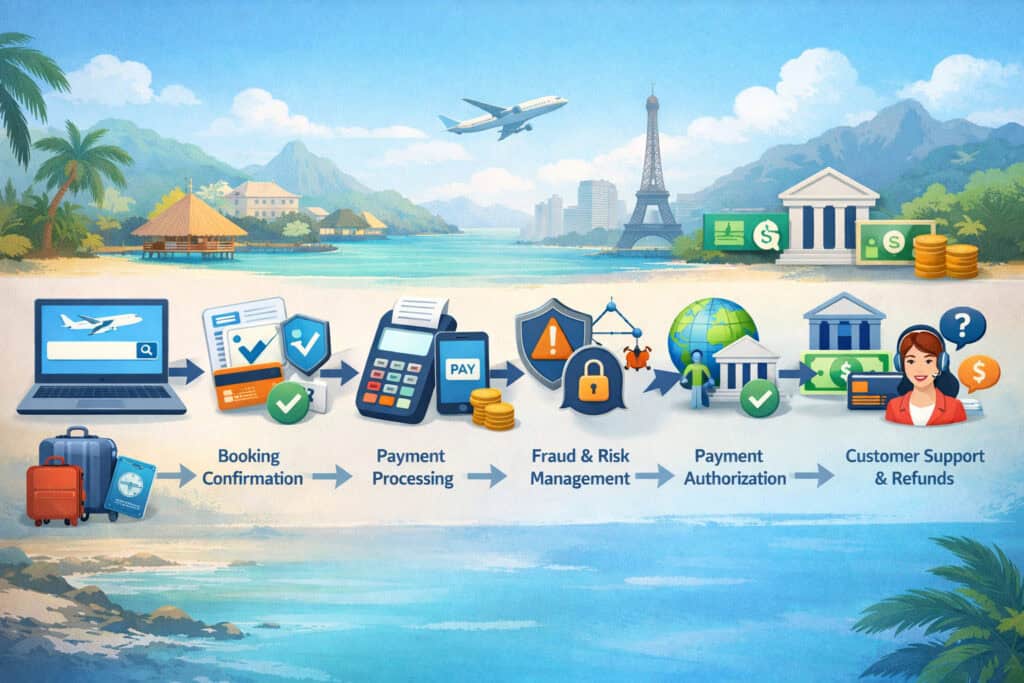
A travel gateway setup that works “well enough” for retail often fails in travel because travel needs lifecycle-aware payment operations. Optimizing payment gateways for international travel bookings means mapping your real flow and ensuring your gateway(s) support it without hacks.
You typically need: authorization (often with enhanced data), capture (immediate or delayed), partial captures, incremental authorizations (common for hotels and incidentals), voids, refunds (full/partial), and sometimes split settlements (marketplace models, agency models, or supplier payouts).
On top of that, you may need to store payment credentials for modifications, reissues, and “pay later” scenarios—without increasing PCI scope more than necessary.
A strong architecture usually includes:
- A gateway for transaction processing and tokenization.
- A processor/acquirer relationship (direct or via gateway) for authorization and settlement.
- A payment orchestration layer (either commercial or in-house) to route, retry, and failover.
- A fraud stack (rules + machine learning + 3DS strategy).
- A reconciliation and ledger layer for supplier payouts and finance controls.
In travel, the booking engine and the payments engine should communicate like a state machine. For example: if an authorization is successful but inventory fails, you should avoid it quickly (reduces “ghost charges” and disputes).
If an itinerary changes, you need a controlled flow for additional collection or partial refund. And if a customer calls support, agents need tools to see payment status, token references, and refund eligibility in one screen.
This is where optimizing payment gateways for international travel bookings becomes a platform decision: your gateway must support the transaction types and data elements you need, and your internal systems must treat payments as a lifecycle, not a single event.
Optimizing authorization rates across borders and issuers
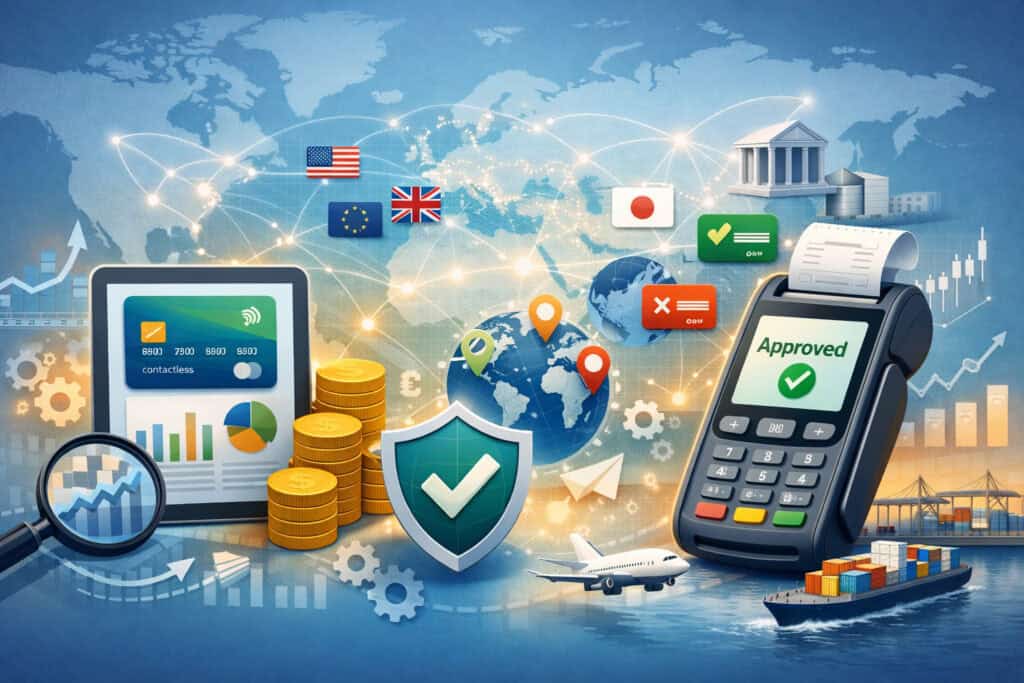
Authorization rate is the single fastest way to move travel revenue without buying more traffic. And optimizing payment gateways for international travel bookings for approvals is mostly about reducing issuer uncertainty and routing intelligently.
Start with “soft declines.” Many issuer declines are recoverable: “do not honor,” “try again,” “authentication required,” or insufficient data.
Build logic that distinguishes hard declines (lost/stolen) from soft declines and uses the right recovery: a 3DS step-up, an adjusted descriptor, a different acquirer route, or a delayed retry window. If you treat every decline the same, you lose legitimate bookings.
Next, feed issuers better context. Where supported, send enhanced data (Level 2/3-like fields, travel itinerary attributes, passenger name fields, check-in/check-out dates, ticket numbers when available).
Travel has standardized data concepts, and issuers often respond better when they can classify the purchase as a legitimate travel booking rather than generic card-not-present risk.
Routing matters. The same card can be approved more reliably through a regionally aligned acquiring route. If you sell globally, you often need multiple acquiring options to reduce cross-border friction. That can mean:
- Multiple acquirers by region.
- Network tokenization and lifecycle management.
- Dynamic routing based on BIN intelligence, issuer country, card type, and historical performance.
A practical business example: an online travel agency sees lower approvals for customers booking lodging in one region using cards issued in another.
By adding a second acquirer route and steering based on issuer region + MCC performance, they recover approvals without changing checkout UX. That is classic optimizing payment gateways for international travel bookings: the customer experience stays the same, but your plumbing adapts.
Finally, monitor approval rate as a segmented metric: by issuer country/region, network, BIN range, device, product type, booking lead time, currency, and 3DS status. Travel “blended” approval rate hides the real fires.
Multi-currency, FX, and pricing strategy that improves conversion

Currency handling is not just a UI preference; it’s a payments optimization lever. Optimizing payment gateways for international travel bookings should include a deliberate approach to currency display, settlement currency, and FX fees.
You have three common pricing models:
- Single-currency pricing (you price in one currency, customers convert at issuer rates).
- Multi-currency pricing (you offer local display currencies, settle in one or many).
- Dynamic Currency Conversion (DCC)-like experiences (often controversial; must be transparent).
In travel, customers are highly sensitive to “price drift.” They might see one total at search results and another at checkout once taxes, FX buffers, and fees appear. That drives abandonment and “not as described” disputes later. Clean optimization means: show totals early, disclose fees clearly, and ensure the gateway supports the currency you promise.
Settlement strategy matters too. If you accept many currencies but settle in one, you’re taking FX exposure or paying conversion costs somewhere in the chain. That cost can be managed, but only if finance and payments teams agree on the model.
Many travel businesses implement a treasury layer: they net FX exposures across corridors, batch conversions, and reduce per-transaction spreads.
From a gateway standpoint, ensure:
- The gateway supports the currencies you market.
- The acquirer route is optimized for local currency authorizations where it improves approvals.
- Refunds are issued correctly in the original currency rules where required (and customers understand what they’ll receive if FX moved).
When done right, optimizing payment gateways for international travel bookings through multi-currency support increases conversion (customers trust the total), reduces support tickets (“why did I get charged more?”), and lowers dispute ratios.
Local payment methods and alternative rails for travel checkout
Cards dominate many travel checkouts, but local payment methods can be decisive for conversion in certain corridors—especially for customers without international card access or those who prefer bank-based payments.
Optimizing payment gateways for international travel bookings often means offering the right alternative payments without overwhelming the checkout.
The trick is to avoid “checkbox sprawl.” Instead, display payment methods dynamically based on customer location, currency, device, and basket size. For example:
- Bank transfer options for high-ticket itineraries (with clear hold windows).
- Real-time bank payments were supported (fast confirmation).
- Digital wallets for mobile conversion.
- “Pay later” options where risk and refund policies align with travel fulfillment realities.
Operationally, alternative payments change your fraud and refund workflow. Some bank-based payments are harder to reverse quickly; some wallets shift dispute processes; some “pay later” models require careful handling when travel providers change schedules.
Your gateway selection should include strong APIs for payment status webhooks, reconciliation fields, and customer identity signals.
A real-world example: a tours operator selling to multiple regions adds wallets and a bank-based method for certain markets. Conversion improves, but they initially see refund delays because their support team doesn’t understand the different reversal timelines.
They fix it by aligning payment method choice with product type: instant-confirmation tours use fast rails; long-lead tours keep cards/wallets that support smoother refund flows. That is optimizing payment gateways for international travel bookings with operational realism.
3DS2, Strong Customer Authentication, and travel-friendly friction management
Authentication can help approvals and fraud—yet it can also crush conversion if used bluntly. Optimizing payment gateways for international travel bookings requires a strategy for EMV® 3-D Secure (3DS2) that is targeted and data-driven.
3DS2 is standardized through EMVCo specifications, and modern implementations support richer data exchange and “frictionless” flows when risk is low.
In certain regions, Strong Customer Authentication (SCA) requirements under PSD2 frameworks influence when authentication is expected, and businesses serving those customers often must support 3DS flows and exemptions properly.
For travel, best practice is step-up authentication:
- Default to frictionless 3DS when possible by sending high-quality device and transaction data.
- Trigger challenge flows when risk signals spike: new device + high ticket + one-way itinerary + mismatched billing signals, etc.
- Use issuer and network guidance to tune exemptions where appropriate (e.g., transaction risk analysis, trusted beneficiary—depending on the ecosystem and your PSP support).
The travel-specific nuance: bookings are often made on mobile while commuting, or on unstable connections, or after long search sessions. Challenge flows that require app switching or SMS codes can break checkout.
So your UX must handle 3DS gracefully: clear messaging, fast return to merchant, and robust retry handling when the authentication times out.
A practical operator playbook: if a transaction returns “authentication required,” automatically re-initiate with 3DS rather than asking the customer to “try another card.” That single change can significantly lift approvals.
This is core optimizing payment gateways for international travel bookings—reducing avoidable drop-off while staying aligned with evolving authentication expectations.
Fraud controls built for travel: prevention without killing approvals
Travel fraud is not just stolen cards; it’s account takeover, synthetic identities, affiliate abuse, refund fraud, and “friendly fraud” where customers dispute after enjoying part of the service. Optimizing payment gateways for international travel bookings means your fraud stack must be travel-aware.
Start with segmentation. Fraud looks different for flights vs. hotels vs. tours. Flights have high resale value and frequent card testing. Hotels have incidentals and delayed captures. Tours have smaller ticket sizes but high refund abuse risk. Your fraud rules should reflect that.
Layer controls:
- Pre-payment controls: device fingerprinting, velocity limits, email/phone risk, IP geo risk, account history.
- At-payment controls: 3DS policy, AVS/CVV strategies, issuer response interpretation, BIN intelligence.
- Post-payment controls: cancellation velocity checks, refund policy enforcement, manual review queues, blacklist/whitelist governance.
Also, use negative signals from operations. For instance, repeated “name change” requests, frequent itinerary modifications, or multiple cards attempted for the same passenger can be stronger fraud indicators than generic ecommerce signals.
A real-world example: a lodging marketplace sees spikes in chargebacks tied to last-minute, same-day bookings. They add a policy: same-day bookings above a threshold require frictionless 3DS attempt; if not available, they route to manual review.
Approvals stay healthy, fraud drops, and support tickets decrease. That’s optimizing payment gateways for international travel bookings by linking fraud decisions to product context.
Chargebacks and disputes: designing evidence, descriptors, and refund flows to win
If fraud prevention is “before,” disputes are “after,” and travel businesses must play both halves well. Optimizing payment gateways for international travel bookings includes dispute engineering: making legitimate transactions recognizable to customers and defensible to issuers.
First, clean descriptors. Customers often don’t recognize travel merchant names—especially when the supplier, agency, and platform brand differ. Ensure your descriptor includes a recognizable brand and support contact. Add confirmation emails and SMS receipts that match descriptor text. This reduces “I don’t recognize” disputes.
Second, evidence readiness. Build your booking record so it can generate a dispute packet quickly: itinerary details, customer communications, refund policy acceptance logs, IP/device signals, 3DS results, and proof of service delivery. You don’t want your team scrambling across systems when a chargeback arrives.
Third, align with network dispute categories. Chargebacks are categorized into fraud, authorization, processing errors, and consumer disputes, and reason codes evolve. Your dispute strategy should map the most common travel loss drivers to operational fixes:
- “Services not received” → improve fulfillment confirmation and proactive communications.
- “Credit not processed” → speed up refunds and confirm timelines transparently.
- “Not as described” → tighten product content accuracy and policy disclosures.
A crucial travel point: fast, policy-aligned refunds reduce chargebacks. When your refund process is slow or confusing, customers use their bank as customer support. Transportation regulators have also emphasized prompt, and in some cases automatic, refunds under defined conditions.
That makes refund operations part of optimizing payment gateways for international travel bookings, not a separate “support problem.”
Compliance and governance: PCI DSS 4.0+, privacy, and sanctions controls
In travel, compliance is not optional because you touch high-value transactions, sensitive personal data, and cross-border corridors. Optimizing payment gateways for international travel bookings must include governance that scales.
PCI DSS and secure card data handling (tokenization-first)
PCI DSS requirements have been modernized, and PCI DSS v4.0 introduced new requirements with a transition period—after which future-dated requirements become mandatory.
Multiple PCI-focused sources note that certain “best practice” requirements become required after March 31, 2025, and PCI DSS v3.2.1 retired March 31, 2024.
For travel merchants, the operational takeaway is simple: reduce scope. Use gateway tokenization, avoid storing PAN data unless absolutely necessary, and apply strong access controls and monitoring.
Privacy obligations that intersect with travel data
Travel bookings include names, contact details, itinerary patterns, and sometimes passport-related fields (depending on product). Privacy rules such as California’s consumer privacy framework create obligations around disclosure, consumer rights, and data-sharing controls.
Payments teams should partner with privacy counsel to ensure that fraud tools, analytics scripts, and identity vendors fit into consent and disclosure requirements.
Sanctions and cross-border compliance controls
Cross-border payments raise sanctions risks. Regulators encourage a risk-based approach to sanctions compliance and technology controls—especially as payment systems evolve and enable faster cross-border movement.
For travel, this typically means screening relevant parties and locations against applicable lists when required, and having a documented escalation and blocking workflow. It also means selecting payment partners that can support compliance needs without freezing legitimate travelers incorrectly.
The point of including compliance in optimizing payment gateways for international travel bookings is not to slow growth. It’s to prevent catastrophic account shutdowns, excessive monitoring, reserve spikes, and reputational damage.
Payment orchestration: smart routing, retries, redundancy, and resiliency
Single-gateway dependency is a hidden risk in travel. Outages happen, acquirers degrade, and cross-border corridors can suddenly underperform due to issuer model shifts. Optimizing payment gateways for international travel bookings at scale usually requires orchestration.
Orchestration can be a commercial platform or an in-house layer. Either way, it should support:
- Dynamic routing: choose the best acquirer/gateway path based on BIN, currency, region, and historical success.
- Retry logic: controlled retries for soft declines with time delays and alternative routes.
- Failover: automatic reroute when one provider errors or times out.
- A/B testing: compare routing strategies and 3DS policies without risky “big bang” migrations.
- Unified token strategy: maintain portability so you can shift volume without forcing customers to re-enter payment details.
Travel example: a booking platform runs two acquirers. When issuer approvals drop in a corridor, they shift traffic gradually while monitoring fraud and chargebacks.
They also maintain a hot failover in case one provider has latency issues during peak holiday traffic. That is optimizing payment gateways for international travel bookings through resiliency and controlled experimentation.
One caution: orchestration can create data fragmentation if not designed carefully. Ensure you maintain a single source of truth for payment state, refund state, and dispute state, even when transactions flow through different providers.
Checkout UX that protects conversion while meeting risk requirements
The best backend optimization won’t save a checkout that confuses customers. Optimizing payment gateways for international travel bookings must include UX patterns that reduce abandonment and reduce post-purchase disputes.
Key UX principles for travel payments:
- Clarity on totals: show taxes, fees, and currency early. Avoid surprise fees at the last step.
- Transparent policies: cancellation and refund policies should be readable and logged (for dispute defense).
- Friction in the right place: if you must add friction (3DS challenge, identity check), do it only when risk signals justify it.
- Mobile-first performance: optimize for speed, because many travel purchases are made on phones.
- Trust cues: display security badges responsibly, show support contact options, and confirm booking details immediately after payment.
Also, reduce “payment anxiety.” Many disputes come from uncertainty: “Did it go through?” Build robust status screens and real-time confirmation messaging. When a payment is pending or requires authentication, communicate it clearly with next steps.
A measurable practice: track checkout drop-off at each step, segmented by payment method and by 3DS outcome. If “3DS challenge initiated” has a steep drop, your optimization target is not only fraud policy—it’s also the handoff UX and the return path to your confirmation page.
That’s the human side of optimizing payment gateways for international travel bookings: fewer surprises, fewer dead ends, and fewer reasons to call the bank.
Reconciliation, refunds, and finance controls that scale travel operations
Travel payment operations can collapse under growth if finance tooling doesn’t scale. Optimizing payment gateways for international travel bookings includes reconciliation and refund governance because those directly impact disputes, cash flow, and partner relationships.
You need clean mapping between:
- Booking ID ↔ payment intent/transaction ID ↔ capture ID ↔ refund IDs ↔ settlement batches ↔ supplier payouts.
If you run an agency model, you may collect from the traveler and pay suppliers later. If you run a marketplace, you may split payouts. Either way, you need a ledger that can handle partial refunds, rebookings, and chargeback debits that hit months after the initial sale.
Refund governance is especially important in travel. Regulators have clarified refund expectations in certain flight-change scenarios, and your internal workflow should be designed to execute refunds promptly when owed and communicate status clearly.
Slow refunds are not just a support issue—they inflate chargebacks and can trigger processor monitoring programs.
A practical control set:
- Refund SLA dashboards (by payment method and corridor).
- Automated refund confirmations with timelines.
- Exception queues for high-risk refunds (to prevent refund fraud).
- Settlement and chargeback reserve monitoring with thresholds.
Teams that do this well treat optimizing payment gateways for international travel bookings as a cash and trust system: customers trust you more, banks flag you less, and suppliers get paid accurately.
Travel distribution and standards: why NDC changes your payments requirements
Travel distribution is evolving, and payments must evolve with it. Optimizing payment gateways for international travel bookings increasingly intersects with distribution standards and supplier connectivity.
The New Distribution Capability (NDC) is an industry program launched to modernize how airline products are retailed using an XML-based standard, improving communication between airlines and travel sellers and enabling richer content and offers.
As distribution becomes more dynamic—bundles, ancillaries, personalized offers—payment flows may need to support more complex pricing updates and post-booking modifications.
For example, if an itinerary expires after a seat selection or bag add-on, you might need incremental collection, split tender, or wallet credits. If refunds are triggered by schedule changes, you need a fast path to execute them. If your supplier settlement model changes, you need ledger adjustments.
This is why optimizing payment gateways for international travel bookings should not be planned in isolation from product and distribution teams. Payments teams should be in the room when distribution changes are planned, because payment constraints can quietly break new retailing models.
A forward-looking approach: build payments as modular services—authorization/capture, token vault, refund service, dispute service—so changes in distribution don’t require fragile checkout hacks.
Future predictions: where travel payments are headed next
Optimizing payment gateways for international travel bookings is getting harder—but also more opportunity-rich. Here are realistic forward trends to plan for.
1) More authentication intelligence, less blunt friction
As issuers, networks, and merchants share richer risk data, expect more transactions to qualify for frictionless authentication while step-ups become more targeted.
EMV 3DS standards already support richer data exchange, and ecosystems are continuously refining how authentication decisions are made. Travel merchants that invest in clean device data, account history signals, and strong 3DS orchestration will see better approvals with lower fraud.
2) PCI DSS maturity will push tokenization everywhere
With PCI DSS v4.0 requirements and mandatory timelines for future-dated controls now in effect for many organizations after March 31, 2025, merchants will keep pushing scope reduction and stronger monitoring and access controls. Gateways that offer flexible token portability and secure credential lifecycle management will be favored.
3) Refund expectations will keep tightening operationally
Even without debating policy direction, the operational reality is that consumer expectations for fast refunds are rising, and regulators have already detailed refund rules in defined flight-change contexts. Travel sellers that automate refunds and communicate clearly will see fewer chargebacks.
4) Orchestration becomes standard for mid-market travel
As provider performance fluctuates by corridor, orchestration will become table stakes. The question will shift from “do we need multiple gateways?” to “how fast can we reroute and learn?”
The merchants that win will treat optimizing payment gateways for international travel bookings as a continuous optimization loop, not a one-time integration project.
FAQs
Q.1: What are the most important KPIs for optimizing payment gateways for international travel bookings?
Answer: If you only track one KPI, track net approval rate (approved and successfully captured transactions divided by attempted checkouts), segmented by corridor and product type. But travel requires a KPI stack, because “approved” doesn’t always mean “kept.”
The core set should include: authorization rate, capture success rate, 3DS frictionless rate, 3DS challenge completion rate, fraud rate, chargeback rate (by reason category), refund rate, refund SLA (time to refund), and support contact rate related to payments.
For optimizing payment gateways for international travel bookings, segmentation is everything. Look at approval rate by issuer region, network, device, and booking lead time. Then connect it to downstream health: if approvals rise but chargebacks rise faster, you’ve shifted risk rather than solved it.
Finally, measure operational friction: how often do agents need to manually intervene on payments, and how long does it take to resolve payment-related tickets?
In travel, support cost is a hidden tax on poor payment performance. A mature program ties these metrics to experiments: routing changes, 3DS policy tweaks, descriptor updates, and refund workflow automation.
Q.2: Should travel companies use multiple gateways or one “best” provider?
Answer: For small travel businesses, one strong provider can be fine—until volume grows or you expand corridors. For most scaling travel merchants, multiple providers become a resiliency and performance strategy.
Optimizing payment gateways for international travel bookings with only one route creates concentration risk: if your provider has latency issues, you lose peak traffic; if their acquiring performance drops in a corridor, your approvals fall; if they tighten underwriting, reserves can spike.
Multiple providers don’t automatically improve performance, though. The value comes from orchestration: the ability to route and retry intelligently, maintain unified tokens, reconcile cleanly, and monitor performance by segment.
If you add a second provider without a clean payment state model, you create reporting chaos and support confusion. The “right” approach is often: start with one provider, build your integration with portability in mind, then add a second route when international mix, volume, or downtime risk justify it.
That’s usually the most practical path for optimizing payment gateways for international travel bookings without over-engineering.
Q.3: How do refunds impact chargebacks in travel, and what should we automate first?
Answer: Refunds and chargebacks are tightly linked in travel because customers often dispute when they feel stuck or uninformed. The fastest way to reduce chargebacks is usually to improve refund execution and communication.
Automate the first mile: eligibility determination (based on policy + supplier rules), refund initiation, and confirmation messaging. Then automate the last mile: status updates, expected timelines, and escalation paths if a refund is delayed.
In travel contexts with defined refund standards, regulators have clarified situations where refunds are owed and emphasized prompt or automatic refunds in certain scenarios. Even when a refund is not owed, clarity matters: show customers what they can receive (credit, voucher, partial refund), and log their acceptance.
For optimizing payment gateways for international travel bookings, the operational win is reducing “credit not processed” and “services not received” disputes by making refunds fast, trackable, and transparent. Refund speed is also cash-flow sensitive—so finance should be part of the workflow design, not an afterthought.
Q.4: What’s the best 3DS strategy for travel without hurting conversion?
Answer: The best 3DS strategy is not “always on” or “always off.” It’s a targeted step-up. Use frictionless 3DS whenever possible by sending high-quality transaction and device data, and reserve challenges for high-risk scenarios.
EMVCo 3DS2 supports richer data exchange to improve risk decisions and enable smoother customer experiences. In regions where SCA frameworks apply, being able to execute 3DS correctly matters for both compliance and approvals.
For optimizing payment gateways for international travel bookings, start by measuring: what percentage of your 3DS attempts are frictionless, what percentage challenge, and what percentage of challenges complete successfully. If challenge completion is low, fix UX and fallback flows before expanding 3DS usage.
Also, treat “authentication required” declines as a routing signal: automatically reattempt with 3DS instead of forcing card swaps. Finally, integrate 3DS decisions with fraud signals: device risk, account history, itinerary risk, and refund abuse patterns. That’s how you protect conversion while still using authentication as a tool.
Conclusion
Optimizing payment gateways for international travel bookings is a lifecycle problem: approvals, authentication, fraud, refunds, disputes, and reconciliation all influence each other. The winning approach is to prioritize the levers that move revenue fastest while reducing operational pain.
If you want a practical roadmap:
- Lift approvals with smart routing, soft-decline recovery, and better data to issuers.
- Implement travel-aware fraud controls that protect you without blanket friction.
- Use 3DS2 strategically—maximize frictionless, step up only when risk warrants it.
- Fix refunds and communications to reduce disputes and meet rising expectations.
- Reduce PCI scope with tokenization-first design and align with PCI DSS v4.0 mandatory timelines.
- Build orchestration and resilience as your international mix grows.
Do this, and optimizing payment gateways for international travel bookings becomes a compounding advantage: higher conversion, lower fraud loss, fewer chargebacks, faster refunds, and a brand that travelers trust when plans change.