Mobile payment security for travel businesses is no longer just a technical concern. It affects how customers book, how employees collect payments, how refunds are handled, how disputes are documented, and how safely customer payment data moves through a travel business.
For travel agencies, tour operators, vacation planners, destination management companies, booking platforms, transportation providers, travel consultants, hospitality-related businesses, and mobile travel vendors, payments often happen across several channels.
A customer may pay a deposit through a mobile checkout, complete a final payment over a hosted payment page, add excursions through a booking engine, or use a digital wallet during check-in. Each step creates a security responsibility.
Mobile payment security protects more than cardholder data. It helps protect customer trust, merchant account stability, cash flow, business reputation, and the ability to keep accepting secure travel payments without unnecessary interruptions. It also helps reduce avoidable fraud, data exposure, chargebacks, and operational confusion.
This guide explains how travel mobile payment security works, where common risks appear, and what practical controls travel businesses can use to support secure mobile travel payments. It is for general educational purposes.
Actual mobile payment security responsibilities can vary based on payment setup, provider, transaction type, business model, technology stack, card data environment, and how payment tools are configured.
Why Mobile Payment Security Matters for Travel Businesses
Travel businesses sell experiences that may be booked days, weeks, or months before the service is delivered. That timing alone creates payment risk.
A customer may pay for a cruise deposit, private tour, airport transfer, vacation package, guided excursion, retreat, or lodging reservation long before the travel date. If something changes, the payment record, cancellation policy, refund policy, and authentication trail all matter.
Mobile payment security for travel businesses matters because mobile travel payments are often connected to high-value purchases, advance bookings, remote sales, and card-not-present transactions. A vacation planner may collect deposits while traveling between client meetings.
A tour operator may accept mobile checkout payments from customers booking from different locations. A transportation provider may use a mobile card reader at the curb. An online travel seller may rely on a payment gateway connected to a booking engine.
Each of these workflows can be secure, but none should be treated casually. A mobile payment app, mobile card reader, digital wallet acceptance tool, or mobile checkout page is part of a broader payment environment.
If employees share logins, process transactions over risky networks, store card numbers in notes, skip device updates, or ignore fraud alerts, the business may create unnecessary exposure.
Travel business payment security also affects merchant account health. High dispute activity, suspicious transaction patterns, weak refund communication, or poor chargeback documentation can create processor reviews, reserves, delayed funding, or account restrictions. Secure mobile travel payments help create cleaner records and more reliable payment operations.
Customers also expect secure mobile booking payments to feel simple. They want a fast checkout, a clear price, confirmation of what they purchased, and confidence that their payment details are handled responsibly. Strong security should support that experience, not make it confusing.
What Mobile Payment Security Means in Travel Payment Processing
Mobile payment security means protecting payment data, devices, users, payment applications, checkout pages, gateway connections, transaction records, and access permissions throughout the mobile payment process. It includes technology controls, employee habits, written policies, vendor oversight, and ongoing monitoring.
For travel businesses, mobile payment processing security may involve in-person payments, online payments, mobile checkout, invoices, payment links, hosted payment pages, embedded booking forms, mobile card readers, contactless payments, debit card payments, credit card processing, and digital wallets.
The exact responsibilities depend on whether the business stores, processes, or transmits cardholder data directly, or whether that work is outsourced to validated payment providers.
A travel agency that sends customers to a hosted payment page has a different risk profile than a business that keys card numbers into a virtual terminal from a mobile device. A tour operator using a mobile card reader at a destination site has different controls than an online booking seller accepting card-not-present transactions through a booking engine.
A transportation business using contactless payments in the field must think about device security, employee access, receipts, and refund workflows.
Mobile payment protection usually focuses on several goals:
- Keeping cardholder data away from insecure systems
- Reducing exposure to stolen card use and account takeover
- Supporting PCI compliance responsibilities
- Protecting mobile devices and payment apps from misuse
- Authenticating customers when risk is elevated
- Monitoring unusual transaction behavior
- Reducing chargebacks and travel payment disputes
- Keeping payment records organized for reconciliation and support
The strongest travel payment security programs usually combine secure tools with disciplined operations. Encryption and tokenization help protect data. Multi-factor authentication and access controls help protect accounts.
Fraud screening, AVS, CVV checks, 3D Secure, and transaction monitoring help identify suspicious activity. Employee training and documentation help ensure the process is followed consistently.
Mobile payment security is not a single product. It is a set of decisions about how your business accepts, verifies, stores, transmits, refunds, and documents payments.
Common Mobile Payment Risks for Travel Businesses
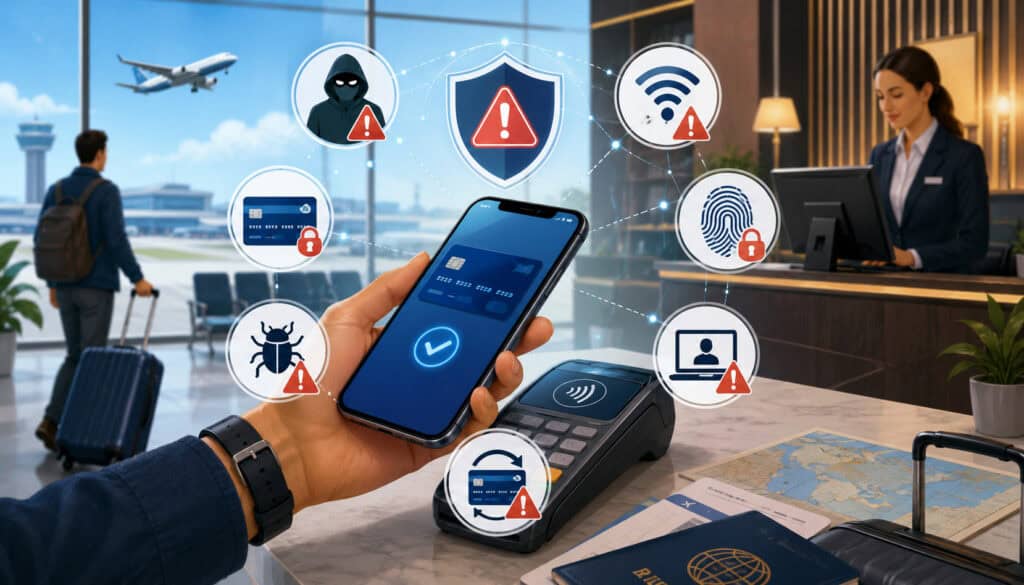
Travel businesses face many of the same payment risks as other merchants, but the timing, ticket size, booking complexity, and remote nature of travel can make those risks more difficult to manage. Mobile payment fraud prevention starts with understanding where exposure usually appears.
A common risk is the card-not-present transaction. Many travel payments happen online, over the phone, through mobile checkout, or by payment link. The card is not physically presented, and the business must rely on customer authentication, fraud tools, billing details, device data, transaction history, and booking context.
Another risk is delayed fulfillment. The customer pays now, but the service happens later. That creates a longer window for disputes, itinerary changes, cancellations, refund requests, supplier failures, or confusion over what was included. Travel payment disputes often depend on documentation. If your records are incomplete, it becomes harder to respond.
High-ticket purchases can also attract fraud attempts. Luxury travel deposits, group tours, transportation packages, retreats, and multi-leg itineraries may involve larger payments than ordinary retail purchases. Fraudsters may try stolen cards, split payments, rushed bookings, unusual travel dates, or mismatched customer details.
Mobile devices create their own risks. Lost phones, shared tablets, outdated operating systems, weak passwords, unsecured Wi-Fi, and unauthorized app access can all affect mobile payment security. Remote staff and independent agents may work from airports, hotels, cafés, homes, client sites, or destination locations, increasing the importance of clear device rules.
Third-party tools add another layer. Booking engines, channel managers, itinerary platforms, customer relationship systems, accounting tools, and payment gateways may all touch payment workflows. A business may believe payment security is handled by a vendor, but the business still needs to understand what data it collects, what data is stored, and who has access.
Common mobile payment mistakes include:
- Taking card numbers through text messages or messaging apps
- Storing cardholder data in spreadsheets, notes, email, or screenshots
- Sharing payment logins among employees
- Processing payments on public Wi-Fi without proper protection
- Ignoring device updates and app updates
- Giving too many employees refund permissions
- Failing to review gateway and booking engine security settings
- Not documenting refund, cancellation, and payment authorization policies
- Skipping transaction monitoring until disputes appear
Secure Mobile Card Readers, Payment Apps, and Digital Wallets
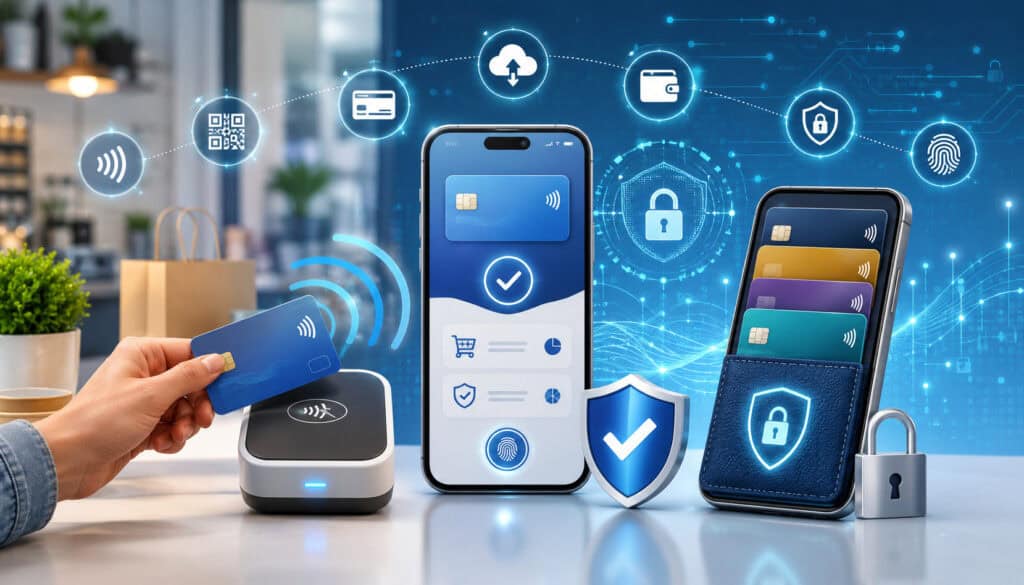
Mobile card readers, mobile payment apps, contactless payments, and digital wallets can help travel businesses accept payments where customers are. They can also reduce manual handling of card data when configured correctly. The key is to choose tools designed for secure payment acceptance and manage them with clear policies.
A mobile travel vendor selling guided excursions may use a card reader at a booth. A transportation provider may accept debit card payments or contactless payments from passengers.
A travel consultant may collect a deposit during an appointment using a mobile payment app. These workflows can be convenient, but device security, user access, and transaction documentation are essential.
Mobile Card Reader Security
Mobile card reader security starts with using approved hardware from a legitimate payment provider. The reader should support secure card acceptance methods such as chip, tap, and swipe only when necessary. Chip and contactless methods generally reduce certain counterfeit card risks compared with older magnetic stripe processes.
The card reader should pair only with authorized devices. Employees should not connect payment hardware to personal devices unless the business has a written policy, device controls, and provider approval.
When mobile card readers are used in the field, the business should track which employee has each device, where it is used, and how it is returned or deactivated.
Physical inspection matters too. Employees should know how to look for tampering, damaged hardware, unfamiliar attachments, or unexpected prompts. A mobile card reader used at a tour desk, kiosk, event table, or transportation site should be stored securely when not in use.
Receipts should clearly identify the travel business, booking reference, amount paid, payment purpose, and next steps. Clear receipts help customers recognize charges later and support chargeback prevention.
Mobile Payment App Security
A mobile payment app should be protected like any other sensitive business system. Strong passwords, multi-factor authentication, biometric authentication where appropriate, role-based access, and regular updates are basic controls. Payment app access should never be shared through a single team login.
Travel businesses should limit payment app permissions based on job duties. For example, a front-line tour guide may need to accept payments but not issue refunds. A manager may need refund access but not administrative control over gateway settings. A booking coordinator may need to view transactions but not change settlement settings.
The mobile payment app should be downloaded only from official app sources and should remain updated. Employees should avoid installing unrelated apps on business payment devices, especially apps from unknown developers. Mobile malware can target credentials, intercept information, or expose sensitive business data.
Notification settings should also be reviewed. Payment confirmations may contain partial card information, customer names, booking details, or transaction identifiers. Those notifications should not appear on unlocked screens where others can view them.
Digital Wallet Payments
Digital wallets can support secure mobile travel payments because they often use tokenization and device-based authentication.
Instead of transmitting the actual card number in the same way a manually entered transaction might, a digital wallet transaction can use a payment token and customer approval through device passcode, facial recognition, fingerprint verification, or another authentication method.
Digital wallets are useful for travel businesses that accept contactless payments in person, mobile checkout payments, or quick add-on purchases. A traveler booking an excursion from a phone may prefer a wallet payment because it reduces typing and can improve checkout completion.
Still, digital wallets are not a complete fraud prevention strategy. The business should continue to use fraud screening, transaction monitoring, clear receipts, cancellation policy disclosure, and proper refund controls. A digital wallet payment may reduce certain risks, but disputes and customer misunderstandings can still happen.
Contactless Travel Payments
Contactless payments can be helpful for transportation providers, on-site tour sellers, hospitality-related businesses, and destination experience providers. They can speed up acceptance and reduce manual card handling. The security benefit depends on using certified terminals, secure payment apps, proper transaction records, and trained employees.
A contactless payment should still generate a clear receipt or confirmation. When customers buy a shuttle transfer, baggage service, local tour, upgrade, or activity add-on, the business should connect that payment to the customer record. That connection helps with reconciliation, customer support, and disputes.
Protecting Cardholder Data with Encryption and Tokenization
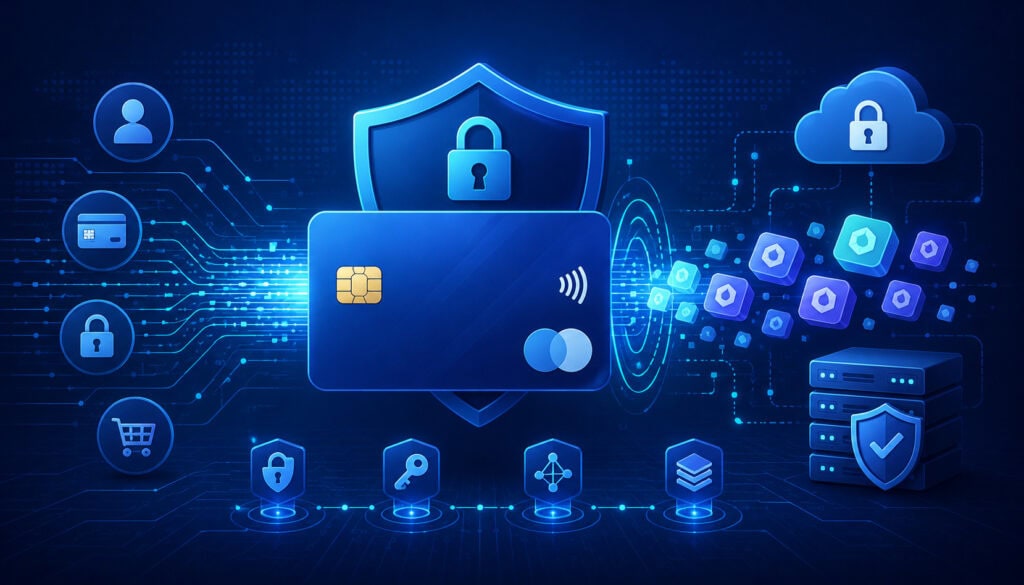
Protecting cardholder data is one of the central goals of mobile payment security. Travel businesses often collect customer names, billing details, itinerary information, travel dates, contact information, deposit records, and final payment schedules. When payment card data is added to that environment, the sensitivity increases.
Encryption and tokenization are two important controls, but they are not the same. Encryption protects data by transforming it into unreadable form unless the correct key is used. Tokenization replaces sensitive card data with a token that can be used for future payment activity without exposing the actual card number to the business.
Both can support secure mobile travel payments, especially when provided through a payment processor, payment gateway, hosted payment page, mobile card reader, or secure booking engine.
Encryption
Encryption helps protect cardholder data when it is transmitted through networks or stored in approved systems. In mobile payment processing security, encryption may apply when a card is tapped, dipped, keyed into a secure payment page, or sent through a payment gateway.
For travel businesses, encryption is especially important because employees and customers may connect from many locations. A traveler might complete a secure mobile checkout from a phone. A travel consultant might send a payment link from a tablet. A transportation business might accept payments through a mobile card reader in the field.
Encryption should be handled by properly designed payment technology, not improvised through manual processes. A business should not rely on employees to “hide” card numbers in documents, split card numbers across messages, or save them in password-protected spreadsheets. Those practices can still create compliance and security problems.
Secure checkout pages should use modern encrypted connections. Payment pages should not show browser warnings, outdated certificates, or mixed security signals. Customers should feel confident that the page where they enter payment details is legitimate.
Tokenization
Tokenization is especially useful in travel payment processing security because travel bookings often involve deposits, final payments, changes, upgrades, cancellations, and partial refunds. A customer may authorize a deposit today and pay the remaining balance later.
A tour operator may need to charge an add-on after the original reservation. A travel agency may need to refund part of a package after a supplier change.
With tokenization, the business can often process approved follow-up actions without storing the full card number. The payment gateway or provider stores the sensitive card data in a controlled environment and provides a token for future authorized use.
This reduces exposure. If a booking record, customer profile, or employee account is accessed without permission, the token is less useful than a full card number. Tokenization does not eliminate all risk, but it can significantly reduce the amount of sensitive payment data inside the travel business.
Tokenization is also helpful for payment reconciliation. Tokens can connect a deposit, final payment, refund, or adjustment to the same customer payment method without exposing full card data to employees.
PCI DSS, Compliance, and Mobile Travel Payments
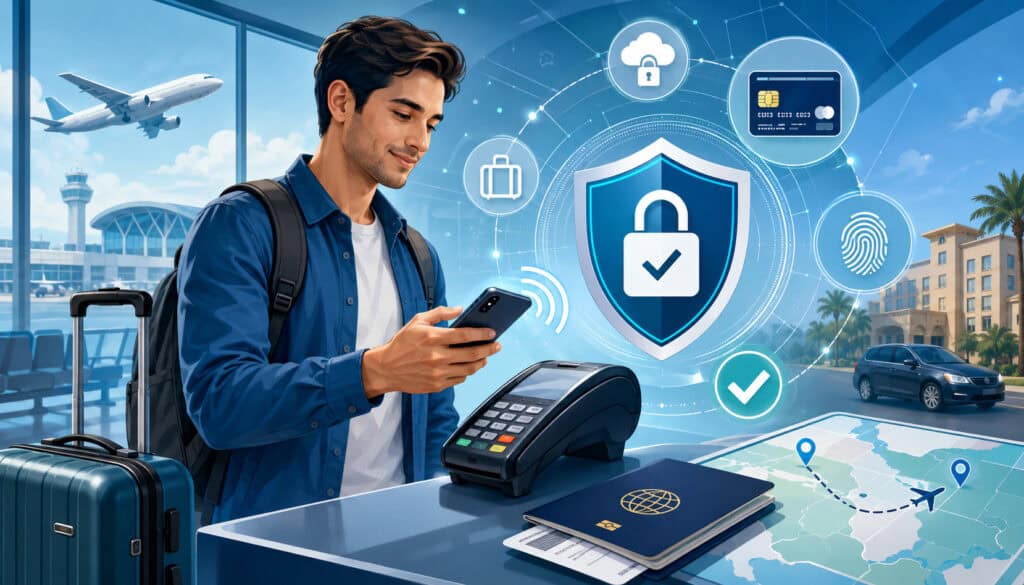
PCI DSS applies to organizations that store, process, or transmit payment card data. For travel businesses, that can include mobile card readers, virtual terminals, payment links, hosted payment pages, booking engines, mobile checkout pages, and any system that touches cardholder data.
The PCI Security Standards Council provides educational resources explaining safe payment practices and why merchants should understand how card data moves through their environment.
PCI compliance is not just a form filed once and forgotten. It is an ongoing responsibility tied to systems, vendors, devices, people, and processes. If your payment environment changes, your security responsibilities may change too.
Adding a new booking engine, mobile payment app, payment gateway integration, remote agent workflow, or card reader can affect your compliance scope.
Travel businesses should understand whether card data is fully outsourced, partially handled by the business, or directly stored or transmitted through business systems. A hosted payment page can reduce exposure because the customer enters payment details into a provider-controlled environment.
However, the business may still have responsibilities related to vendor validation, secure links, employee access, passwords, phishing prevention, and website integrity.
PCI DSS Compliance
PCI DSS compliance includes broad security principles such as protecting cardholder data, maintaining secure systems, controlling access, monitoring activity, and training staff. The exact validation process depends on the business’s payment environment and transaction volume.
Many smaller merchants complete a self-assessment questionnaire, but the correct form depends on how payments are accepted.
A travel agency that only uses hosted payment pages may have a narrower card data environment than a business that enters card numbers into a virtual terminal or stores payment details for recurring balances. A tour operator using mobile card readers may have different obligations from an online seller with an embedded checkout.
The important point is not to guess. Businesses should ask their payment processor, gateway provider, or compliance support resource which validation path applies. They should also keep records of payment workflows, vendors, devices, employee permissions, and security procedures.
Reducing PCI Scope
Reducing PCI scope means limiting where cardholder data goes and who can access it. This is a practical goal for travel business payment security because fewer systems touching card data usually means fewer places to secure, monitor, and document.
Ways to reduce exposure may include:
- Using hosted payment pages instead of collecting card data directly
- Sending secure payment links instead of taking card numbers by email
- Using tokenized customer payment profiles
- Avoiding storage of full card numbers
- Restricting virtual terminal access
- Using approved mobile card readers and payment apps
- Keeping payment data out of booking notes and spreadsheets
- Separating payment permissions by employee role
The PCI Security Standards Council’s small merchant guidance emphasizes understanding who manages the payment page and whether payment data handling is outsourced or handled by the merchant. That distinction is especially relevant for travel sellers using booking engines, third-party checkout tools, and mobile payment links.
Customer Authentication, Fraud Screening, and Transaction Monitoring
Mobile payment fraud prevention for travel businesses requires more than checking whether a transaction was approved. Authorization only means the issuing bank approved the payment request at that moment. It does not guarantee that the transaction is legitimate, that the customer will not dispute it, or that the booking is low risk.
Travel businesses should combine customer authentication, fraud screening, and transaction monitoring. These tools help detect suspicious behavior before fulfillment, especially for card-not-present transactions and high-value bookings.
A secure travel payments strategy should be flexible. Low-risk repeat customers should not face unnecessary friction at every step. Higher-risk transactions may need added verification. The goal is to reduce fraud while still allowing legitimate travelers to book easily.
Fraud Screening
Fraud screening evaluates transaction and booking signals. For travel businesses, useful signals may include billing address, IP location, email reputation, device behavior, booking value, travel date proximity, customer history, passenger details, mismatched names, unusual routing, and velocity patterns.
For example, a same-day luxury transfer booked from a new customer using mismatched billing details may deserve review. A large group tour deposit split across multiple cards may require documentation. A booking with repeated failed payment attempts may indicate card testing. A customer requesting immediate changes after payment may require extra verification.
Fraud screening should be tuned to the business model. A destination management company handling international groups may see different patterns than a local tour operator. An online booking platform may need automated rules, while a boutique travel consultant may rely more on manual review.
3D Secure
3D Secure is a customer authentication layer for online card payments. It can ask the cardholder to confirm identity through the card issuer when risk signals require it.
Modern implementations are designed to support mobile checkout and risk-based authentication, which means low-risk payments may move smoothly while higher-risk payments receive additional checks.
For travel merchants, 3D Secure can be useful for online bookings, secure mobile checkout, and higher-risk card-not-present transactions. It may help reduce certain fraud-related disputes when the transaction qualifies under applicable rules.
However, it should be configured thoughtfully because unnecessary authentication prompts can affect booking completion.
A practical approach is to use 3D Secure as part of a broader fraud strategy rather than applying it blindly to every payment. High-ticket purchases, new customers, cross-border payments, suspicious device behavior, or mismatched billing details may justify stronger authentication.
For deeper context on this topic, travel sellers can review this guide to 3D Secure for travel merchants.
AVS and CVV Checks
AVS compares billing address details provided by the customer with information associated with the card account. CVV checks confirm that the customer has access to the card security code at the time of payment. These tools are common in card-not-present transactions and can support travel payment security.
Neither AVS nor CVV is perfect. Some legitimate customers may have address mismatches because they recently moved, use corporate cards, or book while traveling. Some international payments may produce limited address results. Still, these checks can help identify transactions that deserve review.
Travel businesses should avoid relying on a single signal. A CVV match with a suspicious booking pattern may still be risky. An AVS mismatch from a known repeat customer may be explainable. Fraud tools work best when combined with transaction context.
Transaction Monitoring
Transaction monitoring means reviewing payment activity for unusual patterns. This may include repeated declines, multiple cards used by the same customer, several bookings from the same device, unusually large deposits, sudden refund requests, or charge activity outside normal business patterns.
Monitoring should happen before fulfillment whenever possible. If a tour operator confirms a high-value booking immediately after a suspicious payment, the business may lose the opportunity to review details before supplier commitments are made.
Device Security, Employee Access, and Mobile Payment Controls
Even the strongest payment gateway can be undermined by weak device security or poor employee access controls. Mobile payment security depends on the phones, tablets, laptops, card readers, apps, and user accounts that support payment activity.
Travel teams are often mobile. Agents may work remotely. Tour guides may collect payments at destination sites. Transportation staff may accept payments on the road. Booking coordinators may manage deposits from home offices. This flexibility is useful, but it makes policies and controls more important.
Access Controls
Access controls determine who can do what inside payment systems. A travel business should give employees the minimum access required for their role. This reduces the chance that a compromised account or careless user can cause larger damage.
For example:
- Sales staff may create payment links but not issue refunds.
- Tour guides may accept in-person payments but not view full customer profiles.
- Finance staff may reconcile transactions but not change gateway settings.
- Managers may approve refunds above a defined amount.
- Administrators may manage users but should not share credentials.
Shared logins are a common mistake. They make it difficult to know who processed a payment, issued a refund, changed a setting, or accessed customer data. Individual logins create accountability and support investigation when something looks wrong.
Multi-Factor Authentication
Multi-factor authentication adds another layer of protection beyond a password. It may require a code, app prompt, security key, or biometric factor before access is granted. For payment systems, booking platforms, email accounts, and administrative dashboards, multi-factor authentication is one of the most practical controls available.
Travel businesses should require multi-factor authentication for payment gateway access, mobile payment apps, administrator accounts, booking engine dashboards, email accounts used to send payment links, and remote access tools. This is especially important for remote staff and managers with refund or settlement permissions.
Strong passwords still matter. Passwords should be unique, complex, and not reused across personal and business accounts. A password manager can help employees avoid unsafe habits, such as storing passwords in notes or sending them through messages.
Biometric Authentication
Biometric authentication can help protect mobile devices and payment apps by requiring a fingerprint, face scan, or similar device-level verification. It is useful when employees use tablets or phones in busy environments such as tour desks, airports, hotels, event venues, vehicles, or destination sites.
Biometric authentication should not replace good account management. It should work alongside strong passwords, multi-factor authentication, device lock settings, and user permissions. If a device is shared among employees, biometric controls may be less appropriate unless the system supports individual user profiles.
Public Wi-Fi Risks
Public Wi-Fi is common in travel environments, but it can create payment security concerns. Airports, hotels, cafés, convention centers, and visitor areas may have open networks that are not suitable for sensitive business activity.
Employees should avoid processing payments, logging into gateway dashboards, or accessing booking systems over unsecured public Wi-Fi unless the business has approved protections in place. A safer approach is to use trusted networks, secure mobile data, properly configured business networks, or approved remote access tools.
Phishing risk is also high in mobile environments. Employees may receive fake payment notifications, urgent refund requests, supplier impersonation messages, or login prompts designed to steal credentials. Training should include examples that match real travel workflows.
Lost Device Protection
Lost device risk is serious for mobile travel payments. A phone or tablet may contain payment apps, booking records, customer messages, email access, saved passwords, or transaction notifications.
Every business payment device should have:
- Screen lock enabled
- Strong passcode or biometric lock
- Remote wipe capability
- Device tracking where appropriate
- Automatic lock after inactivity
- Updated operating system and payment apps
- No unnecessary cardholder data stored locally
- A process for reporting lost or stolen devices immediately
Secure Mobile Booking Payments and Payment Gateway Integrations
Secure mobile booking payments are central to modern travel sales. Customers expect to book from phones, pay deposits quickly, receive confirmations instantly, and manage changes without calling multiple times. A secure booking flow should protect payment data while keeping the process clear and convenient.
For travel businesses, booking payment security often depends on how the website, booking engine, payment gateway, customer database, and accounting system connect. A weak integration can create unnecessary exposure, duplicate records, reconciliation problems, or refund confusion.
A secure mobile booking workflow should answer several questions:
- Where does the customer enter payment information?
- Is the checkout page hosted by a secure payment provider?
- Does the business ever see or store full card numbers?
- Are deposits and final payments linked to the same booking?
- Can refunds be issued only by authorized users?
- Are transaction records easy to reconcile?
- Are fraud checks applied before confirmation?
- Are policy disclosures captured before payment?
For broader travel payment context, this guide on payment processing for travel businesses explains how booking payments, merchant accounts, and travel-specific payment operations connect.
Secure Mobile Checkout
Secure mobile checkout should be simple, clear, and trustworthy. Customers should understand what they are paying for, whether the payment is a deposit or final balance, what currency applies, when the remaining amount is due, and how refunds or cancellations work.
A mobile checkout should be easy to use on smaller screens. Confusing forms can lead to errors, abandoned bookings, and support calls. Security indicators should be visible without overwhelming the traveler. The payment page should avoid unnecessary redirects, broken formatting, or suspicious-looking links.
Travel businesses should test mobile checkout flows regularly. Test deposit payments, final payments, promo codes, refunds, failed payments, booking changes, and confirmation emails. Security is not only about stopping attacks; it is also about preventing operational mistakes that lead to disputes.
Hosted Payment Pages
Hosted payment pages can reduce card data exposure because customers enter card details directly into a provider-managed payment environment. This can help travel businesses avoid handling full card numbers in their own website or booking system.
Hosted payment pages are especially useful for travel agencies, consultants, and tour operators that send payment links for deposits, final balances, upgrades, or custom itineraries. The page should clearly show the business name, booking reference, amount, payment purpose, and policy acknowledgments.
However, hosted checkout does not remove every responsibility. The business still needs to secure the links it sends, prevent phishing, control employee access, confirm vendor compliance, and ensure the hosted page matches the customer’s booking details. Employees should not modify payment links casually or send customers to unfamiliar pages.
Payment Gateway Security
A payment gateway connects the travel business, customer payment method, processor, and related systems. Gateway security settings can affect fraud screening, tokenization, refunds, transaction logging, 3D Secure, AVS, CVV, settlement, and reporting.
Travel businesses should review gateway settings with a payment professional or qualified technical resource. Important areas include user roles, API keys, webhook security, refund permissions, fraud filters, token vault settings, transaction limits, duplicate transaction controls, and logging.
Booking engine integration also matters. If the booking platform connects to the gateway through an API, API credentials should be protected and rotated when needed. Access should be limited to only what the integration requires. Test environments should not contain live cardholder data.
For businesses handling cross-border payments or multi-currency payments, payment gateway configuration becomes even more important. Currency display, settlement, fraud screening, authentication, and refund records should be consistent. Travel sellers can review additional context in this guide to payment gateways for international travel bookings.
Pro Tip: Review your payment gateway users at least regularly. Remove old users, reduce excessive permissions, confirm MFA is active, and verify that refund rights are limited to trained employees.
Chargebacks, Refunds, and Mobile Payment Disputes
Chargebacks and travel payment disputes are closely connected to mobile payment security. Fraud prevention matters, but many disputes are not pure fraud. They may involve unclear cancellation policies, duplicate charges, itinerary changes, supplier problems, delayed refunds, customer confusion, or poor documentation.
Mobile payments can make booking faster, but speed can create problems if policy disclosure is weak. A customer may tap to pay a nonrefundable deposit without fully understanding the terms. A traveler may pay through a mobile checkout and later forget the billing descriptor. A passenger may add a service through a field employee and not recognize the receipt.
Strong travel agency payment security includes clear communication before and after payment. Customers should know what they paid, what is included, what is not included, when the balance is due, what happens if they cancel, and how refunds are handled.
Chargeback Prevention
Chargeback prevention starts before the payment is submitted. The checkout page should clearly show the travel product, amount, deposit status, final payment schedule, policy terms, and customer authorization. Confirmation emails should repeat the key details.
For mobile payments, receipts should be immediate and easy to read. They should include the booking reference, merchant descriptor, contact information, amount paid, and relevant policies. If a charge appears later on a statement, the customer should be able to connect it to the travel purchase.
Documentation is essential. Keep records of:
- Customer authorization
- Booking details
- Policy acceptance
- Payment amount and date
- IP address or device information when available
- Emails and confirmations
- Itinerary documents
- Supplier confirmations
- Refund communications
- Service delivery evidence
Travel businesses should also monitor disputes by category. If many disputes involve refund confusion, improve policy language and confirmation emails. If disputes involve unrecognized charges, review billing descriptors and receipts. If disputes involve fraud, strengthen authentication and screening.
For more detail on policy-driven dispute prevention, this resource on travel agency chargeback prevention explains why cancellation terms and documentation matter.
Refund Policy and Cancellation Policy Security
Refund and cancellation policies are not only legal or customer service documents. They are payment risk controls. A vague policy creates confusion. An inconsistent policy creates disputes. An undocumented exception creates evidence problems.
Travel businesses should make policies visible before payment. Customers should not have to search for whether a deposit is refundable, whether supplier penalties apply, or whether cancellation timing affects the refund amount.
Mobile checkout pages should include a clear acknowledgment step when appropriate. For high-value bookings, custom packages, nonrefundable fares, private tours, or supplier-dependent reservations, policy acceptance should be recorded.
Refund permissions should be controlled inside the payment gateway or mobile payment app. Not every employee who accepts payments should be able to issue refunds. Refunds should match documented business rules and should be reconciled with booking records.
Payment Reconciliation
Payment reconciliation helps detect mistakes, duplicate charges, missing refunds, and unusual activity. For travel businesses with deposits, final payments, add-ons, partial refunds, and supplier payments, reconciliation is a security and cash flow discipline.
Mobile payments should flow into reporting systems with enough detail to match transactions to bookings. If a mobile card reader payment cannot be connected to a reservation, customer, or service, support and dispute response become harder.
Building a Mobile Payment Security Checklist for Travel Businesses
A checklist helps turn mobile payment best practices into repeatable habits. It gives owners, managers, finance teams, and front-line employees a shared way to review payment workflows.
The checklist below can be adapted for travel agencies, tour operators, online booking sellers, transportation providers, destination experience companies, mobile travel vendors, and hospitality-related businesses.
| Security Area | What It Protects | Why It Matters for Travel Businesses | Practical Action Step |
| Hosted payment page | Cardholder data entry | Reduces direct handling of card numbers during deposits and final payments | Use provider-hosted checkout for payment links and online booking payments |
| Tokenization | Stored payment credentials | Supports deposits, final payments, add-ons, and refunds without storing full card numbers | Use tokenized customer profiles through the gateway or booking platform |
| Encryption | Payment data in transit | Protects mobile checkout and card reader transactions | Confirm payment tools use secure encrypted transmission |
| Mobile card reader controls | In-person travel payments | Helps protect field payments at tours, events, transportation points, and travel desks | Assign readers, inspect devices, and disable lost hardware quickly |
| Multi-factor authentication | Payment system logins | Reduces account takeover risk for gateway, booking, and email accounts | Require MFA for all payment-related systems |
| Employee permissions | Refunds and sensitive actions | Prevents excessive access and supports accountability | Use role-based access and individual logins |
| AVS and CVV checks | Card-not-present transactions | Adds screening for online bookings and mobile checkout payments | Enable checks and define review rules for mismatches |
| 3D Secure | Customer authentication | Adds authentication for selected online travel payments | Use risk-based rules for higher-risk transactions |
| Transaction monitoring | Suspicious payment behavior | Helps identify card testing, unusual refunds, and risky bookings | Review declines, high-ticket payments, duplicate attempts, and refund patterns |
| Refund controls | Cash flow and disputes | Prevents unauthorized or inconsistent refunds | Require manager approval above set thresholds |
| Device security | Phones, tablets, and apps | Reduces lost device and malware exposure | Use screen locks, updates, remote wipe, and approved apps only |
| Public Wi-Fi policy | Remote payment activity | Protects staff working from travel locations | Avoid payment activity on unsecured networks |
| Vendor review | Third-party systems | Booking engines and gateways can affect security scope | Confirm PCI-related responsibilities and security documentation |
| Policy disclosure | Chargeback prevention | Helps customers understand deposits, cancellations, and refunds | Show terms before payment and store acceptance records |
| Staff training | Daily security habits | Employees often control the highest-risk steps | Train staff on phishing, refunds, card data handling, and mobile device rules |
A checklist is most useful when someone owns it. Assign responsibility to a manager, finance lead, operations lead, or security-aware administrator. Review it whenever the business adds a new payment method, vendor, booking channel, device, or remote employee process.
Travel businesses should also document exceptions. If an employee must take a payment outside the normal flow, the reason, authorization, and follow-up should be recorded. Exceptions are sometimes necessary, but repeated exceptions usually indicate that the standard process needs improvement.
Questions to Ask Payment Providers and Technology Vendors
Payment providers and technology vendors play a major role in mobile payment protection. Travel businesses often rely on a payment processor, payment gateway, booking engine, mobile payment app, card reader provider, fraud tool, accounting platform, and customer management system. Each vendor may affect security, compliance, and dispute handling.
Before choosing or renewing a payment tool, ask specific questions. General claims about “secure payments” are not enough. You need to understand what the provider does, what your business must do, and how the system behaves in real travel workflows.
Useful questions include:
- Does the system support hosted payment pages for mobile checkout?
- Does it tokenize cards for deposits, final payments, and approved follow-up payments?
- Does the business ever store or view full card numbers?
- Which PCI responsibilities remain with the merchant?
- Are mobile card readers certified and tied to authorized accounts?
- Can employee permissions be customized by role?
- Is multi-factor authentication available and required?
- Does the gateway support AVS, CVV, fraud filters, and 3D Secure?
- Can refund permissions be limited by user?
- Are transaction logs detailed enough for chargeback response?
- Does the booking engine pass policy acceptance records to the payment system?
- How are API keys, webhooks, and integrations secured?
- Can transactions be reconciled by booking reference?
- How are cross-border payments and multi-currency payments handled?
- What happens if a device is lost or an employee leaves?
- What security documentation is available for compliance review?
- How are service outages, suspicious activity, and breach notifications handled?
Vendor security should also include contract and support review. Businesses should know who to contact for urgent payment issues, how quickly access can be disabled, and what documentation is available if a dispute or security review occurs.
For general cybersecurity practices, resources from CISA and NIST can help businesses think about account protection, device security, employee training, and risk management.
For payment-specific responsibilities, the PCI Security Standards Council provides educational material on protecting card data and understanding merchant obligations. The FTC business guidance on payments and billing also explains the importance of authorized charges and responsible billing practices.
Mobile Payment Best Practices for Different Travel Business Models
Mobile payment security for travel businesses should match the way the business sells. A single-location retail checklist is not enough for travel, because payments may happen across websites, mobile devices, third-party booking platforms, email conversations, destination sites, and remote staff workflows.
Travel Agencies and Vacation Planners
Travel agencies and vacation planners often manage custom itineraries, deposits, payment schedules, supplier rules, and client communication. They should avoid taking card numbers by email, text, or handwritten notes. Secure payment links and hosted checkout pages are safer and easier to document.
Agencies should also connect payments to trip records. Each deposit, final payment, change fee, insurance payment, or supplier-related charge should be tied to the itinerary. This supports customer service and dispute response.
Because agents may work remotely, account access should be tightly controlled. Multi-factor authentication, individual logins, role-based permissions, and secure email practices are essential.
Tour Operators and Destination Experience Providers
Tour operators may accept payments online, at ticket desks, through mobile card readers, or from guides in the field. They should secure both card-present and card-not-present workflows.
For online bookings, fraud screening and clear cancellation policies are important. For field payments, card reader assignment, receipt quality, and device security matter. For group tours and private experiences, high-ticket transactions may require additional review before confirmation.
Tour operators should also plan for partial refunds, weather-related changes, supplier substitutions, and no-show policies. These situations can become disputes if records are unclear.
Online Travel Sellers and Booking Platforms
Online travel sellers and booking platforms may process large volumes of mobile checkout transactions. They need scalable fraud rules, secure gateway integration, 3D Secure strategy, account protection, and detailed reporting.
Because customers may book from many locations and devices, platforms should rely on layered signals instead of one simple rule. Device data, booking behavior, transaction velocity, customer history, and policy acceptance records can all support mobile payment risk management.
Booking platforms should also monitor for card testing. Repeated low-value attempts, many declines, or rapid payment attempts from similar devices may indicate abuse.
Transportation Providers and Mobile Travel Vendors
Transportation providers and mobile vendors often accept payments in dynamic environments. Drivers, dispatchers, guides, event staff, and mobile sellers may use card readers, tablets, or phones.
These businesses should focus on device control, receipt accuracy, employee permissions, and reconciliation. A mobile payment should connect to a route, passenger, service, booking, or invoice. Refund permissions should be limited, and lost device procedures should be clear.
Training Employees to Handle Mobile Travel Payments Securely
Employee training is one of the most practical ways to improve travel merchant payment security. Many payment problems begin with ordinary habits: writing down card numbers, sharing passwords, skipping updates, sending payment links from personal accounts, or issuing refunds without documentation.
Training should be specific to travel workflows. Generic cybersecurity reminders are helpful, but employees need examples from their daily work.
Training topics should include:
- How to send secure payment links
- How to avoid collecting card numbers through unsafe channels
- How to recognize phishing and fake payment emails
- How to inspect mobile card readers
- How to process refunds according to policy
- How to identify suspicious booking behavior
- How to handle customer authentication requests
- How to report lost devices or suspected account compromise
- How to document payment authorization
- How to keep cardholder data out of notes, messages, and spreadsheets
Employees should also know what not to do. They should not ask customers to send card photos. They should not store CVV codes. They should not share payment app credentials. They should not bypass checkout because a customer is in a hurry. They should not issue refunds outside approved systems.
Training should be repeated, not limited to onboarding. Payment tools change, fraud patterns change, and employees forget details. Short refreshers can prevent expensive mistakes.
Managers should model the same standards. If leadership asks staff to “just take the card over text this one time,” the policy loses credibility. Secure payment habits must be consistent.
Common Mistakes That Weaken Travel Mobile Payment Security
Many mobile payment security problems are preventable. They do not always come from advanced attacks. Often, they come from convenience-driven shortcuts that become normal over time.
One major mistake is storing card numbers improperly. A travel consultant may save a card in a note for a final payment. A booking coordinator may keep card details in a spreadsheet. A staff member may ask a customer to text a card photo. These practices create unnecessary cardholder data exposure and can complicate PCI compliance.
Another mistake is weak access control. If everyone uses the same payment login, the business cannot easily identify who processed a charge, issued a refund, or changed a setting. Shared credentials also make it harder to remove access when an employee leaves.
Skipping device updates is another common issue. Payment apps, mobile operating systems, browsers, and booking tools need updates to fix bugs and security weaknesses. Outdated devices should not be used for payment activity.
Businesses may also ignore vendor security. A booking engine, payment gateway, or mobile payment app may be convenient, but the business still needs to understand security responsibilities. Vendor selection should include questions about PCI compliance, tokenization, user permissions, data storage, and breach response.
Policy gaps are also risky. If refund terms, cancellation rules, deposit conditions, and final payment deadlines are unclear, customers may dispute charges. This is not only a customer service issue; it is part of travel payment risk management.
What is mobile payment security for travel businesses?
Mobile payment security for travel businesses is the practice of protecting payment data, mobile devices, payment apps, checkout pages, gateway connections, employee access, and transaction records when travel payments are accepted through mobile channels.
It applies to mobile card readers, mobile checkout pages, digital wallets, hosted payment pages, payment links, booking engine integrations, and remote payment workflows. The goal is to protect cardholder data, reduce fraud, support compliance, prevent avoidable disputes, and maintain customer trust.
Why do travel businesses need secure mobile payments?
Travel businesses need secure mobile payments because they often accept deposits, final payments, high-ticket bookings, card-not-present transactions, cross-border payments, and mobile checkout payments. These transactions can involve delayed fulfillment, changing itineraries, cancellation rules, and third-party suppliers.
Secure mobile travel payments help protect customers and the business. They reduce card data exposure, support merchant account stability, improve documentation, and help prevent fraud and chargebacks.
Are mobile card readers safe for travel businesses?
Mobile card readers can be safe when they come from a legitimate payment provider, use secure card acceptance methods, remain updated, and are managed with proper controls. Businesses should assign readers, inspect hardware, restrict app access, and disable lost or unused devices quickly.
Safety also depends on employee behavior. Staff should not share payment logins, connect readers to unauthorized devices, or process payments without receipts and booking records.
How does tokenization protect mobile travel payments?
Tokenization replaces sensitive card data with a token that can be used for approved payment actions without exposing the full card number to the business. This is useful for travel deposits, final payments, add-ons, booking changes, and refunds.
For example, a customer may pay a deposit through secure mobile checkout, and the payment gateway may store the card securely while giving the business a token. Later, the business can process an authorized final payment without storing the full card number in its own files.
What mobile payment risks should travel businesses watch for?
Travel businesses should watch for card-not-present fraud, card testing, account takeover, refund abuse, public Wi-Fi risks, mobile malware, lost devices, phishing, weak passwords, shared logins, excessive employee permissions, and insecure storage of cardholder data.
They should also monitor travel-specific risks such as high-value last-minute bookings, mismatched customer details, unusual refund requests, unclear cancellation terms, supplier-related disputes, and payments that cannot be matched to booking records.
How can travel businesses reduce mobile payment fraud?
Travel businesses can reduce mobile payment fraud by using secure checkout tools, hosted payment pages, tokenization, AVS, CVV checks, fraud filters, 3D Secure, transaction monitoring, multi-factor authentication, strong device security, and employee training.
They should also review high-risk bookings before fulfillment, document customer authorization, use clear refund and cancellation policies, and reconcile mobile payments with booking records. No tool can prevent every fraud attempt, but layered controls can reduce risk.
Does PCI DSS apply to mobile travel payments?
Yes, PCI DSS can apply to mobile travel payments when a business stores, processes, or transmits cardholder data. The exact responsibilities depend on how payments are accepted and whether card data handling is outsourced to validated providers.
A business using a hosted payment page may have a different scope than one entering card details into a virtual terminal or storing card information. Travel businesses should ask their payment provider or compliance resource which validation path applies to their setup.
What should travel businesses ask payment providers about mobile security?
Travel businesses should ask whether the provider supports hosted payment pages, tokenization, encryption, mobile card reader security, multi-factor authentication, role-based permissions, AVS, CVV checks, fraud filters, 3D Secure, secure gateway integrations, refund controls, and detailed transaction reporting.
They should also ask what PCI responsibilities remain with the business, how lost devices are handled, how API credentials are protected, how disputes are documented, and whether transactions can be reconciled by booking reference.
Conclusion
Mobile payment security for travel businesses is about building a safer, clearer, and more reliable payment process across every channel where travelers pay.
It includes mobile card readers, mobile payment apps, digital wallets, hosted payment pages, secure mobile checkout, payment gateway integrations, fraud screening, access controls, device security, PCI compliance, refunds, disputes, and employee training.
Travel businesses face added payment complexity because bookings are often remote, high-value, time-sensitive, and fulfilled later. Customers may pay deposits, make final payments, change itineraries, request refunds, or dispute charges long after the original booking. That makes documentation, authentication, and secure systems essential.
The best approach is layered. Use secure technology to reduce card data exposure. Use tokenization and encryption to protect payment information. Use fraud tools and transaction monitoring to identify suspicious activity.
Use multi-factor authentication and role-based permissions to protect accounts. Use clear policies and strong records to reduce chargebacks. Train employees so security is part of daily operations, not an afterthought.
Secure mobile travel payments do not need to be complicated for customers. A well-designed process can feel smooth while still protecting payment data and business operations.
For travel agencies, tour operators, booking platforms, transportation providers, destination companies, consultants, and mobile travel vendors, strong mobile payment security is a practical investment in customer confidence, cash flow, and long-term payment stability.