
Travel payments are rarely as simple as “customer pays, business delivers, transaction closes.” A traveler may book months ahead, pay a deposit today, change dates later, add excursions, request a partial refund, miss a cancellation deadline, or dispute a final payment after an itinerary change.
For travel agencies, tour operators, vacation planners, destination management companies, booking platforms, transportation providers, hospitality-related businesses, and travel consultants, these moving parts can turn payment disputes into a serious operational issue.
That is where chargeback monitoring tools for travel businesses become useful. These tools help businesses detect dispute activity earlier, organize payment and booking data, track chargeback reason codes, monitor fraud signals, and respond with stronger documentation.
They do not make disputes disappear, and they cannot guarantee every case will be prevented or won. However, they can help travel merchants build a more disciplined approach to chargeback prevention, dispute response, customer communication, and merchant account stability.
Chargeback rules, monitoring capabilities, evidence requirements, and dispute timelines can vary by payment processor, card network, gateway, business model, transaction type, customer location, and documentation quality.
This guide is for general educational purposes and is designed to help travel businesses understand how chargeback monitoring software fits into a broader payment risk strategy.
Why Chargeback Monitoring Matters for Travel Businesses
Chargebacks affect more than one transaction. A single dispute can reverse revenue, create chargeback fees, consume staff time, delay reconciliation, and trigger additional review from a payment processor.
When disputes become frequent, a travel merchant may face settlement holds, rolling reserve requirements, higher processing costs, or closer underwriting attention.
Travel businesses often have more chargeback exposure than a typical retail business because the service is frequently delivered later. A customer might pay for a cruise package, guided tour, hotel stay, flight arrangement, or destination experience long before the trip occurs.
During that waiting period, personal plans, supplier schedules, weather conditions, customer expectations, and refund requests can all change.
Chargeback monitoring tools give travel businesses visibility into these risks before they become unmanageable. Instead of waiting for a monthly merchant statement to reveal a problem, a business can review disputes by booking type, payment channel, reason code, location, agent, supplier, package, or customer segment.
That visibility helps decision-makers separate normal refund friction from deeper problems, such as confusing policies, weak fraud screening, unclear billing descriptors, or poor documentation.
Customer dispute rights are an important part of the payment system. Agencies such as the FTC and CFPB explain that cardholders may dispute certain billing errors or problematic charges through their card issuer.
For merchants, this means payment acceptance carries responsibilities: clear disclosures, accurate billing, timely customer support, and evidence that supports the transaction if challenged.
For travel businesses, monitoring matters because disputes can arrive long after the original sale. The employee who handled the booking may no longer remember the conversation. The supplier confirmation may be buried in email.
The refund policy may have changed. Without chargeback tracking tools, a business can lose valuable response time simply trying to reconstruct what happened.
What Are Chargeback Monitoring Tools?
Chargeback monitoring tools are systems that help merchants track, analyze, and respond to payment disputes. In a travel setting, they may connect to a payment gateway, processor portal, booking engine, customer relationship system, fraud screening platform, or accounting workflow. The goal is to create a clearer picture of why disputes happen and what action is needed next.
At a basic level, chargeback monitoring software helps a travel business see new disputes, deadlines, transaction details, reason codes, amounts, customer information, and current case status.
More advanced chargeback management tools may also provide alerts, dashboards, dispute evidence templates, representment workflows, refund tracking, fraud signals, chargeback ratio reporting, and performance analytics.
For example, a tour operator may use travel chargeback monitoring to identify that most disputes are coming from “service not received” claims on weather-dependent excursions.
A vacation planner may discover that refund disputes spike when customers do not receive written confirmation of supplier penalties. An online booking seller may find that unauthorized transaction claims are tied to weak customer authentication at checkout.
Chargeback monitoring tools are not the same as refund tools, fraud tools, or accounting tools, although they may overlap with all three. Refund tools help return funds. Fraud prevention tools help detect suspicious transactions before approval.
Accounting tools help reconcile payments and deposits. Chargeback management software helps track what happens when the cardholder disputes a transaction through the issuing bank or card network process.
Good monitoring connects these areas. A travel business should be able to see the original booking payment, deposit schedule, final payment, cancellation policy, refund request, customer communication, supplier confirmation, transaction authorization, and dispute status in one organized workflow. Without that connection, teams may make decisions based on incomplete information.
Why Travel Businesses Face Higher Chargeback Risk
Travel businesses face higher chargeback risk because travel purchases are complex, emotional, time-sensitive, and often expensive. Customers are not only buying a product; they are buying an experience that may involve multiple suppliers, strict policies, changing schedules, and personal expectations.
When something goes wrong, the payment dispute process may feel faster or easier to the customer than continued communication with the merchant.
Advance bookings create one of the biggest challenges. A customer may pay a deposit for a destination wedding, guided group tour, resort package, or transportation service months before departure.
If the customer later changes plans, misunderstands the cancellation policy, or believes the service was not delivered as expected, the original payment may be disputed even if the business followed its terms and conditions.
Delayed fulfillment also complicates documentation. Travel businesses must prove not only that payment was authorized, but also that the customer agreed to the booking terms and that the service was available, delivered, held, modified, or canceled according to policy.
This is why clear cancellation policies for travel agencies are central to chargeback prevention for travel businesses.
Card-not-present transactions add another layer of risk. Many travel payments happen online, over the phone, through emailed invoices, or through booking platforms.
These channels are convenient, but they can increase exposure to unauthorized transaction claims, friendly fraud, stolen card use, card testing, and account takeover. Strong customer authentication, fraud screening, and payment security controls are essential.
International customers can also create added complexity. Cross-border payments, multi-currency payments, unfamiliar billing descriptors, language differences, time zone delays, and different refund expectations can lead to confusion.
A customer may not recognize the merchant name on the statement, may expect a faster refund, or may dispute a charge because the billed amount differs from what they expected after currency conversion.
Travel disputes commonly involve:
- Unauthorized transaction claims
- Service-not-received claims
- Cancellation disputes
- Refund disputes
- Duplicate billing
- Billing descriptor confusion
- Deposit and final payment misunderstandings
- No-show or late-cancellation fees
- Supplier failure or schedule changes
- Friendly fraud after a completed trip
How Chargeback Monitoring Software Works

Chargeback monitoring software usually works by collecting dispute and transaction data from payment-related systems and presenting it in a usable format.
Depending on the provider and setup, the tool may pull information from a payment processor, acquiring a bank portal, payment gateway, booking platform, fraud tool, customer support system, or internal spreadsheet. The more complete the data connection, the easier it is to understand the full dispute lifecycle.
When a chargeback or inquiry arrives, the system may create a case record. That case can include the transaction amount, authorization date, settlement date, card type, reason code, customer name, booking reference, dispute deadline, and required response action.
Some systems also group cases by status, such as new, under review, evidence needed, represented, accepted, lost, won, refunded, or closed.
For travel businesses, the best setup links payment data with booking context. A transaction alone may not explain enough. A $2,000 card-not-present payment could be a deposit, final balance, package upgrade, transportation fee, supplier pass-through, or cancellation penalty.
Travel business chargeback monitoring should help the team understand what the payment represented and what documentation supports it.
Dashboards are a common feature. A dashboard may show chargeback volume, dispute amount, chargeback ratio, win rate, reason code trends, fraud-related disputes, refund-related disputes, and cases approaching deadlines. This helps managers identify whether disputes are isolated incidents or signs of a larger issue.
Some chargeback monitoring tools also support early warnings and alerts. These alerts may notify the business when a customer dispute is forming before it becomes a formal chargeback. The business may then choose to refund, contact the customer, provide clarification, or prepare evidence. Availability and timing vary by processor, network, and tool.
A strong monitoring workflow usually includes:
- New dispute alerts
- Case assignment
- Evidence checklist
- Deadline tracking
- Refund and cancellation review
- Customer communication history
- Representment preparation
- Outcome tracking
- Monthly reporting
- Policy improvement recommendations
Key Features to Look for in Chargeback Management Tools

Not all chargeback management tools are built for travel. A generic ecommerce dispute tool may track chargebacks, but it may not understand deposits, supplier confirmations, travel waivers, itinerary changes, delayed service delivery, or cancellation windows. Travel businesses should look for tools that support how travel payments actually work.
The first important feature is centralized dispute tracking. Your team should be able to see open disputes, deadlines, reason codes, amounts, customer records, and response status without logging into multiple portals. A missed response deadline can turn a potentially defendable case into an automatic loss.
The second feature is documentation management. Travel disputes are evidence-heavy. A business may need booking confirmations, signed authorization forms, cancellation policy acknowledgments, refund policy disclosures, itinerary records, email threads, call notes, supplier confirmations, delivery proof, ticket numbers, boarding or check-in evidence, and customer support records. A useful tool should make these records easy to attach, store, retrieve, and organize.
The third feature is reason code analysis. Reason codes help identify why the cardholder disputed the charge. While card networks and processors may group or label reason codes differently, common categories include fraud, authorization, processing errors, cancellation, credit not processed, merchandise or services not received, and services not as described. Understanding these patterns helps a business improve prevention.
The fourth feature is chargeback ratio tracking. Your chargeback ratio can affect processor risk reviews, reserve requirements, and merchant account stability. Monitoring tools should help track disputes relative to transaction volume, not just total dispute dollars.
The fifth feature is reporting. A travel decision-maker should be able to review dispute trends by booking source, agent, destination, payment method, supplier, package type, customer location, and sales channel. This can reveal whether the problem is a policy issue, fraud issue, training issue, or communication issue.
| Tool or Feature | What It Helps Monitor | Why It Matters for Travel Businesses | Practical Tip |
| Chargeback alerts | New disputes and early warnings | Gives teams more time to act before deadlines | Route alerts to a shared queue, not one employee |
| Reason code tracking | Why customers dispute payments | Helps identify refund, fraud, cancellation, and service issues | Review reason codes monthly by booking type |
| Documentation storage | Evidence tied to each booking | Supports faster representment and internal review | Store policies, confirmations, and customer consent together |
| Fraud screening | Suspicious transactions and identity risk | Reduces exposure to unauthorized claims | Use stronger review for high-ticket and last-minute bookings |
| Chargeback ratio dashboard | Disputes compared with transaction volume | Supports merchant account stability | Track ratios weekly during peak travel seasons |
| Refund tracking | Refund requests, approvals, and timing | Helps prevent “credit not processed” disputes | Send written refund status updates to customers |
| Billing descriptor monitoring | Statement name recognition | Reduces confusion-based disputes | Match descriptors to the brand customers recognize |
| Merchant statement review | Fees, holds, reserves, and dispute activity | Helps spot cost and risk changes | Reconcile statements with gateway and dispute reports |
Chargeback Alerts, Early Warnings, and Dispute Tracking
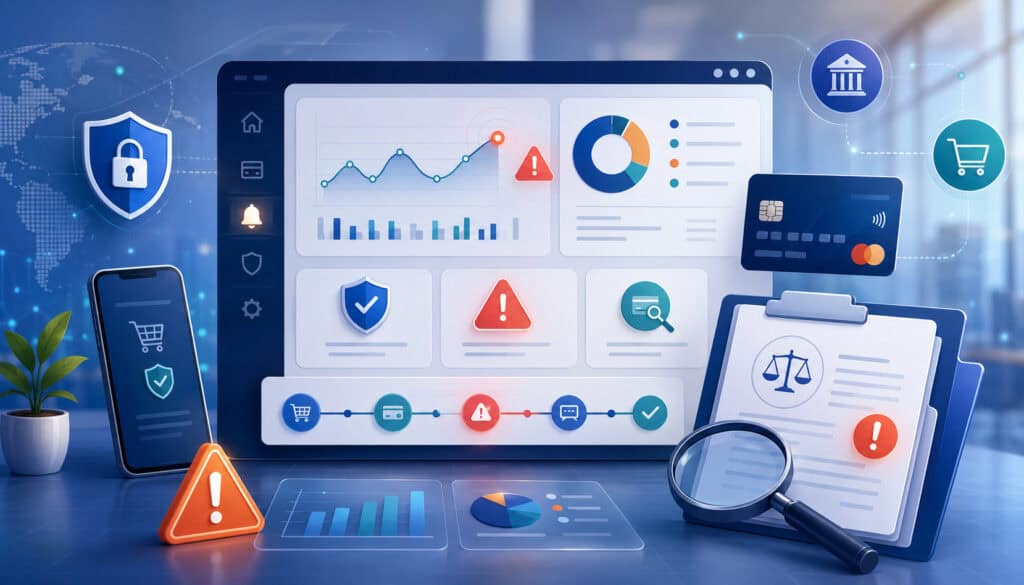
Chargeback alerts are notifications that help merchants respond to dispute activity sooner. In travel, timing matters because evidence can be scattered across booking systems, supplier emails, customer service records, and payment platforms. A delayed response can weaken the business’s ability to challenge a dispute, even when the transaction was legitimate.
Chargeback Alerts
Travel chargeback alerts may come from a processor, gateway, dispute platform, or alert network. They can notify the business when a cardholder has contacted the issuer, when a retrieval request appears, when a formal chargeback is filed, or when a response deadline is approaching. The exact alert type depends on the tool and payment setup.
For a travel agency, an alert might identify a disputed deposit for a nonrefundable package. For a tour operator, it might flag a service-not-received claim tied to a weather cancellation. For a transportation provider, it might highlight a duplicate billing complaint after a customer booked multiple routes.
Alerts are most useful when they trigger a workflow. The team should know who reviews the case, who contacts the customer, who checks the refund policy, who gathers evidence, and who submits the response. Without a defined workflow, alerts can become noise.
Early Dispute Warnings
Early dispute warnings can sometimes give a business an opportunity to act before a chargeback becomes final. Depending on the payment ecosystem, the merchant may be able to issue a refund, clarify the charge, confirm service delivery, or prepare a response.
These tools can be especially useful for travel businesses because many disputes begin as confusion, not intentional fraud.
For example, a traveler may not recognize the billing descriptor after booking through a consultant. A customer may dispute a final payment because they forgot the payment schedule. A vacation planner may resolve the issue by sending the signed authorization, itinerary confirmation, and payment breakdown before the customer escalates further.
Early warnings are not available for every transaction or dispute type. They also require judgment. Refunding every alert may reduce chargebacks but harm revenue and train customers to bypass normal support channels. Fighting every alert may preserve revenue in some cases but increase dispute costs in others.
Travel Chargeback Tracking
Travel chargeback tracking should include more than the dispute status. It should document the full payment story: booking date, travel date, deposit amount, final payment due date, cancellation deadline, refund request date, customer communication, supplier response, service status, and evidence submitted.
This tracking helps businesses learn from each dispute. If many cancellation disputes involve the same destination package, the policy may not be visible enough. If refund disputes increase after supplier delays, customer communication may need improvement. If unauthorized claims cluster around high-value last-minute bookings, fraud screening rules may need tightening.
Fraud Monitoring and Travel Payment Risk Detection
Fraud monitoring is a critical part of travel payment risk monitoring because travel products are attractive to fraudsters. Many travel purchases are high value, easy to resell, time-sensitive, and completed without the cardholder physically present. Fraud can involve stolen cards, account takeover, fake traveler identities, card testing, refund abuse, or friendly fraud.
Fraud Screening Tools
Fraud screening tools review transaction signals to determine whether a payment should be approved, declined, challenged, or manually reviewed.
These signals may include IP address, device information, billing address, card verification results, booking behavior, transaction amount, customer history, email risk, phone number risk, velocity checks, and mismatches between passenger details and payment details.
For travel businesses, fraud screening should be tuned carefully. If rules are too loose, unauthorized transaction claims may increase. If rules are too strict, legitimate customers may be blocked during urgent travel planning. The goal is balanced risk detection that protects revenue without creating unnecessary checkout friction.
Strong fraud screening is especially important for high-ticket bookings, last-minute travel, cross-border payments, multi-currency payments, one-way transportation, luxury packages, and transactions where the payer is not the traveler. These cases are not automatically fraudulent, but they often deserve added review.
Friendly Fraud Detection
Friendly fraud occurs when a customer disputes a legitimate charge. In travel, this may happen after a completed trip, after missing a cancellation deadline, after using a nonrefundable booking, or after receiving part of a service but wanting a broader refund.
Sometimes it is intentional. Other times, the customer may simply misunderstand the policy or forget the purchase.
Chargeback monitoring software can help detect friendly fraud patterns by comparing dispute claims with booking records.
If a customer claims the service was not received, the business can check whether tickets were issued, the customer checked in, the itinerary was delivered, or the tour attendance record shows participation.
If a customer claims an unauthorized payment, the business can review signed authorization, account login activity, email confirmation, and customer communication.
Friendly fraud detection depends heavily on documentation. The strongest monitoring tool cannot create evidence that was never captured. Travel businesses should collect customer consent, policy acceptance, and booking confirmation records at the time of sale.
Unauthorized Transaction Monitoring
Unauthorized transaction claims are common in card-not-present environments. A customer may say they did not authorize the booking, or the true cardholder may report that the card was used without permission. These disputes are especially challenging when the service was delivered to someone other than the cardholder.
Monitoring tools can help by flagging risk indicators before fulfillment. Examples include mismatched billing and traveler names, unusual device behavior, multiple failed payment attempts, high order value, short booking-to-departure windows, and repeated use of different cards.
The business can then request additional verification, use stronger customer authentication, or hold fulfillment until risk is reviewed.
Payment security also matters. Businesses that accept cards should understand PCI compliance responsibilities and protect cardholder data. The PCI Security Standards Council provides resources for safe payment handling and standards that help reduce exposure to payment data compromise.
Using Chargeback Data to Improve Policies and Communication
Chargeback data is most valuable when it leads to operational improvement. A dashboard that shows disputes is useful, but a business gets more value when it uses that data to reduce future confusion, prevent avoidable claims, and improve customer communication.
Travel disputes often reveal expectation gaps. A customer may not understand that a deposit is nonrefundable. They may believe travel insurance covers a situation it does not cover. They may expect a refund from the agency when the supplier controls the funds.
They may not realize that cancellation deadlines are based on supplier rules, local time, or fare terms. These misunderstandings are preventable when policies are clear, repeated, and acknowledged.
Travel chargeback monitoring can show which policies create the most disputes. If cancellation disputes are concentrated in custom vacation packages, the policy presentation may need improvement.
If refund disputes increase after partial supplier refunds, the refund communication process may need clearer timelines. If customers dispute final payments, payment schedule reminders may need to be stronger.
Customer communication records are also essential. A travel business should document emails, messages, call summaries, itinerary approvals, payment reminders, refund status updates, cancellation requests, supplier responses, and customer acknowledgments.
These records support representment and help customer service teams resolve issues before they become disputes.
Billing descriptor monitoring is another practical area. A customer may book with one brand, receive service from another supplier, and see a third name on the card statement.
If the descriptor does not match what the customer recognizes, the customer may dispute the charge as unauthorized. Clear confirmation emails should tell customers what name will appear on their card statement.
Businesses can also use dispute trends to improve training. Agents should know how to explain deposits, final payments, cancellation deadlines, supplier restrictions, travel documentation, and refund timelines. Staff should avoid vague promises and record customer consent consistently.
For broader travel payment operations, businesses can also review resources on payment processing for travel businesses to better understand how payment acceptance, fraud risk, and dispute management fit together.
How Monitoring Tools Support Representment and Documentation
Representment is the process of responding to a chargeback with evidence that supports the merchant’s position. For travel businesses, representment often depends on organized records. A business may have a strong case, but if the evidence is incomplete, late, unclear, or mismatched to the reason code, the outcome may still be unfavorable.
Chargeback management software can help by turning representment into a structured workflow. Instead of starting from scratch each time, the tool may guide staff through evidence requirements based on dispute type.
For example, a service-not-received claim may require itinerary documentation, supplier confirmation, proof of availability, customer communication, and delivery records. A refund dispute may require the refund policy, cancellation timeline, refund status, and proof that the customer agreed to the terms.
Representment Evidence
Useful representment evidence for travel businesses may include:
- Booking confirmation records
- Customer name, contact details, and itinerary details
- Signed authorization or accepted terms
- Cancellation policy and refund policy shown at purchase
- Payment schedule and invoice records
- Proof of deposit and final payment consent
- Customer emails, messages, or call notes
- Supplier confirmations and ticketing records
- Proof of service delivery or availability
- No-show documentation
- Refund request and refund decision records
- Billing descriptor disclosure
- Fraud screening results
- Device, IP, and authentication records where appropriate
Evidence should directly address the reason code. If the dispute is “credit not processed,” proof of service delivery may not be enough.
The response should explain whether a refund was due, whether it was issued, when it was processed, and what policy applies. If the dispute is “unauthorized transaction,” the business should focus on authorization, authentication, customer identity, and prior customer interaction.
Booking Confirmation Records
Booking confirmation records are among the most important documents in travel disputes. A confirmation should show what was purchased, who purchased it, who is traveling, the travel dates, the price, the payment terms, and the policies that apply. Ideally, it should also show that the customer accepted the terms before payment.
For tour operators and destination experience providers, confirmation records should include meeting points, service dates, included items, excluded items, cancellation windows, weather policies, and no-show rules.
For vacation planners and consultants, confirmations should clarify whether the business is acting as an advisor, package seller, booking intermediary, or merchant of record.
Customer Communication Records
Customer communication records can make or break a dispute response. If a customer asked to cancel after the deadline and the business clearly explained the policy, that record matters.
If a traveler acknowledged a schedule change and accepted the revised itinerary, that record matters. If a refund was pending supplier approval and the customer was updated, that record matters.
Monitoring tools that store communication alongside dispute records reduce the chance of missing evidence. They also help managers review whether customer service is helping or hurting chargeback outcomes.
Chargeback Ratio Tracking, Reserves, and Merchant Account Stability
Chargeback ratio tracking is one of the most important functions of travel merchant chargeback monitoring. A chargeback ratio generally compares chargeback activity with transaction volume over a defined period.
The exact calculation and thresholds can vary by payment processor, card network, and monitoring program. Businesses should review their processor guidance rather than assuming one universal number applies.
A rising chargeback ratio can create problems even when total dispute volume seems small. For example, a boutique travel consultant with fewer monthly transactions may have a higher ratio after only a handful of disputes. A larger online booking platform may absorb more disputes numerically but still face risk if chargebacks grow faster than sales.
Merchant account stability depends on the processor’s view of risk. Travel businesses are already reviewed carefully because of advance bookings, delayed fulfillment, high-ticket transactions, and refund complexity.
If chargeback activity increases, the processor may request more documentation, increase reserves, hold settlements, review underwriting information, or adjust processing terms.
A rolling reserve is a portion of processed funds held for a period to cover potential chargebacks, refunds, or losses. A settlement hold delays funds before deposit. These risk controls can affect cash flow, especially for travel businesses that must pay suppliers before the trip occurs.
Chargeback monitoring tools help decision-makers see warning signs earlier and manage dispute activity before it leads to stricter account controls.
Merchant statement review is also important. Chargeback fees, retrieval fees, reserve activity, refund volume, batch deposits, and processing costs may appear across different statement sections.
A business that only reviews top-line sales may miss rising dispute costs. Chargeback tracking tools can support payment reconciliation by matching dispute activity with gateway reports, processor statements, booking records, and accounting entries.
Travel businesses should also watch seasonal patterns. Peak booking seasons may create high transaction volume, while dispute activity may occur closer to travel dates. This timing mismatch can distort how risk appears. Monitoring should account for booking date, payment date, travel date, cancellation date, and dispute date.
For a deeper look at cost drivers, businesses can review information on merchant service fees for travel agencies and how chargebacks can affect the overall cost of accepting payments.
Choosing the Right Chargeback Monitoring Tools for a Travel Business
Choosing the right chargeback monitoring tools requires a clear understanding of your business model. A destination management company with custom group travel has different needs from an online booking platform, a local tour operator, a transportation provider, or an independent travel consultant. The right tool should match your transaction flow, booking complexity, staff capacity, and risk profile.
Start by mapping your payment lifecycle. Identify how customers pay, when they pay, how deposits are handled, when final payments are collected, who controls refunds, how supplier confirmations are stored, and where customer consent is documented. This map will reveal what your monitoring tool needs to connect.
Next, evaluate integration requirements. Does the tool connect with your payment gateway, processor, booking platform, fraud solution, customer support system, or accounting software?
Manual tracking may work for very small businesses, but as dispute volume grows, manual workflows become risky. Missed deadlines, lost evidence, and inconsistent responses can increase losses.
Look at alert quality. A tool that sends alerts without enough context may not save much time. Useful alerts should include transaction information, dispute type, deadline, reason code, booking reference, amount, and recommended next steps.
For travel, alerts should also help identify whether the dispute involves a deposit, final payment, cancellation penalty, supplier issue, or service complaint.
Review reporting depth. Travel decision-makers need more than a list of cases. They need patterns.
Can the tool show disputes by booking channel, supplier, agent, destination, payment method, card-not-present transaction type, customer location, or policy category? Can it separate true fraud from friendly fraud? Can it show refund disputes versus cancellation disputes?
Consider user roles. A finance manager may need reconciliation reports. A customer service lead may need communication history. A risk manager may need chargeback ratio tracking. A booking agent may need policy documentation. The tool should support the people who actually handle disputes.
Finally, consider support and flexibility. Dispute requirements change across processors, networks, transaction types, and business models. A tool should help your team adapt without locking every process into a generic workflow.
Best Practices for Reducing Travel Chargebacks Over Time
Chargeback prevention for travel businesses works best when monitoring, communication, fraud prevention, and documentation operate together. No tool can eliminate all disputes, but a disciplined process can reduce avoidable chargebacks and improve response quality.
Start with transparent policies. Cancellation policy, refund policy, deposit terms, final payment terms, supplier restrictions, no-show rules, and change fees should be visible before payment. Avoid hiding important terms only in long confirmations after the transaction. Customers should understand what they are agreeing to before they authorize payment.
Use strong booking confirmations. Every confirmation should summarize the purchase, payment schedule, travel dates, included services, excluded services, cancellation terms, refund rules, and billing descriptor. For higher-risk bookings, request signed authorization or a clear acceptance record.
Improve customer communication. Send reminders before final payments. Notify customers quickly about itinerary changes. Confirm cancellation requests in writing. Provide refund status updates. Explain when supplier approval is required. Many chargebacks happen because customers feel ignored or uncertain.
Use fraud prevention rules. Screen for suspicious card-not-present transactions, especially high-ticket, last-minute, cross-border, and multi-currency bookings. Review mismatches between cardholder, payer, traveler, device, IP address, and billing details. Use customer authentication where appropriate.
Monitor billing descriptors. Tell customers what name will appear on their card statement. If the descriptor differs from the brand used in booking, mention it in confirmation emails and receipts.
Review chargeback reports regularly. Look at reason codes, agents, suppliers, destinations, booking channels, refund timelines, and customer support records. Use the findings to update policies and training.
Create a dispute response calendar. Chargeback timelines can be strict, and deadlines may vary. Assign tasks immediately when an alert arrives. Build a workflow for evidence collection, review, approval, and submission.
A practical checklist for evaluating your current process:
- Do customers see cancellation and refund terms before payment?
- Are deposits and final payments clearly separated on invoices?
- Does each booking include accepted terms and conditions?
- Are billing descriptors disclosed in receipts and confirmations?
- Are refund requests logged with dates and decisions?
- Are customer calls and emails stored in one accessible place?
- Are fraud rules adjusted for high-ticket and last-minute bookings?
- Are chargeback reason codes reviewed every month?
- Are merchant statements reconciled with gateway reports?
- Is someone responsible for every dispute deadline?
- Are lost disputes reviewed for prevention lessons?
- Are customer support staff trained on policy explanations?
- Are cross-border and multi-currency payments monitored separately?
- Are supplier confirmations stored in a dispute-ready format?
- Are chargeback alerts routed to the right team immediately?
Travel businesses that sell online should also understand how payment gateway design affects fraud, refunds, and disputes. Resources on secure payment processing for online travel sellers can help connect gateway setup with risk management.
Practical Examples for Different Travel Business Models
Chargeback monitoring tools for travel businesses are most useful when they are adapted to the business model. A single strategy will not fit every travel merchant because payment flows, customer expectations, supplier relationships, and documentation needs vary widely.
A travel agency that sells package vacations may need strong monitoring around deposits, final payments, cancellation deadlines, and supplier-controlled refunds.
If customers dispute nonrefundable deposits, the agency should track whether the policy was shown before payment and whether the customer acknowledged it. If final payments are disputed, reminders and signed authorizations may need improvement.
A tour operator may need to monitor service-not-received disputes, weather-related cancellations, no-shows, and itinerary changes. Documentation should show tour availability, customer instructions, attendance records, and communication about rescheduling or cancellation options.
A vacation planner or travel consultant may need to distinguish planning fees from supplier payments. Customers sometimes dispute consulting fees if they believe the fee was part of the trip cost or refundable. Clear invoices, service agreements, and billing descriptors can reduce confusion.
A destination management company may handle complex group programs with multiple vendors. Chargeback monitoring should track partial services, group changes, supplier confirmations, and client approvals.
For group travel, communication records are especially important because decisions may be made by one organizer but paid by another person or entity.
An online booking platform may need more advanced travel payment dispute tools because volume is higher and transactions are often card-not-present.
Monitoring should connect fraud screening, customer authentication, payment gateway reporting, refund handling, and chargeback alerts. For international bookings, cross-border payment disputes and multi-currency transaction monitoring should be reviewed separately.
A transportation provider may face disputes involving missed departures, schedule changes, duplicate tickets, no-show policies, or unauthorized claims. Monitoring tools should help verify whether the customer received booking confirmation, used the service, requested cancellation, or booked multiple transactions by mistake.
Hospitality-related businesses may need to monitor no-show fees, late cancellations, service complaints, resort or destination fees, duplicate billing, and refund delays. Documentation should connect the cardholder, reservation, policy disclosure, stay record, and customer communications.
What are chargeback monitoring tools for travel businesses?
Chargeback monitoring tools for travel businesses are systems that help track payment disputes, chargeback alerts, reason codes, evidence, deadlines, and dispute outcomes.
They are designed to give travel merchants better visibility into why customers dispute booking payments, deposits, final payments, cancellation fees, or service charges.
These tools may connect to a payment processor, payment gateway, booking platform, fraud system, or customer support records. Their main purpose is to help a business detect problems earlier, organize documentation, respond on time, and identify patterns that can reduce future disputes.
They do not guarantee that every chargeback will be avoided or won, but they can support a more organized risk management process.
How does travel chargeback monitoring work?
Travel chargeback monitoring works by collecting dispute information and connecting it with transaction and booking records. When a dispute, retrieval request, or alert appears, the system may create a case with the amount, payment date, reason code, response deadline, customer details, and booking reference.
Staff can then review the cancellation policy, refund status, customer communication, fraud screening data, and proof of service. Over time, the tool can show trends by booking source, agent, destination, supplier, payment method, and dispute category.
This helps a travel business understand whether chargebacks are caused by fraud, unclear policies, refund delays, billing descriptor confusion, or documentation gaps.
Can chargeback monitoring software prevent all disputes?
No. Chargeback monitoring software cannot prevent all disputes, and it cannot guarantee that every representment case will be successful. Customers may still dispute charges because of fraud, dissatisfaction, misunderstanding, supplier problems, cancellation issues, or personal circumstances.
Card issuers and networks also have their own rules and decision processes. What chargeback monitoring software can do is help detect dispute activity earlier, improve documentation, track reason codes, alert teams to deadlines, and reveal patterns that can reduce avoidable disputes.
It is best viewed as one part of a broader strategy that includes clear policies, fraud screening, customer authentication, accurate billing, fast communication, and organized evidence.
Why do travel businesses need chargeback alerts?
Travel businesses need chargeback alerts because payment disputes are time-sensitive. A business may only have a limited window to review the case, gather evidence, decide whether to accept or challenge the dispute, and submit a response.
In travel, that evidence may be spread across booking confirmations, supplier emails, customer messages, invoices, policy acknowledgments, and payment records. Alerts help teams act before deadlines are missed.
They can also help identify disputes that may be resolved through a refund, clarification, or customer outreach. For businesses with advance bookings and high-ticket transactions, early visibility can protect both cash flow and merchant account stability.
What features should travel businesses look for in chargeback management tools?
Travel businesses should look for chargeback management tools that include alerts, dispute dashboards, reason code tracking, documentation storage, representment support, refund tracking, fraud monitoring, chargeback ratio reporting, and payment reconciliation support.
The tool should ideally connect payment data with booking records so staff can understand what the disputed transaction represents. Travel-specific needs include deposit tracking, final payment tracking, cancellation dispute tracking, service-not-received evidence, billing descriptor monitoring, cross-border payment review, and multi-currency transaction reporting.
A useful tool should also help identify patterns, such as repeated refund confusion, high-risk booking channels, or recurring disputes tied to a specific supplier or policy.
How can monitoring tools help with chargeback representment?
Monitoring tools can help with chargeback representment by organizing the evidence needed to respond to a dispute. They may provide case workflows, evidence checklists, reason code guidance, document storage, deadline reminders, and outcome tracking.
For travel businesses, this can include booking confirmations, signed authorization, cancellation policy acceptance, refund policy disclosure, itinerary records, supplier confirmations, customer communication, proof of service, and fraud screening results.
The tool helps staff match the evidence to the dispute reason instead of submitting unrelated documents. This improves response quality and saves time, although the final outcome still depends on card network rules, issuer review, evidence strength, and case details.
How often should travel businesses review chargeback reports?
Travel businesses should review chargeback reports at least monthly, and higher-risk or higher-volume businesses may benefit from weekly reviews.
During peak booking periods, major travel disruptions, seasonal cancellation windows, or periods of increased refund activity, more frequent review may be necessary.
Reports should include chargeback ratio, dispute volume, disputed dollars, reason codes, win and loss outcomes, refund-related disputes, fraud-related disputes, and cases by booking channel or supplier.
The goal is not only to respond to open cases but also to identify what is causing disputes. Regular review helps businesses update policies, train staff, improve customer communication, and adjust fraud prevention rules.
What can travel businesses do to reduce chargebacks over time?
Travel businesses can reduce chargebacks over time by combining monitoring tools with strong operational practices.
They should present cancellation and refund policies before payment, send detailed booking confirmations, disclose billing descriptors, document customer consent, use fraud screening, authenticate risky transactions, track refund requests, and respond quickly to customer concerns.
They should also review chargeback reason codes regularly and use the findings to improve policies, staff training, and supplier communication.
For example, if refund disputes are common, refund status updates may need improvement. If unauthorized claims increase, fraud rules may need tightening. Long-term reduction comes from consistent monitoring, clear communication, and better documentation.
Conclusion
Chargeback monitoring tools for travel businesses are not a magic fix, but they can make dispute management far more organized, informed, and proactive.
Travel payments involve advance bookings, delayed fulfillment, card-not-present transactions, deposits, final payments, cancellations, refunds, supplier rules, cross-border customers, and high customer expectations. Without a structured monitoring process, disputes can quickly become expensive and difficult to manage.
The best chargeback monitoring approach combines software with strong business practices. A tool can alert your team to new disputes, track reason codes, organize evidence, monitor chargeback ratios, and support representment.
Your operations must still provide clear policies, accurate billing, responsive customer service, fraud screening, customer authentication, and reliable documentation.
For travel agencies, tour operators, vacation planners, destination management companies, online booking sellers, transportation providers, travel consultants, and hospitality-related businesses, the goal is not simply to “fight chargebacks.”
The better goal is to understand why disputes happen, prevent the avoidable ones, respond effectively to the valid ones, and use chargeback data to improve the customer journey.
A well-managed travel business accepts that some disputes are part of payment processing. It also refuses to treat chargebacks as random events.
With the right chargeback monitoring tools, clear workflows, and disciplined documentation, travel merchants can protect cash flow, reduce avoidable losses, improve dispute response time, and support long-term merchant account stability.