
By Garry Well June 7, 2026
Travel industry payment challenges are different from the payment issues faced by many other businesses. A travel customer may pay weeks or months before a trip happens. A booking may involve airfare, lodging, tours, transportation, insurance, destination services, taxes, service fees, and supplier rules that are not always controlled by the seller collecting the payment.
That gap between payment and service delivery creates risk. A traveler may cancel, request a refund, dispute a charge, change an itinerary, miss a deadline, or claim the service was not delivered as expected.
At the same time, travel businesses often handle high-ticket transactions, international travelers, card-not-present transactions, multi-currency payments, and complex supplier obligations.
For travel agencies, tour operators, booking platforms, vacation planners, destination management companies, travel consultants, transportation providers, hospitality-related businesses, and online travel sellers, understanding travel payment issues is not just a back-office concern.
It affects customer trust, approval rates, merchant account stability, cash flow, refund handling, dispute management, and long-term operational planning.
This guide explains the most common payment challenges in the travel industry, why they happen, and how travel businesses can manage them with clearer policies, stronger documentation, better payment gateway settings, fraud prevention tools, and disciplined risk management.
This article is for general educational purposes. Payment processing requirements can vary by provider, business model, risk profile, transaction mix, customer location, underwriting policies, and merchant agreement terms.
Why Payment Challenges Are Common in the Travel Industry
Travel is a unique payment category because the customer often pays now for something that happens later. A traveler may book a cruise, tour package, lodging stay, destination activity, airport transfer, or custom itinerary long before the actual service date. That delay creates uncertainty for the traveler, the merchant, the payment processor, and the acquiring bank.
The most common travel industry payment challenges usually come from several overlapping risk factors. These include advance bookings, delayed fulfillment, high-ticket transactions, refund exposure, cancellations, international customers, cross-border payments, and fraud risk.
A business that sells local day tours may have a different risk profile than a booking platform selling bundled travel packages, but both can face payment disputes if expectations are not clear.
Travel payment processing challenges also increase when multiple parties are involved. A travel consultant may collect payment from a client, pay a supplier, coordinate lodging, arrange transportation, and manage itinerary changes. If the supplier changes its policy or the traveler cancels after payment has already been forwarded, the travel business may be left managing customer frustration and cash flow pressure.
Payment processors and acquiring banks review travel businesses carefully because delayed service delivery creates future liability. If a merchant collects large amounts of money today but cannot deliver services later, unresolved refunds and travel chargebacks can create losses.
That is why some travel businesses experience stricter underwriting, higher scrutiny, rolling reserves, funding holds, or periodic risk reviews.
Customer expectations also play a major role. Travelers often view a trip as a major purchase, not a routine transaction.
When plans change because of weather, illness, supplier disruption, scheduling conflicts, or misunderstanding, customers may expect flexibility even when the original cancellation policy is restrictive. If refund terms were not clearly disclosed, that disagreement can quickly become a payment dispute.
How Travel Industry Payment Processing Works
Travel industry payment processing is the system that allows a travel business to accept and settle customer payments. It usually involves the customer, merchant, payment gateway, payment processor, card network, issuing bank, acquiring bank, and merchant account. Each party plays a role in authorizing, approving, settling, or reviewing the transaction.
When a traveler pays online, the payment gateway securely captures the payment details and sends the transaction to the processor. The processor routes the transaction through the card network to the customer’s issuing bank. The issuer approves or declines the transaction based on available funds, fraud signals, card status, authentication results, and other risk factors.
If approved, the transaction is authorized. Later, the transaction is captured and submitted for settlement. Settlement is when funds move through the payment system and eventually reach the travel business’s bank account, minus applicable processing fees, gateway fees, chargeback fees, reserve requirements, or other deductions allowed under the merchant agreement.
Travel agency payment processing may involve different payment methods depending on the business model. Some companies accept credit card processing and debit card payments.
Others may also accept ACH payments, online payments through a booking engine, installment payments, deposits, final payments, or pay-by-link transactions. Online travel payment processing often relies heavily on card-not-present transactions, which carry more fraud and dispute risk than in-person payments.
A travel merchant account is not just a place where money lands. It is part of a risk relationship. The acquiring bank and payment processor evaluate whether the travel business can safely accept payments, deliver services, manage refunds, prevent fraud, and handle disputes.
This evaluation may include underwriting, transaction monitoring, processing history, supplier relationships, cancellation policies, refund policies, chargeback ratios, average ticket size, and booking windows.
Travel payment gateway setup is also important. A gateway may need to support deposits, delayed captures, recurring final payments, multi-currency payments, fraud screening, customer authentication, booking engine integration, and payment reconciliation. When the gateway does not match the booking workflow, teams may rely on manual workarounds that increase errors.
For a deeper overview of travel business payment processing fundamentals, this guide on payment processing for travel businesses explains how travel merchants typically collect booking payments and manage related processing risks.
Advance Bookings, Delayed Fulfillment, and Payment Risk
Advance bookings are one of the biggest reasons payment challenges in travel industry operations are so common. A customer may pay a deposit today for a tour that occurs months later.
A vacation planner may collect final payment before supplier deadlines. A destination management company may coordinate group travel long before arrival. All of these scenarios create delayed fulfillment.
Delayed fulfillment means the payment is received before the service is delivered. That matters because payment processors and acquiring banks look at future delivery obligations as potential financial exposure.
If many customers cancel, dispute charges, or request refunds before travel occurs, the business may need to return funds that have already been spent on suppliers, payroll, marketing, or operations.
Advance deposits and final payments
Many travel businesses use deposits to secure reservations. Deposits can help protect the business from no-shows and last-minute cancellations, but they must be handled carefully. Customers need to understand whether a deposit is refundable, partially refundable, transferable, or non-refundable.
Final payments create another layer of risk. A traveler may pay an initial deposit, then pay the remaining balance before a supplier deadline. If the final payment is missed, the booking may be canceled. If the traveler believes they were not reminded properly, they may blame the travel business.
Clear communication is essential. Booking confirmations should explain:
- Deposit amount and due date
- Final payment due date
- Accepted payment methods
- Cancellation policy
- Refund policy
- Supplier deadlines
- Change fees or rebooking rules
- What happens if payment is late
For custom itinerary payments, the business should also clarify whether planning fees are separate from supplier costs. Travel consultants and vacation planners often invest time before the trip occurs, so the customer should understand which fees cover professional services and which funds are passed to suppliers.
Delayed service delivery
Delayed service delivery increases travel payment risks because the customer’s expectations can change between booking and travel. A traveler may forget what was included, misunderstand an itinerary, or assume that certain changes are allowed. If the business does not maintain strong documentation, a later dispute can be hard to defend.
This is especially important for tour payments, lodging payments, transportation payments, and bundled travel packages. A customer may dispute the entire transaction even if only one part of the trip was affected.
For example, if an airport transfer was late but the hotel and tour were delivered, the business needs records showing what was included, what was delivered, and how any service issue was resolved.
Delayed fulfillment also affects travel business cash flow. A business may receive payment now but need to keep enough liquidity available for refunds, supplier adjustments, or chargebacks. If funds are spent too quickly, the company may struggle when cancellations increase.
Chargebacks, Cancellations, and Refund Management
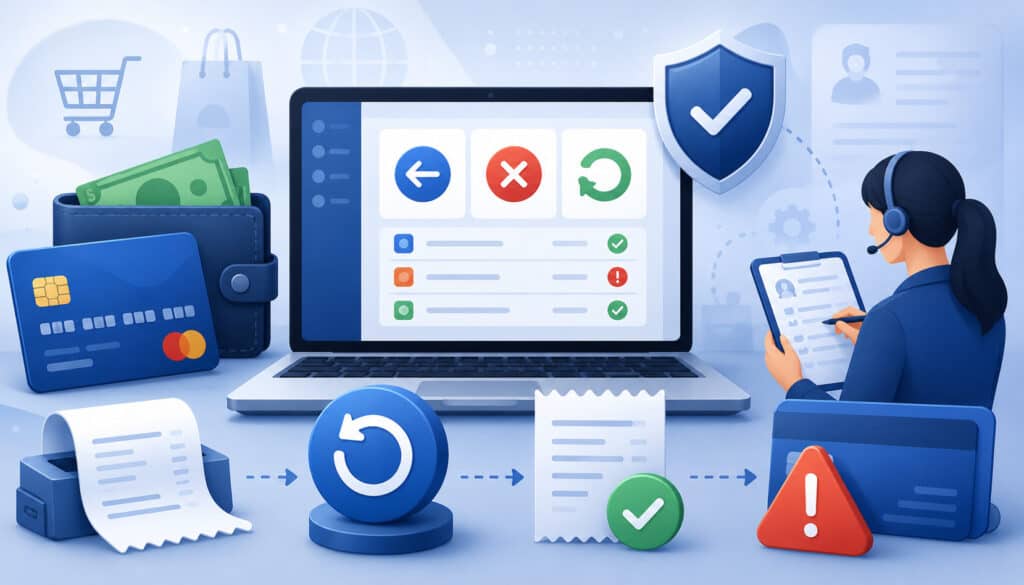
Travel chargebacks are among the most difficult travel payment disputes because they often involve emotion, timing, documentation, and unclear expectations.
A chargeback occurs when a cardholder disputes a transaction through their card issuer. The issuer reviews the dispute and may temporarily reverse the transaction while the merchant has an opportunity to respond.
Travel payment disputes commonly involve claims such as services not received, unauthorized transaction, duplicate billing, refund not processed, cancellation terms not disclosed, or service not as described. Even when the business believes it acted correctly, the dispute outcome depends heavily on documentation.
Chargebacks can affect cash flow and account stability. A merchant may lose the original sale amount, pay a chargeback fee, spend time gathering evidence, and face higher scrutiny if chargeback ratios increase. Excessive disputes can lead to processor risk reviews, higher costs, reserve requirements, or account restrictions.
Travel chargebacks
Travel chargebacks often happen because customers and businesses interpret events differently. A traveler may believe a canceled trip should result in a full refund.
The business may believe the customer agreed to non-refundable terms. The supplier may have already been paid. The processor and card issuer will not decide based on frustration; they review evidence.
Strong chargeback documentation can include:
- Signed or accepted terms and conditions
- Timestamped cancellation policy acceptance
- Booking confirmation emails
- Itinerary details
- Proof of service delivery
- Customer communications
- Refund records
- Supplier policy disclosures
- Device, IP, and billing information
- Authentication results
- Receipts and payment confirmations
A helpful resource on travel agency chargeback prevention explains why clear cancellation policies and evidence trails matter in travel disputes.
Refund policy clarity
Travel refund management becomes difficult when policies are vague. Customers should know exactly when refunds are available, how long processing may take, what fees may be retained, and whether supplier rules affect refund eligibility.
A refund policy should be visible before payment and repeated in booking confirmations. It should explain the difference between business service fees, supplier charges, deposits, cancellation fees, and optional add-ons. If the customer pays for a package, clarify whether each component follows the same refund rules or different supplier rules.
Refund timelines should also be realistic. A travel business may approve a refund immediately, but banks and payment networks may take additional time to post funds back to the customer’s account. Setting expectations can prevent unnecessary support requests and disputes.
Cancellation policy disputes
Cancellation policy disputes are common when customers feel surprised. Even a valid policy can create problems if it is hidden, overly complex, or mentioned only after payment. The best policies are easy to find, consistent across checkout and confirmation pages, and specific enough to support dispute management.
For example, “cancellations may be subject to fees” is less useful than a policy that explains the exact timing, amount, and conditions. If a tour becomes non-refundable after a supplier deadline, say so.
If changes are allowed only when inventory is available, say so. If weather-related cancellations are handled differently from customer-initiated cancellations, say so.
Fraud Risks in Travel Payment Processing

Fraud is a major part of travel payment processing challenges because many travel transactions happen online, without the card physically present.
Fraudsters may target travel businesses because trips, tickets, lodging, and transportation can have high resale value or immediate utility. Digital booking flows also make it easier for bad actors to test stolen cards, use fake identities, or exploit weak authentication.
Travel fraud prevention requires balance. Too little screening can increase fraud losses and chargebacks. Too much friction can decline legitimate travelers, especially international customers, corporate travelers, group organizers, or customers booking from a different location than their billing address.
Card-not-present fraud
Card-not-present transactions are common in online travel payment processing. The customer enters payment details through a website, booking engine, mobile app, invoice link, or virtual terminal. Because the card is not physically presented, the business must rely on digital fraud signals.
Useful fraud screening signals may include billing address match, card verification value, IP location, device fingerprint, email reputation, phone verification, velocity checks, booking behavior, passenger details, and customer history. For higher-risk transactions, customer authentication may be appropriate.
Travel businesses should pay special attention to mismatches. A billing address in one region, IP address in another, last-minute booking, high-ticket purchase, new email address, and different traveler name may not automatically mean fraud, but the combination deserves review.
Payment gateway settings can help flag suspicious activity. However, rules should be tuned to the business model. A destination management company serving international travelers will naturally see more cross-border patterns than a local tour operator serving mostly nearby customers.
Friendly fraud
Friendly fraud happens when a customer disputes a legitimate transaction. Sometimes the customer does not recognize the billing descriptor. Sometimes they forget the booking details. In other cases, they may be unhappy with cancellation terms and use the dispute process instead of working with the business.
Friendly fraud is difficult because the original transaction may have been authorized by the actual cardholder. The defense depends on communication and documentation. A clear billing descriptor, detailed receipt, recognizable business name, and fast customer support can reduce confusion.
Travel businesses should also document post-booking interactions. If a customer confirms an itinerary change, acknowledges a cancellation deadline, or agrees to a partial refund, keep that record. Those details may be valuable if a dispute occurs later.
The PCI Security Standards Council provides educational resources on protecting payment data and maintaining card security standards for organizations that handle cardholder information.
Cross-Border and Multi-Currency Payment Challenges

Cross-border payments are common in travel because customers often book away from home. A traveler may reserve a tour in another country, book lodging through an online platform, hire a destination experience provider, or pay a travel consultant for an international itinerary. These transactions can create added payment complexity.
Cross-border payment risk may include currency conversion confusion, higher decline rates, fraud screening mismatches, issuer restrictions, customer authentication requirements, tax considerations, and longer settlement timelines. International travelers may also use cards issued by banks with different fraud rules, making approval less predictable.
Cross-border payment risk
Cross-border payment risk increases when the customer, merchant, issuing bank, acquiring bank, and service location are in different places.
A card issuer may see an unfamiliar merchant category, unusual transaction amount, or foreign booking pattern and decline the payment. The customer may assume the travel business caused the decline, even when the issuing bank made the decision.
Travel businesses can reduce confusion by giving customers clear payment instructions. For higher-ticket international bookings, it may help to tell customers to confirm availability with their card issuer before payment. Booking confirmations should also show the business name, amount charged, currency, and contact information.
Cross-border transactions may carry higher processing costs. Depending on the merchant agreement, fees may include cross-border assessments, international card fees, currency conversion costs, or gateway charges. These costs should be understood before pricing packages.
Multi-currency payment processing
Multi-currency payments can improve the customer experience by allowing travelers to see familiar currency amounts. However, multi-currency payment processing also introduces reconciliation and settlement challenges. The currency displayed to the customer may differ from the settlement currency received by the merchant.
Currency conversion can also cause refund confusion. If a customer pays in one currency and receives a refund after exchange rates shift, the returned amount may not appear identical in the customer’s local account. The travel business should explain that issuing banks and currency conversion rules can affect the final posted amount.
Multi-currency support should be matched with strong reporting. Teams need to reconcile booking payments, processor deposits, refund activity, chargebacks, gateway fees, and supplier payments. Without clean reporting, finance teams may struggle to understand true margins.
Currency conversion fees
Currency conversion fees can surprise customers if they are not disclosed or if the customer’s card issuer applies additional charges. A travel business may not control the customer’s issuer fees, but it can reduce confusion by being transparent about the transaction currency and any known business-side fees.
For online booking sites, the checkout page should clearly show the currency being charged. If estimated conversions are displayed, label them carefully. Customers should not think they are paying a guaranteed converted amount if the final card statement may vary.
High-Ticket Transactions and Approval Issues
High-ticket transactions are common in travel. A family vacation package, group tour, luxury lodging stay, private transportation booking, destination wedding itinerary, or custom travel package can involve a large payment. High-ticket transactions can create approval challenges because issuing banks and processors view larger amounts as higher exposure.
A large transaction may be declined even when the customer has available credit. The issuer may suspect fraud, require additional authentication, or block the payment until the cardholder confirms it. From the customer’s perspective, this can feel frustrating. From the business’s perspective, it can delay bookings, create support work, and reduce conversion rates.
High-ticket travel purchases
High-ticket travel purchases deserve special handling. A travel business may need to offer deposits, scheduled payments, ACH payments, wire instructions, or split payment options. However, split payments should be managed carefully to avoid processing errors or duplicate billing confusion.
Payment processors may review average ticket size during underwriting. If a business is approved based on a certain transaction profile but later begins processing much larger payments, the processor may conduct a risk review. This is one reason travel business payment processing should be set up with accurate information from the start.
Businesses should keep supporting documentation for large bookings. This may include signed agreements, traveler details, itinerary breakdowns, supplier confirmations, payment schedules, customer authorization records, and refund terms. Large disputes are more expensive, so documentation matters.
Payment authorization declines
Payment authorization declines can happen for many reasons. Some are caused by insufficient funds or expired cards. Others are caused by issuer fraud rules, incorrect billing details, card restrictions, international transaction blocks, or authentication failure.
Travel teams should avoid repeatedly retrying declined payments without understanding the reason. Too many retries can trigger fraud controls or create customer frustration. Instead, support staff can ask the customer to verify billing details, contact the issuer, use another payment method, or complete authentication if required.
Gateway decline reporting can help identify patterns. If many declines involve international cards, authentication rules may need adjustment. If declines occur during final payment collection, reminder timing and saved payment token settings may need review.
Settlement Delays, Funding Holds, and Rolling Reserves
Settlement delays, funding holds, and rolling reserves are major travel merchant account challenges. They can affect cash flow, supplier payments, payroll planning, and refund readiness. These controls are not always signs that something is wrong; they are often risk management tools used by processors or acquiring banks.
Settlement timing refers to how long it takes approved card payments to reach the business bank account. Some merchants receive funds quickly, while others may experience longer timelines depending on provider policies, risk profile, processing history, transaction type, or review status.
Funding holds
A funding hold occurs when a processor temporarily delays the release of funds. This may happen because of unusual transaction activity, increased chargebacks, a sudden spike in volume, high-ticket transactions, incomplete documentation, suspected fraud, or a mismatch between approved and actual processing behavior.
For example, a tour operator normally processing small local bookings may suddenly process several large international group packages. The processor may pause funding while reviewing whether the transactions are legitimate and whether the business can deliver the services.
Funding holds can create operational stress, especially when supplier payments are due. Travel businesses can reduce the likelihood of surprises by maintaining accurate records and communicating major changes to their processor when appropriate.
Rolling reserves
A rolling reserve is a portion of processed funds held for a period before being released later, subject to the merchant agreement. Reserves are often used when a business has delayed fulfillment, higher chargeback risk, large average tickets, limited processing history, or seasonal volume spikes.
Rolling reserves can be frustrating, but they are designed to cover potential future refunds, chargebacks, or losses. A reserve account may also be required during underwriting or after a risk review. The percentage, duration, and release schedule can vary.
Businesses should review reserve terms before signing a merchant agreement. Important questions include:
- What percentage is held?
- How long are funds held?
- When are reserves released?
- What events can increase the reserve?
- Can reserve terms be reviewed after processing history improves?
- How are chargebacks and refunds deducted?
A useful comparison of low-risk and high-risk merchant accounts for tour operators explains how business model, fees, approval factors, and risk controls can affect tour operator payment setups.
Payment Gateway and Online Booking Integration Challenges
A payment gateway is more than a checkout tool. In travel, it often connects the booking engine, customer payment flow, fraud screening, authorization process, refund workflow, and reporting system. If the gateway and booking platform do not work well together, payment problems can multiply.
Online travel payment processing may involve deposits, final payments, add-ons, itinerary changes, partial refunds, canceled components, supplier adjustments, group bookings, and delayed captures. A generic checkout setup may not support these workflows smoothly.
Payment gateway compatibility
Payment gateway compatibility should be reviewed before committing to a booking platform or processor. The gateway should support the payment methods, currencies, fraud tools, reporting needs, and settlement workflows the business requires.
Compatibility questions include:
- Does the gateway integrate with the booking engine?
- Can it support deposits and final payments?
- Can it tokenize saved cards securely?
- Does it support partial refunds?
- Can staff void, capture, or refund transactions with proper permissions?
- Does it provide useful decline and dispute reporting?
- Does it support fraud screening and customer authentication?
- Can it handle multi-currency payments if needed?
Poor gateway configuration can lead to duplicate charges, missed final payments, manual reconciliation problems, and refund delays. Staff training is also important. A powerful gateway can still create risk if employees do not understand how to use it.
Booking engine integration
Booking engine integration should connect payment status with reservation status. If a customer pays a deposit, the booking system should record that deposit and show the remaining balance. If a refund is issued, the booking record should reflect it. If a payment fails, the system should trigger a workflow for customer communication.
When payment and booking records are disconnected, errors become more likely. A customer may receive a confirmation before payment is actually approved. A final payment may be collected but not applied to the reservation. A canceled booking may remain active in one system but refunded in another.
For online travel agencies and booking platforms, event-driven payment records are especially useful. Every booking modification, cancellation, refund, reissue, or support interaction should create a record that can be used for customer service and dispute documentation.
A detailed guide on secure payment processing for online travel agencies discusses how online travel sellers can connect payment security, fraud controls, refunds, and booking operations.
Compliance, PCI Security, and Customer Data Protection
Payment security is central to travel payment processing. Travel businesses may collect names, billing details, itinerary information, passport-related details, contact information, lodging preferences, transportation details, and payment data. Some of this information is sensitive, and mishandling it can damage customer trust.
PCI compliance applies to businesses that store, process, or transmit cardholder data. The PCI Security Standards Council develops and maintains payment security standards used across the card payment ecosystem.
PCI compliance
PCI compliance is not only a technical issue. It affects how staff collect payment information, how systems store card data, how customer records are protected, and how access is controlled. A travel consultant taking card numbers by email, for example, may create unnecessary security risk.
Travel businesses should avoid storing card numbers in spreadsheets, inboxes, printed forms, or general notes. Instead, they should use secure payment links, hosted checkout pages, tokenization, or gateway tools designed to reduce exposure to cardholder data.
Basic security practices include:
- Use secure payment gateway tools
- Limit employee access by role
- Avoid collecting card data through unsecured channels
- Use strong passwords and multi-factor authentication
- Keep systems updated
- Train staff on phishing and payment security
- Review user permissions regularly
- Maintain written payment handling procedures
The Federal Trade Commission provides business guidance on credit card payments and consumer protection topics that can help businesses understand broader payment responsibilities.
Customer authentication
Customer authentication helps confirm that the person making the payment is authorized to use the payment method. In travel, authentication is especially useful for high-ticket bookings, last-minute travel, unfamiliar customer patterns, cross-border transactions, and card-not-present purchases.
Authentication can include address verification, card security code checks, one-time passcodes, account login controls, identity verification, or risk-based cardholder authentication through supported payment tools. The goal is to reduce fraud without creating unnecessary friction for legitimate customers.
Some businesses use step-up authentication only when risk signals are present. This allows low-risk returning customers to book smoothly while adding verification for suspicious or high-value transactions.
Privacy policy and data handling
A privacy policy helps explain how customer information is collected, used, stored, and shared. Travel businesses often need to share details with suppliers, lodging providers, transportation companies, tour guides, or destination partners. Customers should understand how their information may be used to complete bookings.
Terms and conditions should also clarify payment authorization, cancellation rules, refund eligibility, customer responsibilities, documentation requirements, and dispute resolution procedures. These documents are not just legal formalities; they support customer communication and dispute management.
Common Travel Industry Payment Challenges and Practical Solutions
The following table summarizes common travel payment challenges, why they happen, the business risk they create, and practical ways to manage them.
| Payment Challenge | Why It Happens | Business Risk | Practical Solution |
| Advance bookings | Customer pays before travel occurs | Refund exposure and delayed fulfillment risk | Use clear deposit terms, confirmation emails, and cash flow reserves |
| Travel chargebacks | Customer disputes the payment through the issuer | Lost revenue, fees, and account scrutiny | Keep booking records, policy acceptance, service proof, and communication history |
| Cancellation disputes | Customer misunderstands refund rules | Poor customer experience and disputes | Display cancellation policy before payment and repeat it in confirmations |
| Card-not-present fraud | Online payment made without physical card | Fraud losses and unauthorized transaction disputes | Use fraud screening, authentication, velocity checks, and manual review for risky bookings |
| High-ticket transactions | Travel purchases often involve large amounts | Declines, holds, and larger dispute exposure | Verify customer details and maintain supporting documentation |
| Cross-border payments | Customer, merchant, and service location may differ | Declines, higher fees, and currency confusion | Show transaction currency clearly and explain payment expectations |
| Settlement delays | Processor reviews risk before releasing funds | Cash flow pressure | Plan supplier payments around net funding timelines |
| Rolling reserves | Processor holds a portion of funds for risk coverage | Reduced working capital | Review reserve terms and maintain healthy chargeback ratios |
| Gateway integration issues | Booking system and payment system do not sync | Manual errors and reconciliation problems | Test deposits, refunds, cancellations, and payment status updates |
| PCI security gaps | Card data handled through unsafe channels | Data exposure and compliance problems | Use secure payment tools, tokenization, access controls, and staff training |
This table is not a one-size-fits-all rulebook. Travel payment risks vary by business type, transaction size, booking window, refund policy, chargeback history, geographic markets, provider policies, and underwriting profile.
A transportation provider selling same-week shuttle bookings may have lower delayed fulfillment risk than a destination management company arranging a large group itinerary months in advance.
A travel consultant charging planning fees may face different disputes than an online platform selling lodging and activities. A tour operator with strict supplier deadlines may need more detailed cancellation disclosures than a business offering flexible local experiences.
The practical solution is to connect payment controls with the actual booking journey. If customers pay deposits, automate reminders. If refunds depend on supplier rules, disclose that before payment.
If international travelers are common, review gateway settings for cross-border approval and fraud screening. If high-ticket packages are common, keep stronger documentation for each transaction.
How Travel Businesses Can Reduce Payment Problems
Travel businesses cannot eliminate every payment issue, but they can reduce avoidable problems. The best approach combines clear policies, strong documentation, secure payment tools, customer communication, fraud prevention, and regular reconciliation.
Start with the customer journey. A traveler should understand what they are buying, who they are paying, what is included, what is not included, when payments are due, how cancellations work, and how refunds are handled. The more clarity customers have before payment, the fewer surprises they have later.
Clear booking confirmations are especially important. A confirmation should not be just a receipt. It should summarize payment amount, itinerary details, deposit and final payment status, cancellation terms, refund rules, supplier deadlines, contact details, and next steps.
Dispute documentation
Dispute documentation should be collected before a dispute happens. Waiting until a chargeback arrives often leads to missing evidence, scattered emails, unclear notes, or incomplete records. Travel businesses should store booking records in a consistent format.
Useful documentation includes:
- Customer name and contact details
- Billing information and payment authorization
- Booking date and service date
- Itinerary and package details
- Cancellation and refund terms accepted by the customer
- Copies of receipts and confirmation emails
- Customer messages and support notes
- Supplier confirmations
- Proof of service delivery or attempted delivery
- Refund or credit records
Documentation is especially important for custom travel packages and destination services. When a booking includes multiple components, the business should be able to show what was delivered and what was not.
Payment reconciliation
Payment reconciliation helps ensure that booking records match payment records. This matters because travel businesses often manage deposits, final payments, refunds, supplier payments, and chargebacks across multiple systems.
A reconciliation process should compare:
- Booking totals
- Amount authorized
- Amount captured
- Processor settlement deposits
- Gateway fees
- Refunds issued
- Chargebacks received
- Supplier payments
- Outstanding balances
- Reserve deductions
Without reconciliation, payment errors may go unnoticed until a customer complains or a supplier payment is missed. Regular reconciliation also helps detect duplicate charges, failed payments, underpayments, and unexpected fees.
Customer communication
Customer communication can prevent many travel payment disputes. Customers are more likely to contact the business before filing a dispute when they know who to contact and receive timely responses.
Good communication includes pre-trip reminders, final payment notices, itinerary updates, weather or supplier change notices, refund status updates, and clear support channels. If a service issue occurs, document the resolution and confirm it in writing.
Businesses should also make billing descriptors recognizable. If the name on the card statement does not match the travel brand the customer remembers, the customer may dispute the charge by mistake.
Travel payment risk checklist
Use this checklist to identify and reduce travel payment risks:
- Are cancellation and refund policies visible before payment?
- Does checkout require customer acceptance of key terms?
- Do confirmations repeat payment, refund, and itinerary details?
- Are deposits and final payment deadlines clearly documented?
- Does the gateway support partial refunds and payment status updates?
- Are staff trained on secure payment handling?
- Is card data kept out of email, spreadsheets, and notes?
- Are high-ticket bookings reviewed before processing?
- Are international transactions monitored for fraud and decline patterns?
- Are chargeback records stored in one place?
- Is payment reconciliation performed regularly?
- Are reserve terms, settlement timelines, and fees understood?
- Are customer support response times tracked?
- Are supplier cancellation rules aligned with customer-facing policies?
Questions to Ask Before Choosing Travel Merchant Services
Choosing travel merchant services is not only about rates. Pricing matters, but the cheapest option may not be the best fit if it does not support the business model, transaction size, booking window, fraud risk, or gateway requirements.
Travel merchant services should be evaluated based on underwriting transparency, payment gateway compatibility, risk policies, settlement timelines, reserve requirements, chargeback tools, customer support, reporting, and contract terms. The right questions can help a business avoid surprises later.
Ask about underwriting first. Travel businesses should understand what documentation is required, how the provider views advance bookings, whether the business may be considered higher risk, and what factors could trigger a risk review.
A provider may request financial statements, processing history, refund policy, cancellation policy, supplier agreements, website review, ownership details, and expected transaction volume.
Ask about pricing beyond the headline rate. Payment processing costs may include transaction fees, gateway fees, monthly fees, chargeback fees, cross-border fees, international card fees, PCI-related fees, batch fees, refund fees, and reserve requirements. Businesses should review the full merchant agreement, not only a summary page.
Ask about settlement and funding. Important questions include how quickly funds are typically deposited, what can delay funding, how reserves are calculated, whether rolling reserves apply, and what happens during a risk review.
Ask about gateway functionality. Travel businesses may need support for online payments, secure invoices, payment links, deposits, final payments, partial refunds, multi-currency transactions, customer authentication, fraud screening, and booking engine integration.
Ask about chargeback management. Does the provider offer alerts, evidence tools, dispute reporting, or guidance on documentation? Does the gateway store transaction details in a format that helps respond to travel payment disputes?
Ask about scalability. A business may start with small bookings and later add group tours, international packages, or high-ticket itinerary payments. Payment services should be flexible enough to support growth without creating account instability.
Questions to ask include:
- Does the provider support my specific travel business model?
- Are advance bookings, deposits, and delayed fulfillment allowed?
- What transaction sizes and monthly volume are expected?
- Are reserves, holds, or special underwriting conditions likely?
- What are the full processing, gateway, and dispute-related fees?
- What payment methods are supported?
- Can the gateway integrate with my booking system?
- How are refunds and partial refunds handled?
- What fraud prevention tools are available?
- What documentation is needed for chargeback responses?
- How often can account terms be reviewed?
What are the biggest travel industry payment challenges?
The biggest travel industry payment challenges include advance bookings, delayed fulfillment, high-ticket transactions, cancellations, refunds, chargebacks, fraud, cross-border payments, multi-currency issues, settlement delays, funding holds, and payment gateway integration problems.
These issues are common because travel payments often happen before the service is delivered. A customer may pay long before departure, and many things can change before the trip occurs. Clear policies, strong documentation, and secure payment systems can reduce many avoidable problems.
Why is travel payment processing considered higher risk?
Travel payment processing is often considered a higher risk because of delayed service delivery, large transaction amounts, cancellation exposure, refund obligations, international customers, and card-not-present transactions. Payment processors and acquiring banks may view these factors as potential future liability.
Risk levels vary by business model. A local transportation provider may have a different risk profile than an online travel seller handling international travel packages. Underwriting depends on transaction size, booking window, refund policy, chargeback history, processing volume, and business operations.
How can travel businesses reduce chargebacks?
Travel businesses can reduce chargebacks by making cancellation and refund policies clear before payment, requiring customer acceptance of key terms, sending detailed booking confirmations, using recognizable billing descriptors, responding quickly to customer concerns, and keeping organized documentation.
Fraud screening also helps. For online bookings, businesses should use tools such as address checks, card verification, velocity rules, device review, customer authentication, and manual review for high-risk transactions. Good customer communication can prevent many disputes before they reach the issuer.
Why do travel businesses experience funding holds?
Funding holds may happen when a payment processor or acquiring bank sees increased risk. Common triggers include sudden volume spikes, high-ticket transactions, rising chargebacks, unusual transaction patterns, incomplete documentation, suspected fraud, or a mismatch between approved processing activity and actual activity.
A hold does not always mean the business did something wrong. It may be part of risk review. Businesses can reduce disruption by keeping clear records, monitoring chargebacks, maintaining refund reserves, and understanding the funding terms in their merchant agreement.
How do cancellations and refunds affect travel payments?
Cancellations and refunds affect travel payments because they create cash flow pressure and dispute risk. If a customer cancels after funds have been paid to suppliers, the travel business may need to manage refund expectations even when it does not control all supplier rules.
Clear refund policies are essential. Customers should know whether payments are refundable, partially refundable, transferable, or non-refundable. They should also know how long approved refunds may take and whether cancellation timing affects eligibility.
What payment security practices should travel businesses follow?
Travel businesses should use secure payment gateways, hosted payment pages, tokenization, strong passwords, multi-factor authentication, limited staff permissions, PCI compliance practices, and regular employee training. They should avoid collecting or storing card numbers through unsecured email, spreadsheets, or general notes.
Customer data protection is also important. Travel businesses often handle contact details, itinerary information, lodging preferences, and payment records. Access should be limited to employees who need it, and systems should be reviewed regularly.
Can travel businesses accept international payments?
Yes, many travel businesses can accept international payments if their payment processor, acquiring bank, and payment gateway support the transaction types and currencies involved. However, international payments can involve higher decline rates, additional fees, currency conversion issues, fraud screening concerns, and customer authentication requirements.
Businesses serving international travelers should clearly display the transaction currency, refund terms, billing descriptor, and support contact information. They should also monitor cross-border decline patterns and review gateway settings as needed.
What should travel businesses ask before choosing payment processing?
Travel businesses should ask whether the provider supports their business model, advance bookings, deposits, final payments, high-ticket transactions, refunds, partial refunds, online booking integration, fraud screening, multi-currency payments, and chargeback management.
They should also ask about pricing, gateway fees, chargeback fees, settlement timelines, rolling reserves, funding holds, contract terms, underwriting requirements, and risk review policies. The best fit depends on the business’s transaction mix, booking window, customer location, and risk profile.
Conclusion
Travel industry payment challenges are not random. They usually come from the structure of travel itself: customers pay before service delivery, transactions can be large, plans change, cancellations happen, refunds can be complicated, and many bookings occur online or across borders.
For travel agencies, tour operators, vacation planners, booking platforms, transportation providers, destination management companies, travel consultants, and hospitality-related businesses, payment management should be treated as a core operating function. It affects cash flow, customer trust, dispute outcomes, approval rates, account stability, and long-term growth.
The most effective approach is practical and consistent. Make cancellation and refund policies clear before payment. Use secure payment tools. Match the gateway to the booking workflow.
Document customer acceptance, itinerary details, supplier rules, and service delivery. Reconcile payments regularly. Monitor chargebacks and refunds. Train staff to communicate clearly and handle payment data safely.
Travel payment processing will always involve some risk because travel involves future experiences, customer expectations, and many moving parts. But with better systems, clearer communication, and disciplined documentation, travel businesses can reduce payment problems and create a smoother experience for both customers and internal teams.