By Garry Well June 7, 2026
Travel chargeback reason codes are the labels used inside the payment dispute process to explain why a cardholder is challenging a card transaction.
For travel businesses, these codes matter because bookings often involve advance payments, cancellation windows, supplier rules, changing itineraries, delayed fulfillment, high-ticket purchases, card-not-present transactions, and customers who may not immediately recognize a billing descriptor.
A reason code does not tell the full story by itself. It is the starting point for understanding the dispute, not the final decision. A travel agency may receive a code tied to “service not received,” even though the tour was available and the customer failed to attend.
A transportation provider may receive an “unauthorized transaction” claim even when customer authentication and booking confirmation records show that the cardholder completed the purchase.
A vacation planner may see a refund-related dispute because the customer expected a full refund, while the agreed cancellation policy allowed only a partial refund.
That is why travel merchants need a practical understanding of chargeback reason codes, chargeback documentation, representment, payment dispute reason codes, and the operational patterns behind travel chargebacks.
The goal is not only to respond to disputes after they arrive. It is to build a stronger payment operation that reduces preventable disputes, protects cash flow, and helps decision-makers make better choices about policies, booking flows, customer communication, fraud screening, and payment reconciliation.
This guide is for general educational purposes. Chargeback rules, reason code names, evidence standards, deadlines, and dispute outcomes can vary by card network, processor, payment gateway, merchant account setup, business model, transaction type, customer location, and documentation quality.
What Are Travel Chargeback Reason Codes?
Travel chargeback reason codes are identifiers used by card networks, issuers, processors, and acquirers to classify why a cardholder is disputing a travel-related payment.
They are part of the broader chargeback system that allows a cardholder to challenge a transaction for reasons such as fraud, service not received, cancellation disagreement, duplicate billing, incorrect transaction amount, or refund not processed.
For travel merchants, these codes often appear in processor portals, merchant statements, dispute notices, gateway dashboards, or risk management reports. A code may be shown as a number, a short label, a category, or a combination of all three.
The exact format depends on the card network and processor. One network may use a fraud-related numeric code, while another may describe the same type of dispute under a broader unauthorized transaction category.
The most important thing to understand is that travel chargeback reason codes are not always precise descriptions of what actually happened. They usually reflect how the issuing bank categorized the cardholder dispute based on the complaint received.
A customer might say, “I never got the service,” but the real issue may be that they missed the departure time, misunderstood the refund policy, or expected a supplier credit to be returned faster.
Travel businesses should treat chargeback reason codes as a guidepost. They help identify the likely dispute type and the kind of evidence needed, but merchants should still review the full dispute details, customer history, booking terms, fulfillment records, payment authentication, refund status, and communication logs before deciding how to respond.
A good chargeback reason code guide should help teams answer four practical questions:
- Why did the customer dispute the transaction?
- What evidence is most relevant for this category?
- What deadline applies to the response?
- What operational issue, if any, caused or contributed to the dispute?
For travel agencies, tour operators, destination management companies, and online booking platforms, the same code may appear in very different scenarios.
A “service not received” dispute could involve a canceled excursion, a weather-related rescheduling, a supplier failure, a traveler no-show, or a delayed itinerary confirmation. A “transaction not recognized” dispute could come from billing descriptor confusion, a spouse using a shared card, or a legitimate fraud event.
Why Chargeback Reason Codes Matter for Travel Merchants
Chargeback reason codes matter because they influence how travel merchants investigate disputes, prepare representment, track risk, and improve payment operations. Without reason code visibility, a business may know that chargebacks are happening but not understand why.
That makes it difficult to separate fraud problems from refund confusion, billing descriptor issues, supplier failures, operational errors, or weak documentation.
Travel merchants face dispute patterns that are different from many retail businesses. A customer may pay a travel deposit months before the service date. Final payments may be collected later. A trip may involve several suppliers, multiple currencies, different cancellation windows, and changing itinerary details.
The person paying may not be the traveler. The customer may forget the original booking, fail to recognize the billing descriptor, or dispute the transaction after a delay, cancellation, or unsatisfactory travel experience.
Reason codes help organize this complexity. If a booking platform sees a growing number of “cardholder does not recognize transaction” disputes, the issue may be a confusing billing descriptor or weak post-purchase communication.
If a tour operator sees more service-not-received claims, the business may need better itinerary documentation, supplier confirmation records, customer acknowledgment logs, and no-show records. If a travel consultant sees refund disputes, the refund policy may need clearer wording during checkout and in follow-up emails.
These codes also affect financial stability. A high chargeback ratio can lead to additional processor scrutiny, risk review, settlement holds, rolling reserve requirements, higher processing costs, or even merchant account disruption.
While no merchant can eliminate every travel payment dispute, tracking chargeback reason code categories can help identify preventable dispute sources before they become serious.
Reason codes also help train staff. Reservation teams, customer support teams, accounting staff, and dispute teams should understand which customer interactions create evidence later. A support note confirming that a traveler accepted a schedule change may become valuable documentation.
A booking confirmation showing the cancellation policy may help respond to a cancellation dispute. A signed authorization for a custom package may support a representment package for a card-not-present transaction.
For broader context on payment flows in the sector, this guide to credit card processing for travel businesses explains why travel payments carry unique risk characteristics such as chargebacks, fraud exposure, and compliance needs.
How Chargeback Reason Codes Work in Payment Disputes
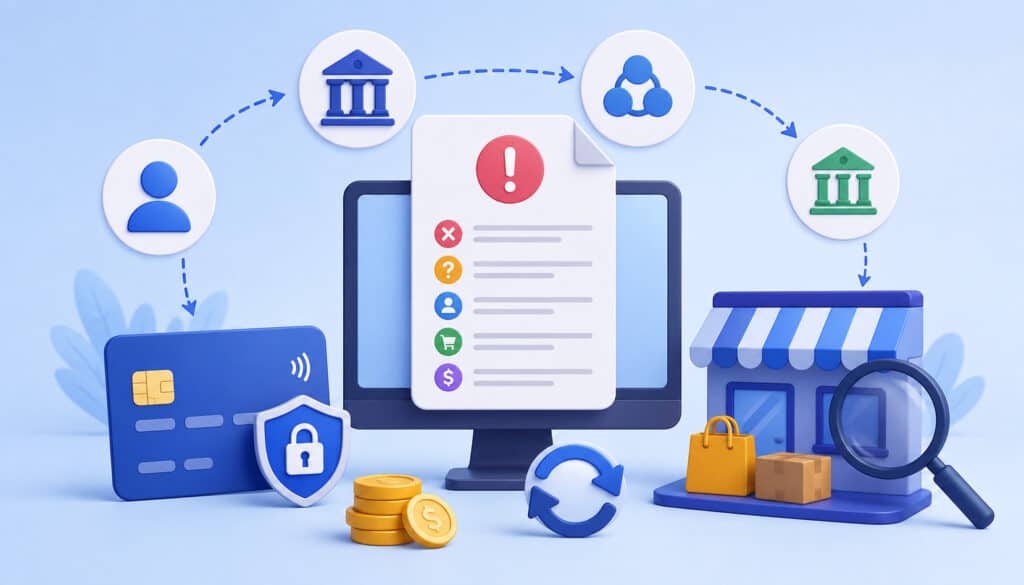
A travel payment dispute usually starts when a cardholder contacts the card issuer and challenges a transaction.
The customer may say the transaction was unauthorized, the service was not received, the refund was not processed, the transaction was duplicated, the amount was incorrect, or the merchant did not follow the agreed terms. The issuer then assigns the claim to a dispute category, often represented by a reason code.
The merchant typically receives the dispute through the processor, acquiring bank, or payment gateway. The notice may include the reason code, transaction amount, dispute amount, transaction date, response deadline, and sometimes a short description of the cardholder claim. The merchant must then decide whether to accept the dispute or challenge it through representment.
Representment is the process of submitting evidence to show that the transaction was valid, properly authorized, correctly processed, or handled according to the disclosed terms. The strength of representment depends on matching the evidence to the dispute type.
A fraud-related dispute requires different evidence than a refund dispute. A service-not-received claim requires different evidence than a duplicate billing claim.
Reason codes help determine the response path, but they do not remove the need for judgment. A travel merchant should review:
- The original booking record
- Customer name, traveler name, and payer information
- Transaction amount and payment method
- Booking confirmation and itinerary records
- Cancellation policy and refund policy acceptance
- Customer communication logs
- Authentication and fraud screening results
- Supplier fulfillment records
- Refund or partial refund records
- Any signed authorization or written approval
The merchant also needs to pay attention to dispute deadlines. Chargeback response windows can be short, and missing the deadline may result in the chargeback standing, even when the merchant has strong evidence. Deadlines can vary by processor, network, dispute stage, transaction type, and case status.
Travel businesses should also distinguish between a chargeback, a retrieval request, and an inquiry. A retrieval request or inquiry may ask for information before a formal chargeback is filed. Responding quickly with clear documentation can sometimes prevent escalation. A chargeback, by contrast, usually means funds have been debited or placed at risk while the dispute is reviewed.
Consumer-facing educational resources, such as the FTC’s guide to disputing card charges and the CFPB’s dispute guidance, explain why cardholders may contact their issuer when they believe a billing error, unauthorized charge, or unresolved problem has occurred.
Travel merchants should understand that customer dispute rights exist, while also maintaining accurate records to support legitimate transactions.
Common Chargeback Reason Code Categories for Travel Businesses
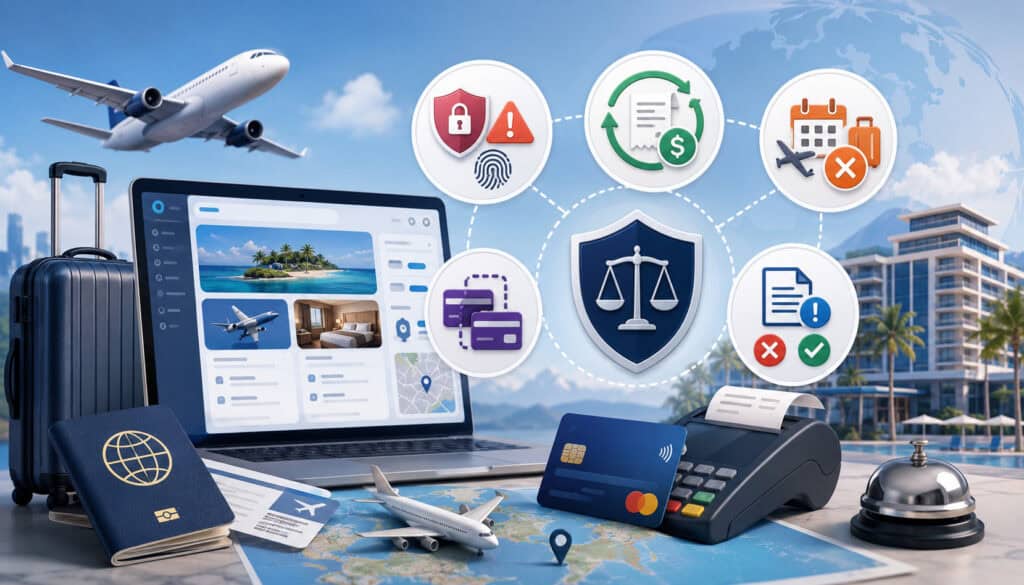
Although reason code names and numbers vary, most travel chargeback codes fall into a few practical categories. These categories are useful because they help merchants build workflows that match evidence to the dispute type.
A travel agency chargeback involving a refund disagreement should not be handled the same way as an unauthorized transaction claim. A duplicate billing dispute should not require the same documentation as a service delivery dispute.
The following table provides a practical overview of common travel chargeback reason code categories and response tips.
| Reason Code Category | What It Usually Means | Common Travel Scenario | Evidence to Prepare |
| Fraud or unauthorized transaction | Cardholder claims they did not authorize the transaction | Stolen card used for a high-value booking or customer denies online purchase | Customer authentication records, IP address, device data, AVS/CVV results, signed authorization, booking confirmation |
| Transaction not recognized | Cardholder does not identify the merchant or charge | Billing descriptor differs from agency name or traveler did not tell cardholder | Billing descriptor, receipt, booking confirmation, customer emails, itinerary details |
| Service not received | Customer claims the booked service was not provided | Tour, transfer, hotel, event, or package was canceled, missed, or disputed | Itinerary, supplier confirmation, check-in records, attendance logs, no-show policy, customer communication |
| Canceled service dispute | Customer says they canceled and should not have been charged | Customer cancels after penalty period or expects full refund | Cancellation policy, timestamped acceptance, cancellation request, refund calculation, supplier rules |
| Refund not processed | Customer claims promised credit was not issued | Refund was delayed, partial, sent to original card, or still pending | Refund receipt, refund date, refund amount, policy terms, support records |
| Duplicate billing | Customer claims they were charged more than once | Deposit and final payment confused as duplicate, or duplicate authorization captured | Transaction IDs, invoice records, payment schedule, settlement records |
| Incorrect amount | Customer claims the amount is wrong | Currency conversion, add-ons, taxes, resort fees, luggage fees, or upgrades misunderstood | Invoice, checkout page, agreed add-ons, currency disclosure, signed approval |
| Processing error | Transaction was processed incorrectly | Wrong card charged, late presentment, reversal not completed, or manual entry error | Processor records, authorization data, reversal proof, reconciliation logs |
These chargeback reason code categories help travel merchants prioritize evidence. They also help identify prevention opportunities.
For example, duplicate billing disputes may point to accounting and payment reconciliation gaps. Transaction-not-recognized disputes may point to billing descriptor confusion. Service-not-received disputes may point to weak supplier confirmation workflows or unclear travel interruption policies.
Unauthorized Transaction Claims
Unauthorized transaction claims are among the most serious travel payment disputes because they suggest the cardholder did not approve the purchase. In travel, this can happen because stolen cards are attractive for high-ticket bookings, last-minute transportation, luxury stays, vacation packages, and services that can be resold or transferred.
However, not every unauthorized transaction claim is true fraud. Some cases involve friendly fraud, where a customer or someone known to the customer made the purchase and later disputes it.
Other cases involve household confusion, where one person books a trip using a shared card and another person disputes the charge after seeing the statement. Travel merchants should avoid assuming intent and instead focus on evidence.
Useful documentation may include AVS results, CVV response, customer authentication records, IP address, device fingerprint, email address, phone number, signed authorization, booking confirmation, itinerary access logs, and customer communication.
For card-not-present transactions, payment security controls and fraud screening records become especially important.
Cardholder Does Not Recognize Transaction
A “cardholder does not recognize transaction” dispute often happens when the billing descriptor is unclear. The customer may remember booking a tour, cruise, hotel package, or destination experience, but the card statement shows a different legal entity, payment processor descriptor, abbreviated name, or parent business name.
This is common in travel because the seller, supplier, merchant of record, and brand shown to the customer may not be the same.
Online travel sellers and destination management companies should make the payment descriptor visible before checkout, on the receipt, and in the booking confirmation. The descriptor should be consistent enough that a customer can connect the statement charge to the reservation.
Evidence may include the receipt, booking confirmation, itinerary, email correspondence, customer profile, and a copy of the checkout page showing the billing descriptor. Support records are also useful if the customer previously contacted the business about the same booking.
Card-Not-Present Disputes
Many travel bookings are card-not-present transactions because customers book online, over the phone, through email, or through a booking platform. Card-not-present payments carry higher dispute exposure because the merchant does not physically inspect the card or verify the cardholder in person.
For travel payment processing, the risk is greater when the booking is expensive, made close to departure, involves cross-border payments, or includes flexible customer details. Fraudsters may use stolen card data to purchase flights, transfers, accommodations, or experiences that can be consumed quickly.
Good controls include fraud screening, customer authentication, velocity checks, email and phone verification, device analysis, address verification, CVV checks, and review of mismatched traveler and payer information.
PCI compliance also matters because merchants that process, store, or transmit cardholder data must protect payment data appropriately. The PCI Security Standards Council merchant resources provide useful educational information about payment data security responsibilities.
Fraud-Related Chargeback Codes in Travel Payments

Fraud-related chargeback codes usually indicate that the cardholder or issuer believes the transaction was unauthorized. In travel, fraud risk is heightened because bookings may be expensive, purchased remotely, fulfilled later, or delivered through multiple parties.
A fraudster may try to book flights, lodging, luxury transportation, private tours, or destination activities using stolen payment credentials. A customer may also dispute a legitimate transaction after travel plans change, creating a friendly fraud scenario.
Travel merchants should separate true fraud from friendly fraud and operational confusion. True fraud involves unauthorized use of payment credentials.
Friendly fraud may involve a legitimate customer disputing a valid transaction because they forgot the booking, disliked the outcome, misunderstood the policy, or wanted to bypass the merchant’s refund process. Operational confusion may involve unclear billing descriptors, incomplete confirmations, or support delays.
Fraud-Related Disputes
Fraud-related disputes require evidence that connects the cardholder, the payer, the traveler, and the transaction. The stronger the connection, the better the representment package. A payment approval alone is usually not enough.
Authorization means the transaction passed initial payment checks, but it does not automatically prove that the cardholder knowingly approved the purchase.
Useful evidence may include:
- Booking timestamp
- IP address and device data
- Email address and phone number used
- Account login history
- AVS and CVV responses
- Customer authentication results
- Signed authorization forms
- Copy of identification when lawfully collected and securely stored
- Passenger or traveler details
- Itinerary delivery records
- Customer support communications
Travel merchants should pay close attention to mismatches. A booking where the cardholder name, traveler name, IP location, billing address, and departure urgency all conflict may require manual review. That does not mean the booking is automatically fraudulent, but it does mean the business should collect stronger confirmation before fulfillment.
For online sellers, a secure payment architecture is especially important. This article on secure payment processing for online travel agencies discusses fraud prevention, PCI compliance, chargeback reduction, and evidence capture for online booking environments.
Friendly Fraud
Friendly fraud occurs when a customer disputes a charge that they or someone connected to them actually authorized. The term can sound judgmental, so merchants should use it carefully. In practice, friendly fraud may be intentional, accidental, or caused by confusion.
In travel, friendly fraud often appears after cancellation penalties, weather disruptions, missed departure times, supplier issues, dissatisfaction, or buyer’s remorse.
A traveler may believe the issuer will resolve the matter faster than customer support. Another customer may dispute because they expected a refund to arrive immediately, even though the merchant already initiated it.
Responding to friendly fraud requires documentation that shows the transaction was legitimate and the service terms were disclosed. Strong evidence includes booking confirmation, policy acceptance, itinerary delivery, customer communication, support notes, signed authorization, and proof that the merchant fulfilled or attempted to fulfill the service.
Customer Authentication and Fraud Screening Records
Customer authentication records can be valuable in fraud-related representment. Depending on the payment method and gateway setup, authentication may include one-time passcodes, account login data, 3-D Secure results, device recognition, risk scoring, or verification steps for high-risk bookings.
Fraud screening records should be organized and readable. A dispute analyst should not need to interpret raw system logs without context. The evidence package should explain what checks were performed, what matched, what was reviewed, and why the booking was accepted.
Travel merchants should also train staff to document manual reviews. If a team member called the customer to verify a last-minute booking, note the call date, number used, verification questions, and outcome. If the customer emailed a signed authorization, store it with the booking record.
Service-Not-Received and Cancellation Dispute Codes
Service-not-received and cancellation dispute codes are especially common in travel because the customer often pays before the service is delivered. Advance bookings create a gap between payment and fulfillment.
During that gap, flights change, tours are rescheduled, hotels adjust availability, weather affects plans, suppliers cancel, customers change their minds, and refund expectations may shift.
A service-not-received dispute generally means the cardholder claims the travel service was not provided. A cancellation dispute usually means the customer believes they canceled properly or should not have been charged. These disputes can overlap, but the evidence needed may differ.
Service Not Received
A service-not-received claim can arise when a customer says a tour did not happen, a transfer never arrived, a hotel reservation was unavailable, a ticket was not issued, or an itinerary was not delivered. The merchant’s response should focus on proof of fulfillment or proof that the service was available under the agreed terms.
For a tour operator, evidence may include attendance logs, guide notes, check-in records, supplier confirmation, meeting point instructions, and no-show documentation.
For a transportation provider, evidence may include dispatch records, driver arrival logs, GPS records, passenger communications, and completed ride records. For a travel consultant, evidence may include itinerary delivery, booking confirmations, supplier confirmations, and advisory service deliverables.
If the service truly was not provided, the business should review whether a refund, credit, rebooking, or supplier recovery process applies. Representment should not be used to defend an error that the documentation does not support. A balanced dispute strategy protects credibility.
Canceled Travel Service
Canceled travel service disputes often turn on the difference between “I canceled” and “I was entitled to a refund.” A customer may cancel a booking and assume the charge should be reversed automatically. The merchant may have a cancellation policy that allows no refund, a partial refund, a future travel credit, or supplier-imposed penalties.
Travel merchants should make cancellation terms visible before payment and repeat them in confirmation emails. If policies vary by supplier, fare type, departure date, booking class, or package component, the confirmation should identify the specific rules that apply to the booking.
Evidence may include the cancellation policy, timestamped acceptance, customer cancellation request, staff response, refund calculation, supplier terms, and any credit issued. If the customer accepted a rescheduled service or travel credit, that acceptance should be documented.
Clear policy communication is one of the most effective ways to reduce travel agency chargebacks. This article on travel agency chargeback prevention and cancellation policies offers helpful context on why cancellation rules should match how travel bookings actually work.
Advance Booking Disputes
Advance booking disputes happen because the customer pays now but receives the service later. This creates memory gaps, expectation gaps, and risk gaps. A customer may forget the payment, lose the confirmation email, change plans, or become concerned when the departure date approaches and communication is unclear.
Travel deposits and final payments can also create confusion. A customer may see two charges and believe they were billed twice, even though the payment schedule was disclosed. Another customer may dispute the deposit after deciding not to travel, even though the deposit was nonrefundable.
The best prevention strategy is a communication timeline. Send a booking confirmation immediately, payment schedule reminders before final payment, itinerary updates as the travel date approaches, and clear instructions for cancellations or changes. Each communication should be stored in the booking record.
Travel Cancellation Disputes
Travel cancellation disputes may involve customer-initiated cancellations, supplier cancellations, weather interruptions, event changes, travel restrictions, medical emergencies, or missed deadlines.
The reason code may not capture all of that detail. A customer may file a broad dispute even when the issue is really about how much refund was owed or who controlled the cancellation.
Merchants should separate the facts into a timeline. When was the booking made? What policy was accepted? When did the customer request cancellation? What supplier rule applied? Was a refund, credit, or rebooking offered? What did the customer accept or reject?
A timeline helps the processor, issuer, or dispute analyst understand the case quickly. It also helps internal teams spot weak points in the customer experience.
Refund, Duplicate Billing, and Transaction Error Codes
Refund disputes, duplicate billing disputes, and transaction error codes often point to payment operations rather than travel fulfillment. These disputes may happen even when the customer received the service or agreed to the booking terms.
The issue is usually whether the merchant processed the payment correctly, credited the customer properly, or communicated clearly about amounts.
Travel businesses should give special attention to payment reconciliation because bookings often include deposits, installment payments, final balances, add-ons, taxes, supplier fees, change fees, and partial refunds.
A customer may not understand why a final payment was charged, why an upgrade increased the amount, or why a refund was smaller than expected.
Refund Not Processed
A refund-not-processed dispute generally means the cardholder believes they were promised a refund that has not appeared. This does not always mean the merchant failed to act. Refunds may take time to appear, may be returned to the original card, may be partial, or may be offset by cancellation penalties.
Travel merchants should document refund eligibility, refund approval, refund submission date, refund amount, transaction reference, and customer communication. If a refund was denied under the policy, the merchant should show the policy and explain why the booking was not eligible.
Support teams should avoid vague refund promises. Statements such as “you should get your money back” can create dispute risk if the actual policy allows only a partial refund. Instead, staff should confirm the amount, method, estimated processing window, and reason for any deductions.
Duplicate Billing
Duplicate billing disputes occur when a customer believes they were charged twice for the same booking. In travel, this is often caused by deposits and final payments, multiple travelers on one reservation, split payments, retry attempts after a failed authorization, or add-on purchases.
The evidence should show whether the transactions were distinct. Provide invoices, payment schedules, authorization records, settlement records, and booking notes. If there was a true duplicate charge, resolve it quickly and update reconciliation procedures to prevent repeats.
Duplicate billing disputes can often be prevented with better receipt design. The receipt should label each payment clearly, such as “deposit,” “final balance,” “change fee,” “upgrade,” or “additional traveler.” If installment payments are used, the schedule should be visible before checkout.
Incorrect Transaction Amount
Incorrect transaction amount disputes happen when the customer believes the merchant charged more than agreed. Travel businesses may see these disputes when customers misunderstand taxes, resort fees, luggage fees, fuel surcharges, currency conversion, foreign exchange differences, optional add-ons, or itinerary changes.
Evidence should include the checkout amount, invoice, accepted terms, add-on selection, currency disclosure, and any written approval for changes. If the customer approved an upgrade or itinerary modification by email, include that approval.
Multi-currency payments deserve extra care. Customers may see a different converted amount on their statement than the amount shown at checkout.
Merchants should disclose the transaction currency, conversion handling, and any known fees clearly. More guidance on payment flow design is available in this article on optimizing payment gateways for international travel bookings.
How Reason Codes Affect Chargeback Representment
Chargeback representment is the process of challenging a dispute by submitting evidence that supports the validity of the transaction or the merchant’s handling of the booking. Reason codes affect representment because they determine what the dispute is about and what kind of evidence is most persuasive.
A fraud-related chargeback needs proof that the cardholder authorized or participated in the transaction. A service-not-received dispute needs proof that the service was provided, made available, or not used due to customer action under disclosed terms.
A refund dispute needs proof of refund eligibility, refund processing, or policy-based denial. A duplicate billing dispute needs payment records showing whether the charges were separate and valid.
Reason codes also influence deadlines. Processors and card networks may set specific response windows by dispute type and stage. Some cases may allow additional escalation, while others may not. Merchants should never assume that all chargebacks follow the same timeline.
A strong travel chargeback representment package is usually clear, organized, and directly tied to the reason code. It should not overwhelm the reviewer with irrelevant documents. More evidence is not always better. Better evidence is evidence that answers the exact claim.
For example, if the dispute says “service not received,” the merchant should not lead with a long explanation of fraud screening. The package should lead with booking confirmation, itinerary delivery, supplier confirmation, proof of service availability, customer communication, and the applicable cancellation or no-show terms. Fraud records may be included only if relevant.
Good representment also avoids emotional language. The reviewer needs facts, dates, documents, and policy references. A travel merchant may feel the dispute is unfair, especially in friendly fraud cases, but the response should remain professional and evidence-based.
What Evidence Travel Merchants Should Collect by Dispute Type
Evidence collection is one of the most important parts of travel chargeback management. The best time to collect evidence is during booking, payment, customer communication, fulfillment, and refund handling. Waiting until a dispute arrives often leads to missing records, incomplete timelines, and rushed responses.
A travel business should maintain a dispute-ready record for each booking. This does not mean storing unnecessary personal data. It means organizing relevant booking, payment, policy, fulfillment, and communication records in a secure and accessible way.
Booking Confirmation Records
Booking confirmation records show what the customer purchased and what the merchant agreed to provide. A strong confirmation includes the customer name, traveler name when different, booking ID, service description, travel dates, destination, supplier details when appropriate, total amount, deposit amount, final payment schedule, cancellation policy, refund policy, and customer support contact information.
For online payments, the confirmation should also show the payment status and billing descriptor. If the charge will appear under a different business or descriptor, say so clearly. Confirmation emails should be sent promptly and stored with delivery records when possible.
Booking confirmations are useful for many travel payment dispute codes because they establish the foundation of the transaction. They help respond to transaction-not-recognized claims, service-not-received disputes, cancellation disputes, and incorrect amount claims.
Itinerary Documentation
Itinerary documentation is especially important for travel agencies, tour operators, vacation planners, destination management companies, and transportation providers. It shows that the merchant delivered the booking information and that the customer had access to the service details.
Useful itinerary evidence may include flight details, hotel confirmation numbers, tour meeting points, transfer pickup times, guide contact information, supplier vouchers, ticket numbers, route details, and activity schedules. If the itinerary changed, keep both the original and updated versions, along with customer acknowledgment.
For service-not-received claims, itinerary documentation can show that the service was arranged, confirmed, and communicated. For cancellation disputes, it can show which components were refundable, nonrefundable, rescheduled, or supplier-controlled.
Signed Customer Authorization
Signed customer authorization is useful for phone bookings, custom packages, high-ticket transactions, group travel, corporate bookings, and situations where the payer is not the traveler. It can confirm that the customer approved the charge, amount, terms, and payment method.
A signed authorization should include the customer’s name, billing details, transaction amount, booking description, cancellation terms, refund terms, payment schedule, and authorization statement.
It should be stored securely and handled according to payment security requirements. Merchants should avoid collecting or storing sensitive card data in unsafe formats.
For card-not-present disputes and unauthorized transaction claims, signed authorization can be helpful, but it is strongest when combined with other records such as email communication, customer authentication, and booking activity.
Refund Policy Documentation
Refund policy documentation is essential for refund disputes and cancellation-related chargebacks. The policy should explain when refunds are available, whether deposits are refundable, how supplier penalties apply, how partial refunds are calculated, whether credits may be issued, and how long processing may take.
The key is not merely having a refund policy. The merchant must be able to show that the customer saw and accepted it before payment. Timestamped acceptance, checkout screenshots, confirmation emails, and signed documents can help.
If a refund was issued, keep the refund transaction ID, date, amount, and communication record. If a refund was denied, keep the policy basis and support notes explaining the decision.
Cancellation Policy Documentation
Cancellation policy documentation should be specific to the booking type. A one-day walking tour, a luxury cruise, a multi-supplier vacation package, and a private transfer may all require different cancellation rules. A generic policy may not be enough if the dispute involves supplier-specific penalties.
The policy should explain deadlines, cancellation methods, refund percentages, no-show handling, weather contingencies, customer-initiated changes, supplier cancellations, and documentation requirements. It should also state how customers can contact support to request changes or cancellations.
For travel cancellation disputes, the policy is often the central evidence. The merchant should show the policy accepted at booking, the customer’s cancellation request, the timing of that request, and the refund or credit calculation.
How to Reduce Chargebacks Linked to Common Reason Codes
Reducing travel chargebacks starts with identifying which disputes are preventable. Some disputes are outside a merchant’s control, such as true fraud or unexpected supplier failure. Many others can be reduced through clearer communication, stronger payment controls, better policy presentation, and organized documentation.
Start by mapping common reason codes to operational causes. If transaction-not-recognized disputes are frequent, review billing descriptors and confirmation emails. If refund disputes are common, review refund timelines, support scripts, and policy visibility.
If service-not-received claims appear often, examine supplier confirmation workflows, itinerary delivery, and no-show documentation. If fraud codes are increasing, review authentication, screening, and manual review rules.
Customer communication is one of the strongest prevention tools. Travel customers often become anxious when plans change, refunds take time, or confirmations are unclear. Proactive updates can prevent customers from assuming something is wrong and contacting their issuer.
Practical chargeback reduction steps include:
- Show the billing descriptor before checkout.
- Send immediate booking confirmation.
- Repeat cancellation and refund terms in follow-up messages.
- Use secure payment links instead of collecting card data manually.
- Apply fraud screening to high-risk bookings.
- Verify unusual high-ticket or last-minute transactions.
- Keep support records tied to the booking ID.
- Reconcile deposits, final payments, and refunds regularly.
- Train staff to avoid unclear refund promises.
- Provide visible customer support options before and after travel.
Travel merchants should also review website terms and conditions, privacy policy, payment security disclosures, refund policy, and cancellation policy for consistency. Customers should not see one rule at checkout, another in the confirmation, and another from support.
How to Track Reason Codes and Improve Payment Operations
Reason code tracking turns chargeback data into operational insight. A merchant that only reviews disputes one by one may miss patterns. A merchant that tracks reason codes by booking source, supplier, product type, payment method, customer location, booking window, and staff workflow can make better decisions.
Reason Code Tracking
Reason code tracking should be structured. At minimum, record the reason code, dispute category, card network, processor case ID, booking ID, transaction date, service date, booking channel, disputed amount, response deadline, outcome, evidence submitted, and root cause.
If possible, also record whether the dispute was true fraud, friendly fraud, customer confusion, supplier issue, policy disagreement, or merchant error.
This data should be reviewed regularly by finance, operations, customer support, and management. A dispute team may understand chargebacks, but operations may understand why a specific tour or supplier creates customer complaints.
Accounting may see reconciliation issues that support teams do not see. Marketing may know whether a promotion created unclear expectations.
Reason code tracking can also help identify weak documentation. If the business loses many cancellation disputes because policy acceptance cannot be proven, the checkout process should be updated. If service-not-received disputes lack fulfillment records, supplier documentation should be improved.
Chargeback Ratio Monitoring
Chargeback ratio monitoring is critical for merchant account stability. Processors and acquiring banks review dispute levels because high ratios may signal elevated risk. A rising chargeback ratio can trigger risk review, settlement holds, rolling reserve requirements, additional documentation requests, higher costs, or account restrictions.
Travel businesses should monitor chargeback ratios alongside refund rates, approval rates, fraud declines, customer complaints, and booking volume. A seasonal spike may be explainable, but it still needs management.
For example, a wave of weather-related cancellations may increase refund disputes. A marketing campaign may increase bookings from unfamiliar customers, which can increase fraud screening needs.
Chargeback ratio monitoring should include both count and amount. A few high-ticket disputes can create significant cash flow pressure even if the number of cases is low. This is especially important for luxury travel, group travel, destination weddings, charter services, and custom vacation packages.
Payment Reconciliation
Payment reconciliation helps prevent disputes tied to duplicate billing, incorrect amounts, missing refunds, and customer confusion. Travel businesses should reconcile authorizations, captures, deposits, final payments, partial refunds, supplier payments, and settlement records.
Reconciliation is more complex when bookings involve multi-currency payments, cross-border payments, split deposits, group payments, and supplier remittances. A clear internal ledger should show what was charged, what was refunded, what remains due, and what was paid to suppliers.
When reconciliation is weak, support teams may give customers incorrect information. That can turn a small accounting issue into a chargeback. Accurate reconciliation also helps prepare better representment packages because transaction records are easier to retrieve.
Questions to Ask Your Processor About Chargeback Codes
Travel merchants should ask their processor practical questions about chargeback reason codes before disputes become urgent. Processor portals and dispute tools vary widely. Some provide detailed reason code descriptions and evidence prompts. Others provide minimal information and require merchants to contact support for clarification.
Ask how reason codes are displayed, whether code names differ by card network, how deadlines are calculated, where evidence should be uploaded, what file formats are accepted, and whether alerts or inquiries are available before formal chargebacks.
Also ask whether the processor provides reporting by reason code category, dispute outcome, card type, transaction channel, and booking descriptor.
Important questions include:
- Where can we see the full reason code and cardholder claim?
- Do reason code names or numbers vary by network?
- What evidence is recommended for each dispute category?
- How are response deadlines calculated?
- Are weekends or holidays included in the deadline?
- Can we receive alerts before a chargeback is filed?
- Does the gateway store authentication and fraud screening records?
- Can reports be exported by reason code category?
- How are partial disputes and partial refunds handled?
- What happens if a dispute is accepted, reversed, or escalated?
- How do chargebacks affect reserves, settlement holds, or risk review?
- What documentation is required for travel merchant chargeback codes involving delayed fulfillment?
Merchants should also ask how dispute data appears on the merchant statement. Some fees, reversals, chargeback debits, representment credits, and final decisions may appear across different statement periods. Understanding this reporting helps with cash flow planning and accounting.
What are travel chargeback reason codes?
Travel chargeback reason codes are labels or identifiers used to classify why a cardholder disputed a travel-related transaction. They may relate to fraud, service not received, cancellation issues, refund disputes, duplicate billing, incorrect amounts, or transaction recognition problems. The code helps the merchant understand the general dispute category and prepare a response.
Why do chargeback reason codes matter for travel merchants?
They matter because they guide evidence collection, representment strategy, internal tracking, and dispute prevention. A travel merchant that understands reason codes can better identify whether disputes are caused by fraud, policy confusion, billing descriptor issues, supplier problems, refund delays, or payment processing errors. This can help reduce preventable disputes and improve payment operations.
Are chargeback reason codes the same across all card networks?
No. Reason code names, numbers, categories, timelines, and evidence requirements can vary by card network, processor, transaction type, payment method, and dispute stage.
Merchants should use the code as a starting point and review the dispute notice carefully. Processor guidance is important because the same scenario may be labeled differently depending on the network involved.
What are common chargeback codes for travel merchants?
Common chargeback codes for travel merchants often fall into categories such as unauthorized transaction claims, transaction not recognized, service not received, canceled service, refund not processed, duplicate billing, incorrect transaction amount, and processing error.
Travel payment dispute codes are often connected to advance bookings, delayed fulfillment, cancellation policies, refund expectations, card-not-present transactions, and billing descriptor confusion.
How do reason codes affect chargeback representment?
Reason codes affect representment by showing what the merchant needs to prove. Fraud disputes require evidence of authorization and customer authentication.
Service-not-received disputes require proof that the service was provided or available under the agreed terms. Refund disputes require refund records or policy documentation. Duplicate billing disputes require transaction and reconciliation records.
What evidence should travel businesses keep for chargebacks?
Travel businesses should keep booking confirmations, itinerary documentation, customer communication logs, signed authorizations when appropriate, cancellation policy acceptance, refund policy acceptance, payment details, fraud screening records, authentication results, supplier confirmations, no-show records, refund receipts, and support records. Evidence should be securely stored and easy to retrieve by booking ID.
Can tracking reason codes help reduce future disputes?
Yes. Tracking reason codes helps merchants identify patterns. For example, repeated transaction-not-recognized disputes may indicate billing descriptor confusion. Frequent refund disputes may show that refund timelines or policy explanations need improvement.
Service-not-received claims may reveal supplier documentation gaps. Tracking helps merchants focus on root causes instead of treating every chargeback as an isolated event.
What should travel merchants do after receiving a chargeback reason code?
The merchant should review the dispute notice, confirm the response deadline, identify the booking, read the cardholder claim, collect evidence that matches the reason code, and decide whether to accept or challenge the dispute. The merchant should also record the case in a tracking system and review whether the dispute reveals a preventable operational issue.
Conclusion
Understanding travel chargeback reason codes is essential for any travel business that accepts card payments. These codes help classify travel payment disputes, but they do not tell the entire story.
A reason code should lead merchants to ask better questions: What did the customer claim? What did the booking terms say? Was the service delivered or made available? Was the refund handled correctly? Did the customer recognize the billing descriptor? Was the transaction properly authenticated? What documentation supports the merchant’s position?
Travel merchants operate in a dispute-sensitive environment. Advance bookings, delayed fulfillment, cancellation policy complexity, refund misunderstandings, high-ticket transactions, cross-border payments, multi-currency payments, card-not-present transactions, and supplier dependencies all create unique risk.
That does not mean chargebacks are unavoidable in every case. It means payment operations must be intentional.
The strongest approach combines prevention and response. Prevention comes from clear terms and conditions, visible refund and cancellation policies, accurate billing descriptors, secure payment processing, fraud screening, customer authentication, proactive communication, and careful payment reconciliation.
Response comes from organized chargeback documentation, reason-code-specific evidence, timely representment, and clear internal ownership.
Travel chargeback management is not only a finance task. It touches reservations, customer support, operations, supplier management, accounting, technology, and leadership.
When teams understand chargeback reason code categories and track them consistently, disputes become more than losses or administrative burdens. They become feedback that can improve booking flows, customer trust, payment security, and merchant account stability.
No guide can guarantee a dispute outcome, and no merchant can prevent every chargeback. But a travel business that understands travel chargeback reason codes, keeps strong records, reviews patterns, and responds with relevant evidence is in a much better position to manage risk and protect long-term payment operations.