By Garry Well February 10, 2026
Chargebacks are not just a “payments problem” for travel agencies—they’re a revenue, reputation, and operations problem. A single dispute can wipe out margin on a booking, trigger non-recoverable supplier costs, and raise your chargeback ratio high enough to threaten your merchant account.
In the travel category, disputes spike because plans change, supplier rules differ, and customers often expect “refunds” even when the product is nonrefundable or partially used.
That’s why travel agency chargeback prevention starts long before a customer clicks “Pay.” It starts with clear cancellation policies that match how travel actually works: airline fare rules, hotel cut-off dates, cruise penalties, tour deposits, and the messy reality of delays, schedule changes, and medical emergencies.
When your policy language is vague or buried, customers feel surprised—and surprised customers dispute.
From an operator’s perspective, the goal of travel agency chargeback prevention is simple: reduce the number of disputes and increase win rates when disputes happen. The best way to do that is to align policy, checkout disclosure, confirmations, and post-sale support into one consistent experience.
In card network terms, you’re building a trail of “compelling evidence” that shows the customer understood the terms and you delivered what was purchased (or processed a refund according to disclosed rules).
This guide breaks down how cancellation policies prevent disputes, how to structure and present them, what evidence matters most, which regulations and standards shape refund expectations, and what future trends will change travel agency chargeback prevention over the next few years.
Why Travel Agency Chargebacks Happen More Than You Expect

In travel, customers don’t buy a physical item—they buy timelines, access, and reservations. That creates a perfect storm for misunderstandings.
A traveler may think, “I paid you, so you owe me a refund,” while the agency is stuck between strict supplier penalties and a customer who no longer wants the trip. That mismatch drives the most common dispute themes: “services not provided,” “canceled recurring/ongoing,” “not as described,” and “fraud.”
Here’s the hidden operational problem: a travel booking can contain multiple components—air, hotel, car, tour, insurance—each with different cancellation windows and refund methods.
If your cancellation policy doesn’t clearly explain (1) what is refundable, (2) what is a credit, (3) what is a supplier penalty, and (4) what is an agency service fee, customers default to the simplest assumption: full refund.
Another driver is timing. Travel disputes often happen weeks or months after purchase, when the customer’s memory is fuzzy and circumstances have changed. That lag increases “friendly fraud” risk: a cardholder recognizes the charge but claims otherwise because they’re frustrated or want leverage.
Effective travel agency chargeback prevention accepts reality: you can’t eliminate disputes, but you can reduce “surprise,” reduce “friction,” and improve documentation. You do that by designing a cancellation policy that reads like a plain-language contract—then reinforcing it at every step.
The Real Role of Cancellation Policies in Travel Agency Chargeback Prevention

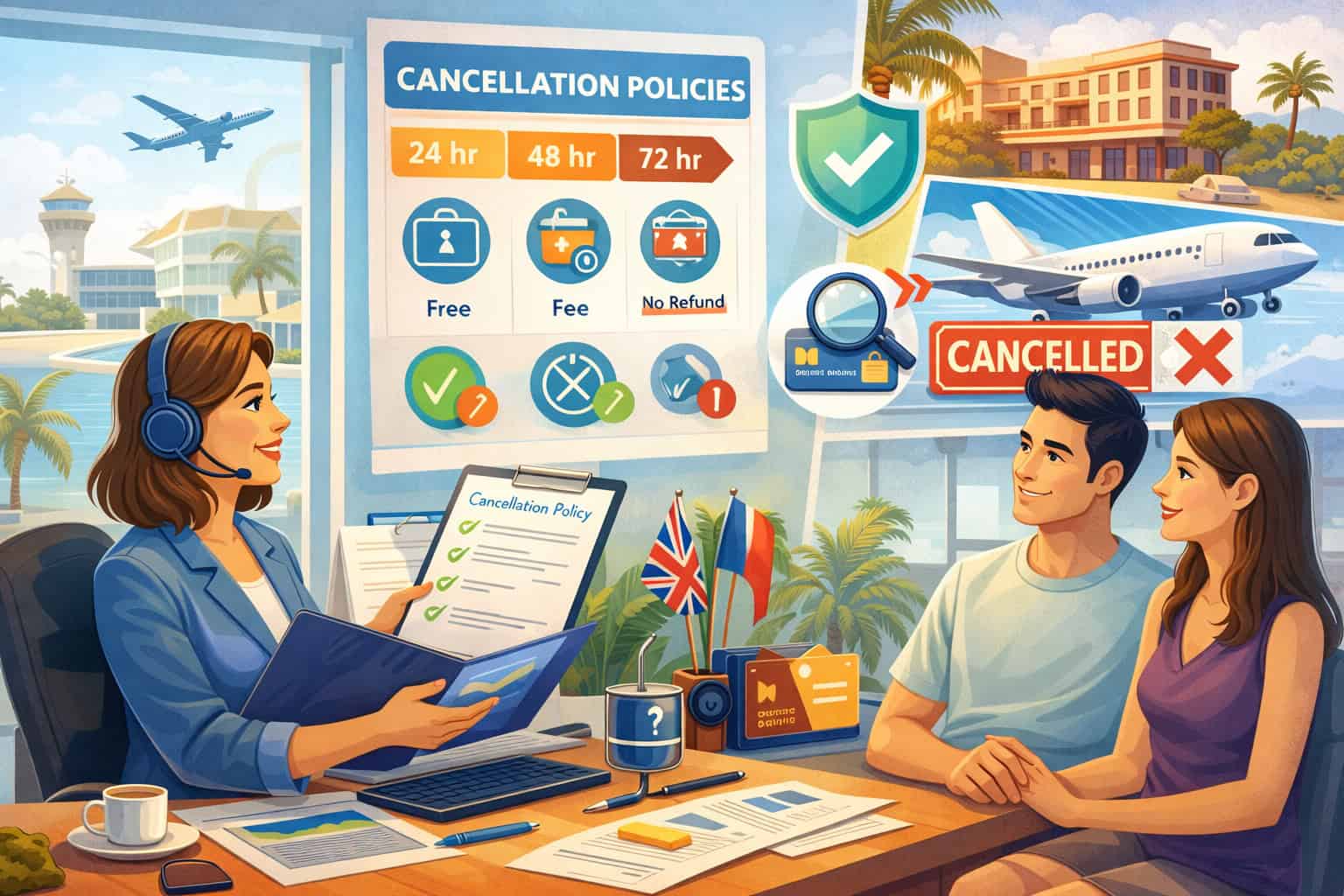
A cancellation policy is not just a page on your website. For travel agency chargeback prevention, it’s a dispute shield—but only if it’s written clearly, displayed conspicuously, and consistently referenced in confirmations and support interactions.
Card disputes are adjudicated by rules and evidence, not by what you “meant.” If the issuer believes the cardholder didn’t understand refund terms, you’ll lose more cases—even when your supplier rules are strict. Travel agency chargeback prevention hinges on proving three things:
- Disclosure: The traveler saw the cancellation terms before paying.
- Agreement: The traveler affirmatively accepted them (checkbox + timestamp + IP/device metadata helps).
- Performance: You delivered the booked service, or you processed refunds/credits exactly as disclosed.
Think of your cancellation policy as “structured evidence.” It should define refund timelines, penalty schedules, service fees, credit rules, and exceptions. It should also explain edge cases like supplier bankruptcy, schedule changes, and force majeure.
When done right, your policy reduces disputes because customers understand what will happen if they cancel. When disputes do occur, your policy becomes the backbone of a representation package: checkout screenshots, policy link, acceptance logs, confirmations, and support transcripts. That’s the heart of travel agency chargeback prevention.
Policy Language That Prevents “Services Not Provided” Disputes
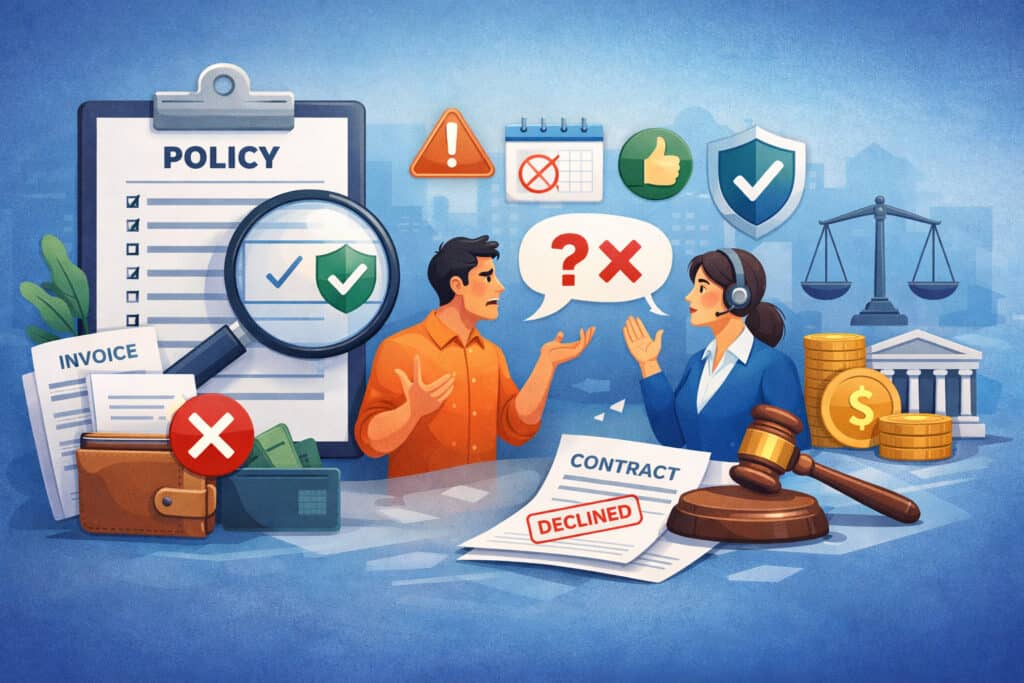
“Services not provided” is one of the most expensive dispute categories in travel. It often appears after a cancellation, a schedule change, or a traveler who didn’t show up. Clear language can prevent the dispute by setting expectations about what counts as “provided.”
Your cancellation policy should explicitly state:
- What the agency provides (booking, ticketing, itinerary management, support, changes, refund processing).
- What suppliers provide (transportation, lodging, excursions).
- When your service is considered delivered (e.g., “agency services are rendered upon successful booking confirmation and delivery of itinerary/tickets”).
This matters because many agencies charge service fees for research, ticketing, and changes. If a traveler disputes a service fee after canceling, the question becomes: did the agency deliver the service?
Travel agency chargeback prevention improves dramatically when the policy defines “service delivery” and separates it from supplier refunds.
Also include a short “refund method” section: refunds typically return to the original payment method; credits may be issued by suppliers; processing times vary.
For airline-related issues, travelers increasingly expect prompt refunds due to federal standards around flight cancellations and significant changes. DOT guidance and rules emphasize refunds in certain circumstances and clarify refund expectations for flight disruptions and changes.
This section prevents disputes by reducing the “I didn’t get my refund yet” panic that triggers chargebacks.
How to Structure a Cancellation Policy That Customers Actually Understand
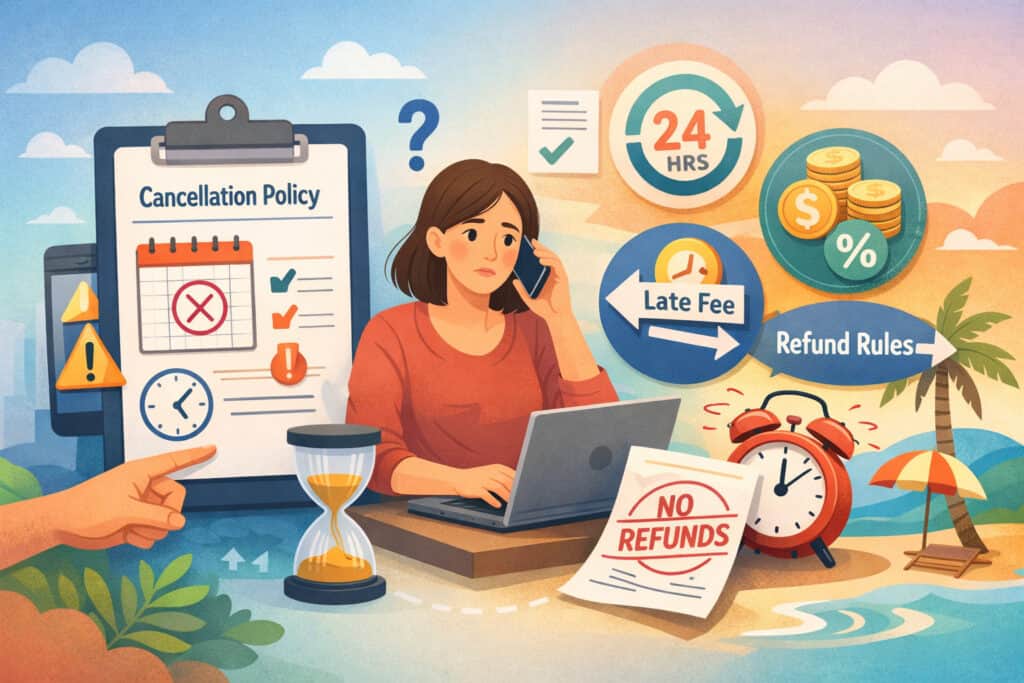
Most cancellation policies fail because they read like legal disclaimers instead of operational instructions. For travel agency chargeback prevention, your policy must be easy to scan, specific, and consistent with your actual process.
A strong structure includes:
1) Plain-language summary (at the top)
Start with a short “Key Points” block in normal language:
- “Some bookings are nonrefundable.”
- “Supplier penalties may apply.”
- “Agency service fees may be nonrefundable.”
- “Refunds can take X–Y business days after supplier approval.”
This is not fluff—this reduces chargebacks by preventing misunderstanding.
2) Component-based rules
Separate rules for air, hotel, cruise, tours, and packages. Travelers mentally map their purchase to components, not to your internal accounting.
3) A penalty timeline
Use a simple schedule: “More than 30 days,” “15–29 days,” “7–14 days,” “0–6 days,” “no-show.” Even if supplier rules differ, give “typical” ranges and then add: “Your confirmation email shows the exact supplier terms for your booking.”
4) What happens after cancellation
Explain the steps: request received → supplier contacted → approval/denial → refund or credit issued → confirmation sent. Travel agency chargeback prevention improves when customers know the process, because uncertainty drives disputes.
Where to Display Cancellation Terms for Maximum Chargeback Protection
A cancellation policy cannot protect you if it’s hidden. In disputes, visibility is everything. Your goal is to make disclosure undeniable.
For travel agency chargeback prevention, place cancellation terms in five locations:
- Before checkout (linked near price and “Pay” button)
- Inside checkout (summary + link + acceptance checkbox)
- Confirmation email (full terms or link + supplier rules)
- Customer portal (itinerary page with refund/cancel button and terms)
- Support macros (agents paste the same language consistently)
This “multi-touch disclosure” does two things: it reduces disputes and strengthens representation evidence. It also aligns with broader consumer-protection expectations around transparent pricing and fee disclosure—especially in lodging contexts where regulators have targeted hidden or confusing fees.
Essential Clauses Every Travel Cancellation Policy Should Include
If you want a dispute-resistant policy, you need specific clauses that map to real chargeback narratives. These clauses are the building blocks of travel agency chargeback prevention:
Refundability definitions
Define: refundable, nonrefundable, partially refundable, credit-only, and “supplier discretion.” Customers dispute when “nonrefundable” is implied but not stated.
Supplier control disclosure
State that suppliers control penalties, inventory rules, and credit issuance. Clarify that the agency cannot override supplier decisions.
Agency service fee treatment
Define whether service fees are refundable and when they are earned. Tie fees to delivered services: booking, ticketing, changes, after-hours support.
Cancellation request method
Specify how cancellations must be requested (portal, email, recorded phone line). Require written confirmation for cancel requests. This is gold for travel agency chargeback prevention because it prevents “I canceled” claims without proof.
Refund timelines and method
Explain card refund timing, supplier approval delays, and that chargebacks slow down refunds. Set realistic expectations to reduce premature disputes.
Traveler responsibility
Require correct traveler names, documents, check-in compliance, and no-show consequences.
Force majeure and disruptions
Explain what happens in weather events, strikes, or schedule changes—especially for flights where refund rights may apply depending on circumstances.
Handling Schedule Changes and Cancellations Without Triggering Disputes
Travelers don’t dispute because you have rules—they dispute because they feel trapped. When a schedule change happens, your response determines whether the customer calls support or calls their bank.
A dispute-resistant workflow looks like this:
- Immediate notification with a clear choice: accept change, request alternatives, or request eligible refund/credit.
- Documented traveler decision (click-to-accept log, email confirmation, or recorded call).
- Fast resolution: rebook options within hours, not days.
For flight disruptions, refund expectations have become more standardized and public-facing through DOT materials and rules addressing cancellations, significant changes, and prompt refunds in qualifying scenarios. That changes the customer’s mental model: they believe refunds should be straightforward.
Travel agency chargeback prevention means you proactively communicate eligibility: “Your fare is nonrefundable, but you may have a credit,” or “This schedule change qualifies you for a refund; here’s how we process it.”
Clear, fast answers reduce chargeback attempts dramatically, especially when paired with a one-click confirmation receipt.
“Friendly Fraud” in Travel: Why Clear Policies Reduce It
Friendly fraud is when a cardholder disputes a legitimate charge—sometimes intentionally, sometimes because they’re confused. Travel is high-risk for friendly fraud because purchases are higher-ticket and emotionally charged. A family cancels a vacation due to illness and feels a full refund is “fair,” even if supplier penalties make it impossible.
Travel agency chargeback prevention doesn’t assume bad intent; it assumes high emotion + low clarity = disputes. Clear cancellation policies reduce friendly fraud by removing ambiguity. When customers know the rules, fewer people “try their luck.”
You can also reduce friendly fraud with operational signals:
- Use a recognizable billing descriptor (agency name + travel keyword + support phone).
- Send immediate confirmation with “what you purchased” and “what to do if you need changes.”
- Provide self-service cancellation options that generate instant receipts.
In representment, friendly fraud often collapses when you provide:
- policy acceptance log,
- confirmation delivery evidence,
- support contact attempts,
- and refund/credit offer records.
Card brands use reason codes to label disputes, and these codes change over time—so your prevention program should focus on evidence fundamentals rather than memorizing codes.
Payment Security and Data Practices That Support Chargeback Prevention
Not all travel disputes are about cancellation. Some are true fraud. Strong data practices reduce fraud disputes and improve your standing with payment partners.
At minimum, travel agency chargeback prevention should include:
Strong authentication and fraud controls
- AVS/CVV checks for card-not-present transactions
- 3-D Secure where applicable (and where it makes business sense)
- velocity controls (too many bookings too fast)
- device/IP reputation checks
- manual review for high-risk itineraries and last-minute international bookings
Card data handling discipline
Many travel agencies store card details for changes, deposits, or incidentals. That’s risky. PCI guidance emphasizes that Requirement 3 applies if you store cardholder data, and storage must be protected—or avoided entirely through tokenization and payment links.
From an expert standpoint: if you don’t need to store PAN data, don’t. Use gateway tokens and vaults. This reduces breach risk and lowers the chance of “fraud” chargebacks caused by compromised data.
Building “Compelling Evidence” for When Chargebacks Still Happen
Even with excellent travel agency chargeback prevention, some disputes will come in. Your win rate depends on how quickly and cleanly you can assemble evidence.
A travel-specific compelling evidence bundle usually includes:
- Checkout screenshot showing total price + cancellation terms
- Policy link + policy version ID
- Acceptance checkbox record (timestamp + IP/device)
- Confirmation email delivery log
- Supplier confirmation (PNR, hotel confirmation, cruise booking ID)
- Communication history (emails, chat transcripts, call notes)
- Refund/credit offer + customer response
- Proof of service usage (check-in confirmation, boarding records where available, tour attendance logs)
Mastercard and other networks publish detailed dispute guidance and workflows; operationally, you should mirror that structure: concise narrative + indexed exhibits.
The biggest preventable loss I see: agencies submit long emotional explanations instead of tight evidence. Dispute reviewers want facts: what was sold, what was disclosed, what was accepted, what was delivered, what was refunded.
Real-World Examples: How Clear Policies Prevent Chargebacks
Example 1: Nonrefundable hotel deposit dispute
A traveler books a boutique hotel with a “nonrefundable deposit” and cancels two weeks later. Without strong disclosure, they file a chargeback claiming “services not provided.”
With effective travel agency chargeback prevention, you show: (1) deposit rule at checkout, (2) acceptance checkbox, (3) confirmation email repeating the rule, and (4) supplier policy in the itinerary. Result: fewer disputes—and higher win rate if it’s filed.
Example 2: Airline schedule change and refund confusion
Flight time changes significantly. The traveler doesn’t want the new schedule and expects an automatic refund. Your support team replies with a vague “we’re checking with the airline,” and the traveler disputes.
A prevention-focused workflow would immediately explain eligibility and timelines consistent with DOT-facing consumer expectations around qualifying refunds and prompt processing.
Example 3: Tour cancellation due to illness
A traveler cancels a guided tour inside the penalty window. Your policy clearly states: penalty schedule, documentation requirements for exceptions, and how travel insurance works. You offer a partial credit per supplier rules. The traveler feels treated fairly—no chargeback.
These are not theoretical. They’re the day-to-day cases where clear cancellation policies decide whether you keep revenue or fight a dispute.
Pricing Transparency, Fees, and Why They Affect Cancellations and Disputes
Many travel chargebacks start as “fee anger.” A traveler sees a total price, then later notices service fees, resort fees, or processing fees they didn’t understand. That anger often reappears at cancellation time: they demand “all fees back,” and if they don’t get them, they dispute.
For travel agency chargeback prevention, your cancellation policy must pair with your fee disclosure. Regulators have increased enforcement and rulemaking around hidden or misrepresented fees in ticketing and short-term lodging contexts, emphasizing clear and conspicuous total price disclosure and honesty about refundability of fees.
Operationally, do this:
- Show an “all-in” total before payment.
- Label each fee (agency service fee, supplier fee, taxes).
- State refundability next to the fee line item.
- Repeat those details in confirmation.
When travelers understand fees upfront, cancellation conversations stay calmer—and calmer customers file fewer disputes.
Future Trends and Predictions for Travel Agency Chargeback Prevention
The next few years will reshape travel agency chargeback prevention in three big ways:
1) More standardized refund expectations
Public-facing rules and guidance—especially around air travel disruptions—push customers toward expecting fast, straightforward refunds when cancellations or significant changes occur in qualifying scenarios. Agencies that build automated, transparent workflows will see fewer disputes than agencies that handle refunds manually and slowly.
2) Stronger emphasis on fee transparency
The direction of regulation is clear: disclose total prices and avoid confusing fee practices, particularly in lodging-adjacent sales models. Even if your agency isn’t directly covered by a specific rule, customer expectations will follow the market.
3) Better digital evidence and identity signals
Card networks, issuers, and processors are investing in richer data signals (device, behavioral, authentication). Agencies that capture clean logs—policy acceptance, portal activity, customer acknowledgments—will win more disputes. Those that rely on “phone-only” processes will struggle.
The practical prediction: the agencies that treat cancellation policies as a product experience (not legal text) will lead the category in chargeback reduction.
Frequently Asked Questions
Q.1: What is the single most important step for travel agency chargeback prevention?
Answer: The biggest lever is clear cancellation policies displayed before payment, paired with affirmative acceptance (checkbox + timestamp) and repeated in confirmations.
Travel agency chargeback prevention works best when disclosure is unmissable and consistent. If you can prove the traveler saw and accepted the policy, you reduce “surprise” disputes and improve representation outcomes.
Q.2: Should my agency offer refunds or credits to reduce chargebacks?
Answer: Offer what’s commercially viable, but communicate it fast and clearly. Credits can reduce cash outflow, but only if customers understand the rules. If a traveler expects cash and you offer credit without explanation, you may trigger disputes.
For flight disruptions, travelers may expect refunds in qualifying cases due to widely available consumer refund guidance and rules; align your process and messaging accordingly.
Q.3: How detailed should a cancellation policy be without becoming unreadable?
Answer: Use layered clarity: a short summary at the top, then component-specific sections (air/hotel/cruise/tours), then detailed exceptions. Keep paragraphs short, use headings, and repeat the key “nonrefundable/penalty/credit” concepts.
The goal is not length—it’s comprehension. Travel agency chargeback prevention improves when customers can find the answer in 10 seconds.
Q.4: Do I need to mention card network rules and reason codes in my policy?
Answer: You don’t need to list reason codes (they change), but you should build your policy to support evidence needs: disclosure, acceptance, delivery, and refund timelines. Card brand dispute categories and codes evolve over time, so focus on durable documentation fundamentals.
Q.5: Does storing customer card data help with chargebacks?
Answer: Usually it increases risk. If you store cardholder data, you expand your security obligations and exposure. PCI guidance emphasizes protecting stored cardholder data and reminds merchants that storage requirements apply if you store it—so avoid storage unless truly needed, and use tokenization wherever possible.
Q.6: How can I reduce “refund not received” chargebacks?
Answer: Set expectations and provide proof:
- state realistic timelines,
- send cancellation receipts immediately,
- provide a refund status page,
- notify when the refund is submitted,
- explain that bank posting time may vary.
Travel agency chargeback prevention here is mostly about reducing uncertainty—uncertainty is what pushes customers to dispute.
Conclusion
If you want travel agency chargeback prevention that actually moves the numbers, don’t start with disputes—start with the customer’s decision moments. The best cancellation policy is not the longest. It’s the clearest, most visible, and most consistently reinforced across checkout, confirmations, and support.
Clear policies reduce chargebacks because they remove surprise. They also increase dispute win rates because they create a clean evidence trail: disclosure, acceptance, delivery, and refund handling.
In a world where refund expectations are becoming more standardized and fee transparency is under the microscope, agencies that communicate plainly and document meticulously will outperform.
Treat your cancellation policy like a core product feature. Make it readable. Make it unavoidable. Make it provable. That’s how travel agency chargeback prevention becomes a competitive advantage instead of a constant fire drill.